Artemis Bodrum · Jul 16, 2026 · 6 min read · History & Culture
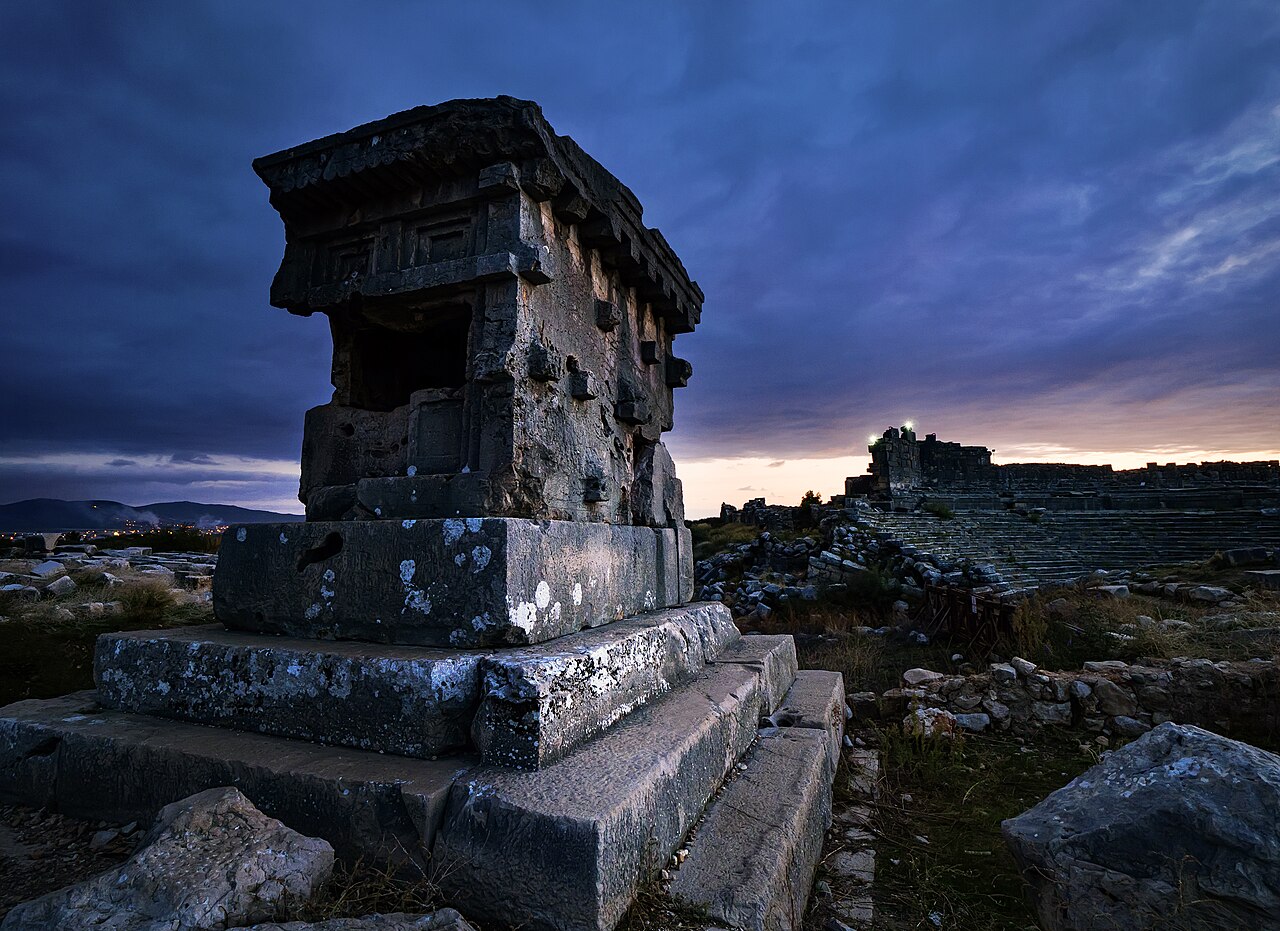
Most travellers through Lycia photograph the tombs cut into the cliffs and drive on. Yet you cannot really understand this civilisation without visiting its capital and its sacred centre. Standing just 4 kilometres apart on the banks of the Eşen River (the ancient Xanthos), Xanthos and Letoon have been a joint UNESCO World Heritage Site since 1988. This is the story of a language carved into stone — and of a people who twice chose death over surrender.
Xanthos, Capital of Lycia
Set on hills above the left bank of the river near modern Kınık, Xanthos was, in the words of the geographer Strabo, "the largest city in Lycia". As the political centre of the Lycian League, it was the heart of a civilisation with its own language and alphabet.
The City That Burned Twice
The history of Xanthos holds one of Anatolia's most harrowing stories of resistance — and it happened twice.
The first time, around 540 BC: the Persian general Harpagus marched into Lycia on behalf of Cyrus. According to Herodotus, when the Xanthians saw that defeat was certain, they set fire to their own acropolis, killed their wives, children and slaves, and then threw themselves at the enemy in a suicidal attack.
The second time, five centuries later, in 42 BC: Brutus besieged the city during the Roman civil war. Plutarch records that the people again set their city alight in an act of mass suicide. Despite the rescue attempts of Roman soldiers, only 150 survived. The same hill, the same choice, twice.
What to See at Xanthos
- The Harpy Tomb: A pillar tomb of around 480 BC, named for the winged female figures (harpies) in its reliefs. The pillar itself stands in place, but the original reliefs are in the British Museum — what you see on site are casts.
- The Nereid Monument: A temple-form tomb of 390–380 BC. It holds a special connection for anyone staying in Bodrum: its architecture directly influenced the Mausoleum at Halicarnassus — Bodrum's own wonder of the ancient world. The monument is displayed, reconstructed, in Room 17 of the British Museum.
- The Inscribed Pillar (Xanthian Obelisk): Bearing inscriptions in Lycian, Milyan and Greek, this pillar was a key document in deciphering the Lycian language.
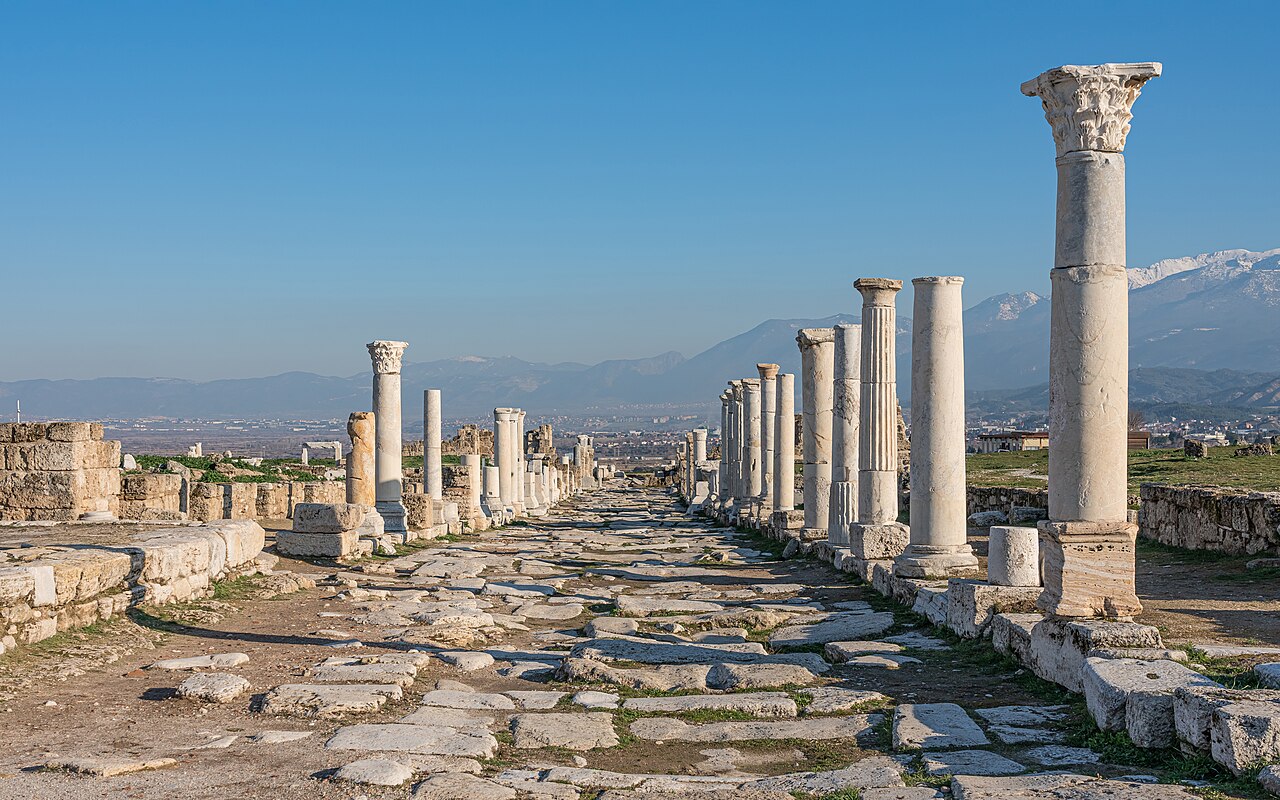
- The Roman Theatre: At the foot of the acropolis, right beside the pillar tombs. That juxtaposition — a Lycian tomb next to a Roman theatre — sums up the city's layered history in a single frame.
- The Byzantine Basilica: Measuring 74 × 29 metres, its mosaic floors speak to the city's Christian era.
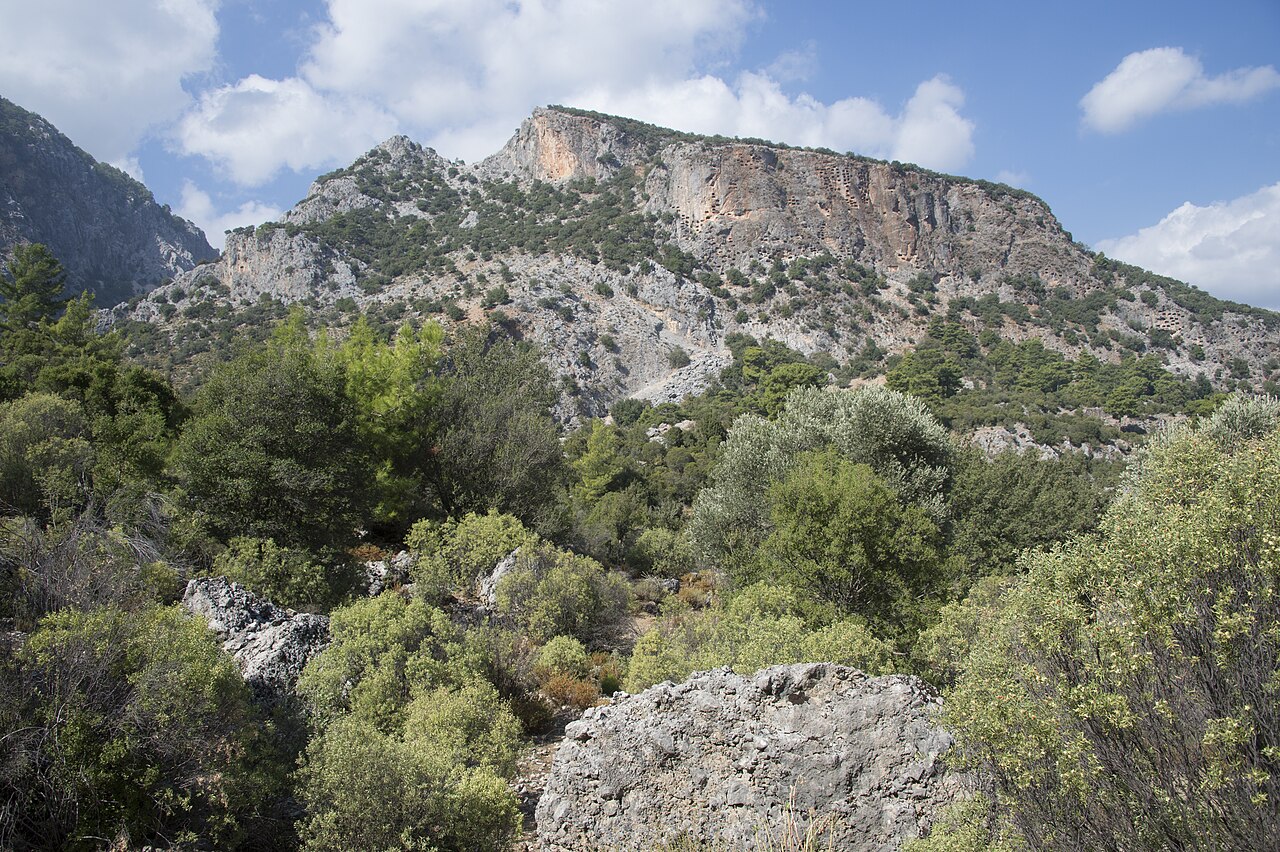
- The Necropolis: Sarcophagi and pillar tombs scattered across the site. A Lycian sarcophagus standing alone in a field at dusk is one of the region's most unforgettable sights.
Why Are the Sculptures in London?
The British traveller Charles Fellows explored Lycia from 1838 and rediscovered Xanthos. With permission from the Ottoman authorities, an operation beginning in late 1841 crated up the antiquities; in March 1842, roughly 80 tons of material in 82 cases was moved downriver and loaded onto the Royal Navy vessel HMS Beacon for shipment to the British Museum. Standing before an empty plinth at Xanthos, knowing this story changes the experience entirely.
Letoon: The Sacred Centre of Lycia
Four kilometres south of Xanthos, Letoon was the religious centre of the city and of the entire Lycian League. Lycian rulers announced their public decisions here — this was not merely a sanctuary but something closer to a constitutional forum.
It takes its name from Leto, who in myth bore Zeus's twins Apollo and Artemis. Three temples stand side by side: the central one dedicated to Artemis, the other two to Leto and Apollo. The Temple of Leto was re-erected between 2000 and 2007.
The Letoon Trilingual
Letoon's greatest contribution to world archaeology is the trilingual stele found in 1973 and dated to 337 BC. It records cult regulations in three languages: Lycian, Ancient Greek and Aramaic. The stele was a turning point in scholars' understanding of the Lycian language — a kind of Lycian Rosetta Stone.
What to See at Letoon
- The three temples and their foundations.
- The nymphaeum: A monumental fountain built over a Hellenistic structure in the early 2nd century AD or later.
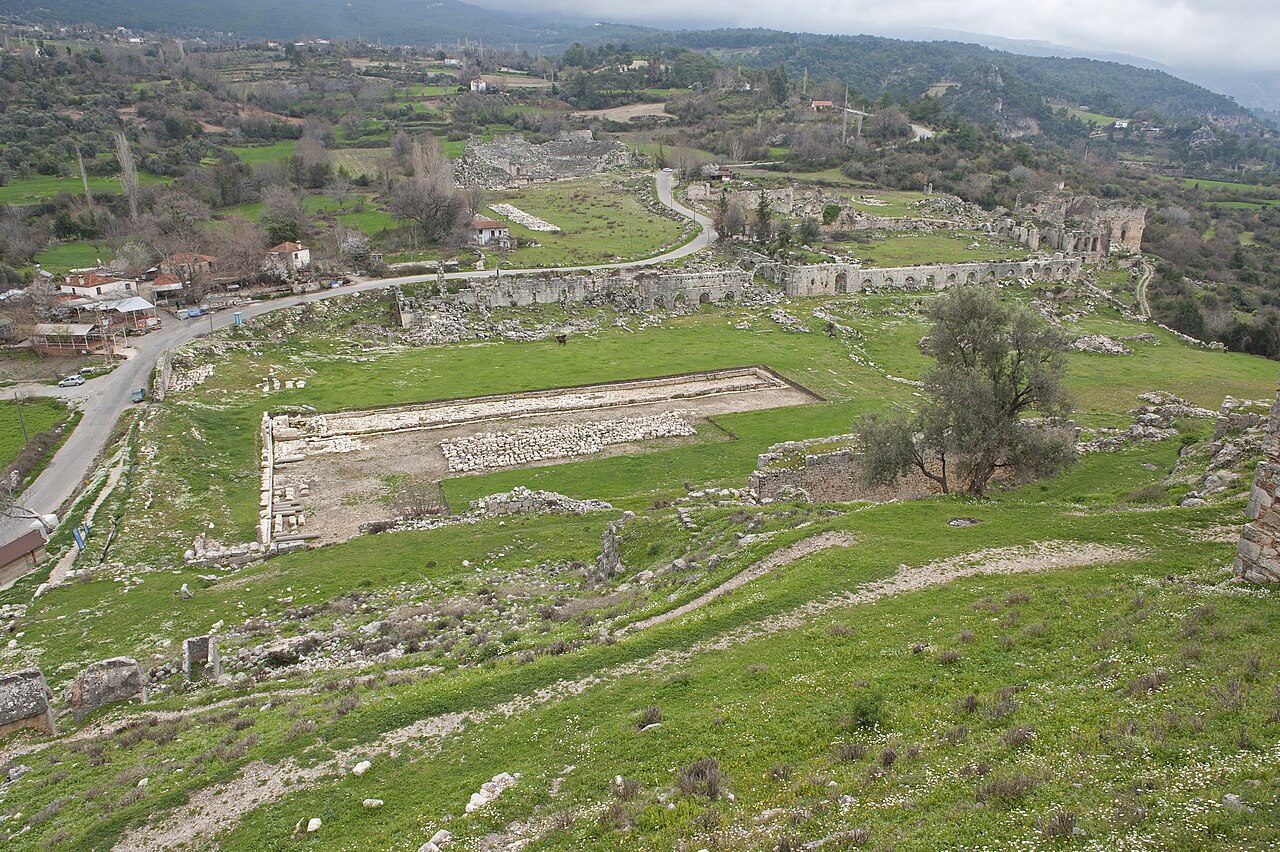
- The Hellenistic theatre: To the northeast of the site, in notably good condition.
- The submerged ruins: Because the site sits below the water table, part of it is permanently flooded. Turtles and frogs swim among ancient columns — a strange and rather wonderful sight.
Excavations at Letoon were directed from 1962 by the French archaeologist Henri Metzger.
Practical Notes for Your Visit
- Time to allow: 1.5–2 hours for Xanthos, 45 minutes to an hour for Letoon. They are close together, so plan them as a pair — each is incomplete without the other.
- Order: Xanthos first (it is higher, and better in the cool of the morning), then Letoon.
- Best time of day: There is little shade at Xanthos; avoid summer midday. Late afternoon light is ideal for photographing the pillar tombs.
- Admission: Both are paid archaeological sites and the Museum Pass (Müzekart) is valid. Check official sources for current prices and hours.
- Terrain: Stony and grassy. Closed, sturdy shoes are essential. Letoon can be wet underfoot in spring.
- Bring: Water and a hat; refreshment options on site are limited.
Getting There from Bodrum
Xanthos is about 260 km from Artemis Bodrum, roughly 3 hours 50 minutes by car, via Milas and Muğla towards Fethiye and on to Kınık. Let's be honest: that is a long way for a single day, and there and back in one go is tiring. Combining it with an overnight stay on the Fethiye–Kaş stretch makes for a far more enjoyable plan.
For details and a map, see our Xanthos & Letoon destination page.
Nearby Stops
Xanthos and Letoon sit right in the middle of the Lycian route. Patara (the ancient harbour city with its long beach), Kalkan and the Saklıkent Gorge are all easy additions to the same day. Patara, at the river's mouth, was also where Fellows began the route that led him to Xanthos — a natural combination for anyone who wants to spend a day walking through history.
For anyone who has stood in Bodrum looking at the empty space where the Mausoleum once rose and wondered what it looked like, Xanthos carries a particular meaning: the Nereid Monument is that wonder's architectural ancestor. The thread linking these two cities can turn your stay at Artemis Bodrum into a journey through history.
 Artemis Bodrum