Artemis Bodrum · Jul 16, 2026 · 5 min read · History & Culture
Almost everyone who comes to Denizli goes to see the blinding white travertines of Pamukkale. Just 10 kilometres to the south, on the same plain, lies a far quieter but no less ambitious city: Laodicea. And once you have walked it, you realise this city is the other half of the story that explains why Pamukkale's white water mattered so much in the first place.
A city named for a queen
Laodicea was founded in the mid-3rd century BC (around 263–261 BC) by the Seleucid king Antiochus II Theos, and named after his wife Laodice. The earlier settlement here had been known as Diospolis and Rhoas. The city stands on a hill in the Lycus valley between the small rivers Asopus and Caprus — hence its full name, Laodicea ad Lycum, Laodicea on the Lycus.
The location was no accident: Laodicea sat squarely on the great trade road linking the Aegean coast to the Anatolian interior. Under Rome it became the seat of a conventus, a judicial district covering 24 cities besides itself. Its wealth came largely from textiles, and above all from the distinctive black wool of the region.
The city that rebuilt itself with its own money
The moment that best captures Laodicea's character is the great earthquake of AD 60. Striking in Nero's reign, it levelled the city. Rome would normally have sent imperial assistance in such a case — the Laodiceans declined it and rebuilt the city entirely from their own resources. Most of the monumental architecture you walk through today is the product of that rebuilding. When the Book of Revelation rebukes Laodicea as a city that says "I am rich, I need nothing," it is that same self-assurance being described.
A relationship built on water — and ended by it
Laodicea's most impressive feature may not be its temples but its water system. Water was brought from kilometres away, and valleys lay in between. The ancient engineers solved this with the inverted siphon: the water dropped into the valley and rose again under pressure on the far slope. That means enormous internal pressure in the pipes — which is why they were made not of lead but of thick travertine pipe sections. You can see them on site today, and most are all but sealed shut by a crust of lime. The very mineral that makes Pamukkale white is the mineral that clogged Laodicea's plumbing. The city and the landscape are two faces of the same chemistry.
The main monuments
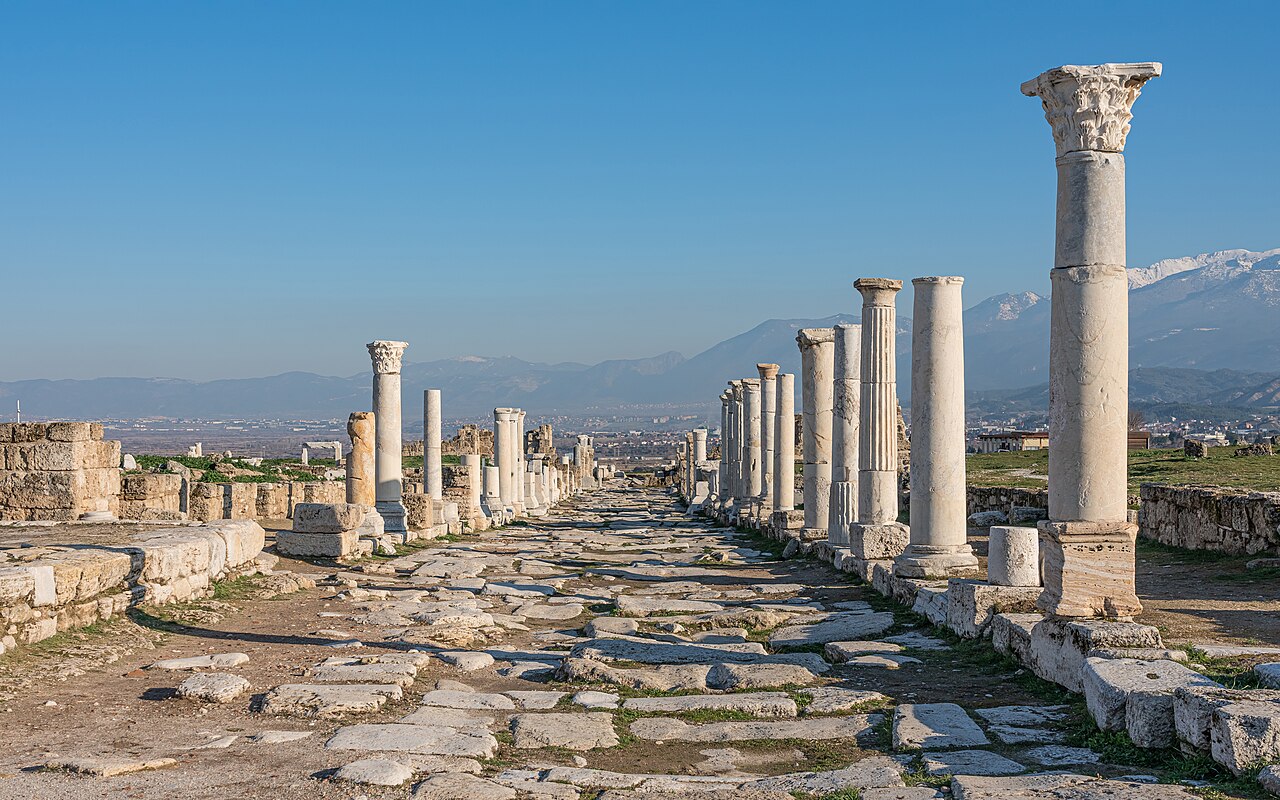
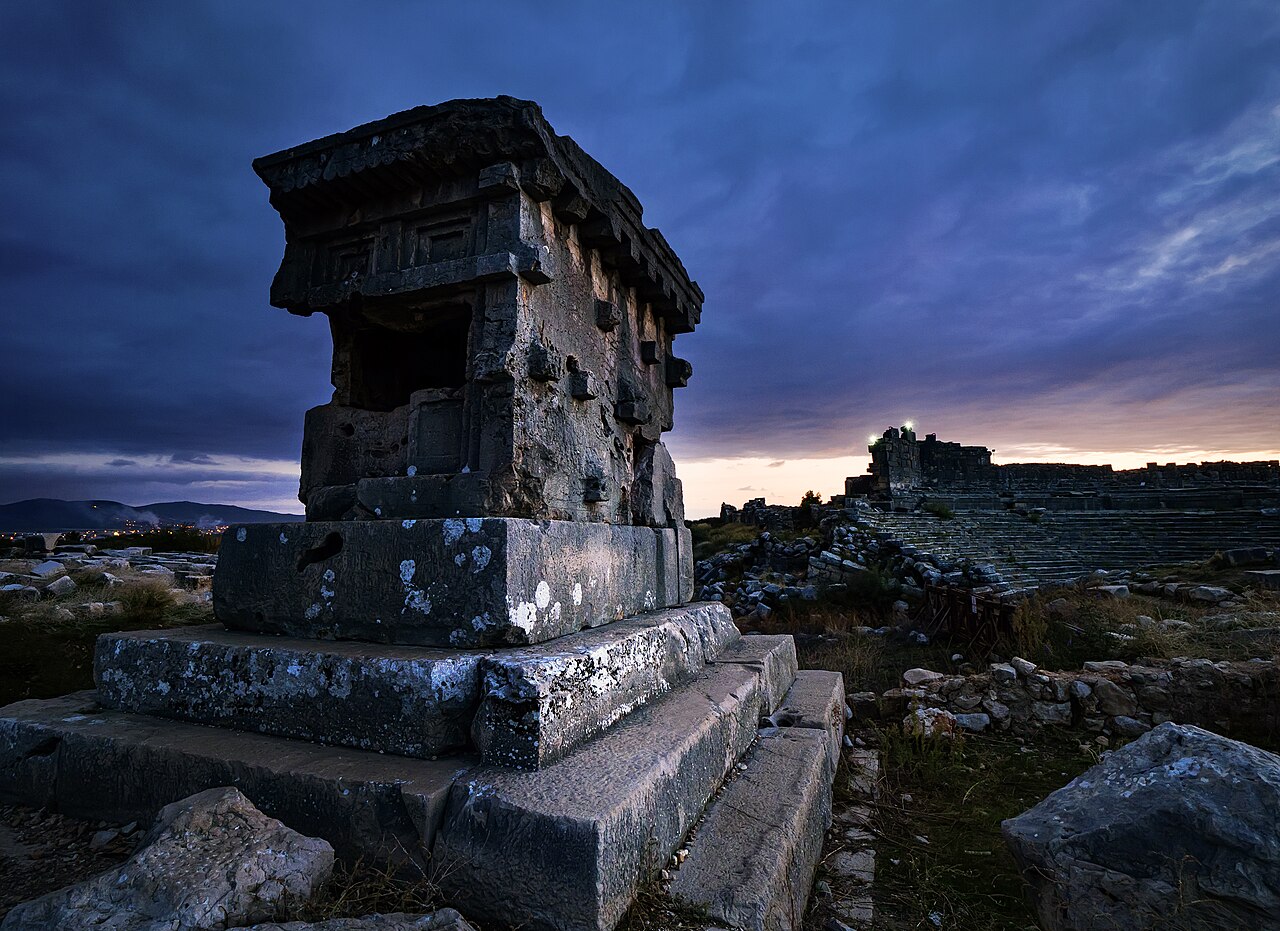
- Syria Street: the city's principal axis, roughly 900 m long in total. In 2007 a stretch of about 400 m was fully excavated together with the shopfronts and colonnaded galleries flanking it. Walking its length is the fastest way to grasp the city's scale.
- Two theatres: Laodicea has both a west and a north theatre — two large theatres preserved in a single city is unusual in Anatolia. (Sources disagree on their exact capacities; both belong firmly in the "large" category.)
- The stadium: built in AD 79 and among the largest in Anatolia, measuring roughly 285 × 70 m.
- The Laodicea Church: the site's most talked-about find in recent years. Uncovered during excavations in 2010, this early church can now be visited under a modern protective roof, with its floor mosaics and baptistery. Laodicea is one of the Seven Churches named in Revelation, which makes the city a first-order site in the history of Christianity.
- Also the agora, the nymphaeum (monumental fountain), the bath–gymnasion complex and several temples.
Decline and rediscovery
Laodicea's long decline also came by earthquake. The city contracted in the Byzantine period, passed under Byzantine control in 1119, and was sacked by the Seljuks in 1161, much of its population enslaved. It was eventually abandoned and lay quietly on the plain for centuries. Systematic excavation began in 2003 under Prof. Celal Şimşek of Pamukkale University, and intensive excavation and restoration have been raising the city step by step ever since. That Laodicea is walkable at all today is largely the work of the last twenty years.
Its UNESCO status: a candidate, not yet World Heritage
One point not to confuse: Laodicea is not on the UNESCO World Heritage List. (Its neighbour Hierapolis–Pamukkale is, which is part of why the two get mixed up.) Laodicea was entered on the UNESCO World Heritage Tentative List by Türkiye in 2013 under reference 5823 — declared, in other words, an official candidate. A tentative listing is the first rung of a nomination, not an inscription.
Practical visiting notes
- Time needed: 2–3 hours. The city is large and the distances between monuments are walked; rushing it does the place a disservice.
- Best time of day: early morning or late afternoon. Laodicea sits on an open plateau with little shade, and the midday summer sun is heavy.
- Hours and fees: the site generally stays open until evening in summer and closes earlier in winter; the Turkish Museum Pass is valid. Check current hours and prices on the Ministry of Culture and Tourism's official page.
- Bring: water, a hat, comfortable shoes.
- Tip: visit Laodicea before Pamukkale. Seeing the water system and the limed-up pipes first turns the travertines into something else entirely.
Getting there from Bodrum
Laodicea lies roughly 290 km from Artemis Bodrum, about 3.5–4 hours by car via Bodrum – Milas – Aydın – Denizli; after Denizli, head towards Pamukkale and follow the signs for Laodikeia. In all honesty, that is a long way for a day trip. If you want to do the region justice, we suggest an overnight in Denizli and a full day for Laodicea plus Hierapolis–Pamukkale together.
What else is nearby
Hierapolis–Pamukkale is only 10 km north (these two genuinely do pair in one day), Colossae about 17 km east, and the ancient city of Tripolis a little further out. Same valley, same trade road, same water.
For location, distance and access details, see our Laodicea Ancient City destination page. Our reception team can help you plan the Denizli leg of your trip.
Sources
- Kapak görseli: Laodikeia — Suriye Caddesi — A.Savin (Wikimedia Commons)
- UNESCO Dünya Mirası Merkezi — Geçici Liste: Laodikeia (Ref. 5823, 2013)
- Bilgi kaynağı: Wikipedia — Laodicea on the Lycus
- Kazı kaynağı: Pamukkale Üniversitesi — Laodikeia Kazısı (Prof. Dr. Celal Şimşek, 2003–)
- Ziyaret bilgileri: T.C. Kültür ve Turizm Bakanlığı — Laodikeia Örenyeri
 Artemis Bodrum