Artemis Bodrum · Jul 16, 2026 · 4 min read · History & Culture
Most people touring Lycia know Patara and Xanthos. Almost nobody mentions Pinara. Yet this city — hidden in pine forest at the foot of Mount Babadağ, southeast of Fethiye — was one of the largest members of the Lycian League, and it will very likely be the emptiest and most atmospheric stop on your route. Most visitors find themselves entirely alone among the ruins, which on Turkey's western coast is an increasingly rare luxury.
A Name That Means "Round"
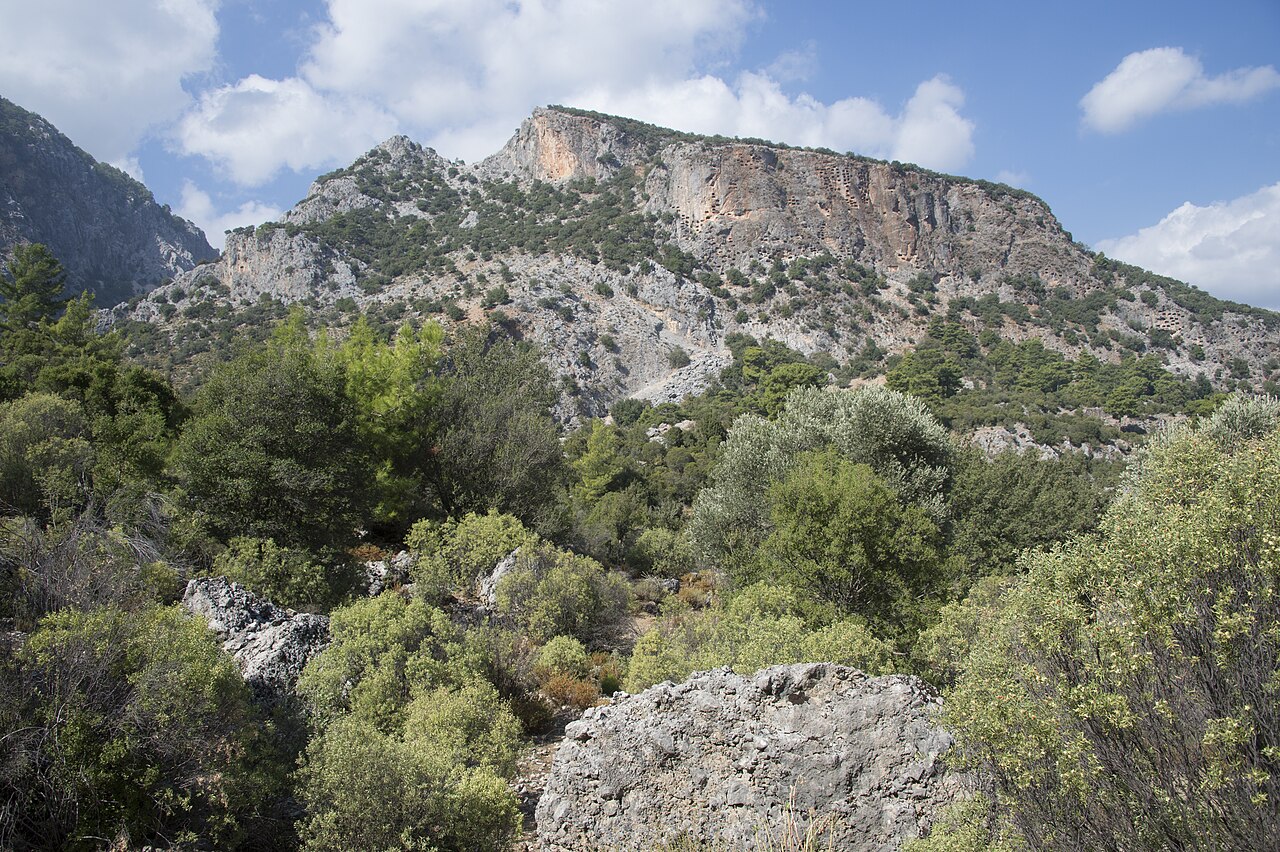
The city's name comes from the Lycian word Pilleñni, meaning "round". That is no coincidence: the moment Pinara comes into view, the enormous cylindrical rock rising behind it takes over the whole scene. According to an ancient account, Pinara was founded as a colony when the great Lycian city of Xanthos outgrew itself — born, in effect, as the valley's second capital.
Ancient writers rarely mention Pinara, but the scale of the ruins speaks for itself: the city held three votes in the Lycian League, the maximum — the same weight as Xanthos, Patara, Tlos, Myra and Olympos. It surrendered to Alexander the Great in 334 BC, passed under Roman control after 133 BC, and had been abandoned by the ninth century. The man who reintroduced it to the modern world was the great 19th-century Lycia explorer Sir Charles Fellows, who described the round cliff as literally speckled all over with tombs.
What You'll See
The Honeycomb Cliff
Pinara's signature is the hundreds of small tomb niches cut into the face of the round rock behind the city. From a distance the cliff resembles a honeycomb, or a colossal dovecote. Exactly how the masons reached and worked those openings has never been fully settled — ropes or scaffolding are the usual guesses. Standing opposite it in silence for a while is the single strongest experience Pinara offers.
The Royal Tomb
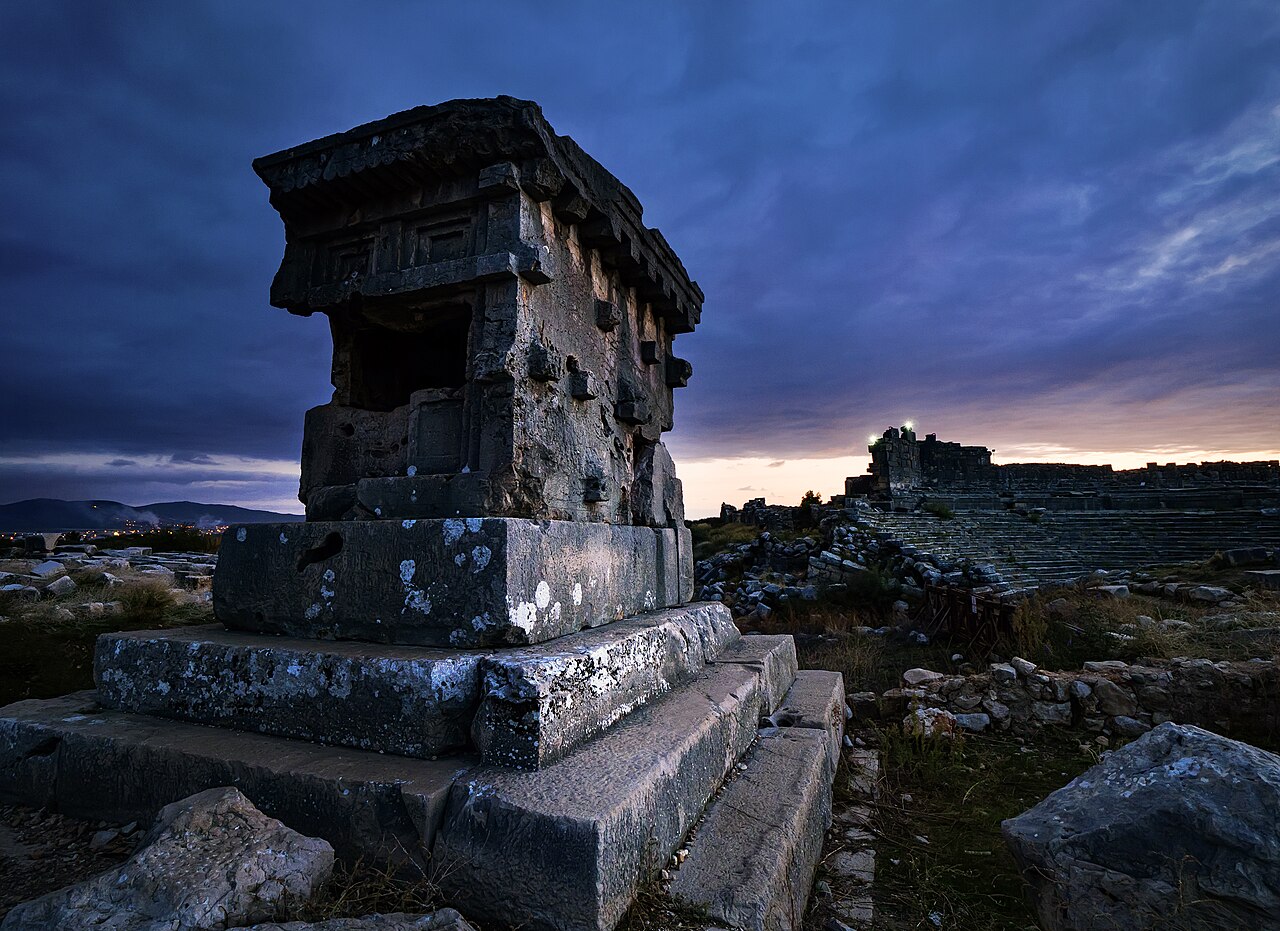
The city's most spectacular individual monument is a rock-cut tomb whose façade is covered in reliefs: walled towns, houses and figures. That makes this tomb one of the earliest surviving "cityscapes" of a Lycian settlement — archaeological evidence embedded inside a work of art, which is not a combination you meet often.
Theatre, Odeon and Agora
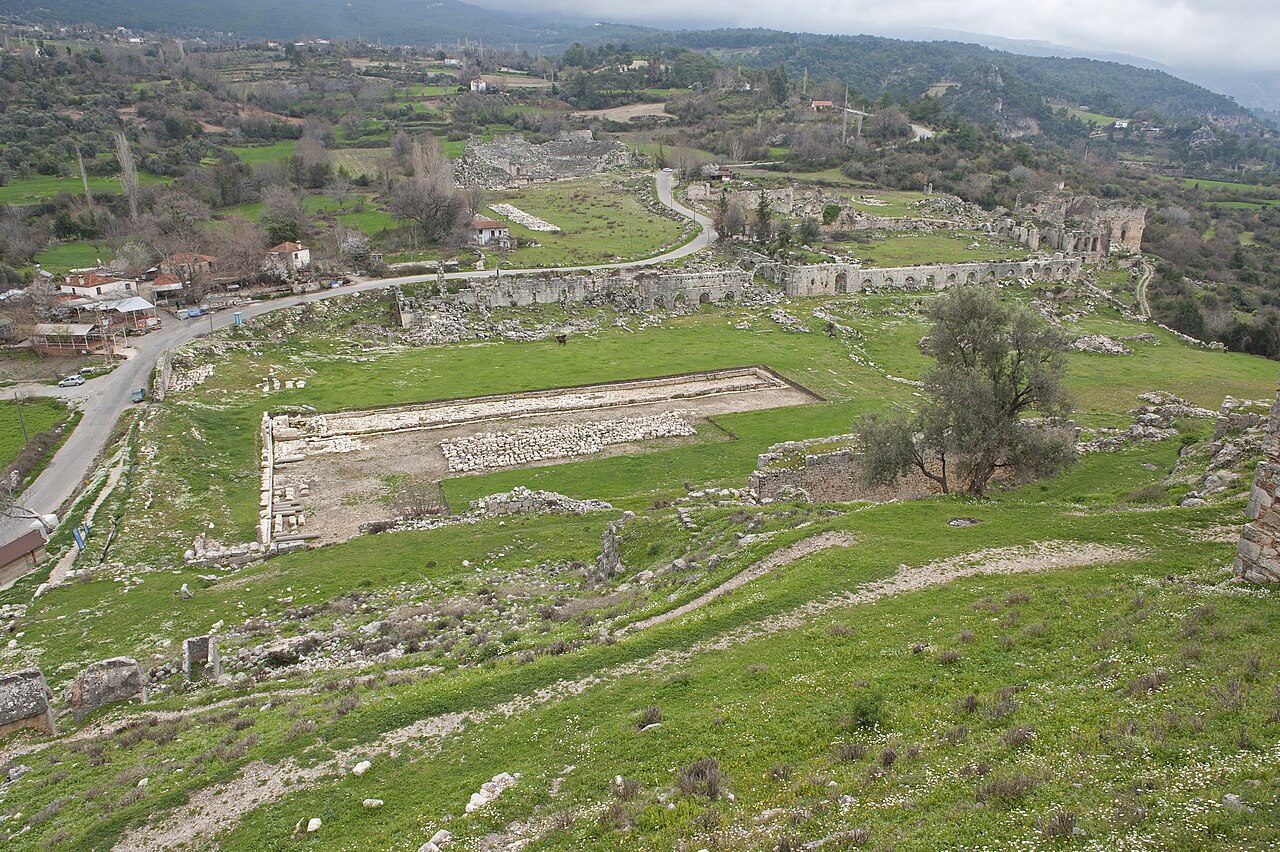
- Theatre: Standing in the forest with most of its seating intact — surprisingly well preserved, and all the more powerful for never having been restored.
- Odeon and agora: The administrative core, alongside temple remains and a later church.
- Upper acropolis: Traces of the earliest settlement on top of the round rock. The climb is serious and waymarking is poor — don't push it if you're alone.
Let's Be Precise About UNESCO
Pinara is not a UNESCO World Heritage site. Along with Tlos, Patara, Myra, Olympos and other Lycian cities, it was added in 2009 to the UNESCO World Heritage Tentative List under the serial file "Ancient Cities of Lycian Civilization" (ref. 5408). Tentative list means official candidate. The serial nature of the file matters: Lycia is presented to UNESCO not as isolated cities but as a civilisation — because what makes it unique is precisely the federal structure and the shared tomb architecture linking those cities.
By contrast, Xanthos-Letoon, very close to Pinara, genuinely has been on the World Heritage List since 1988 (ref. 484). Knowing the difference will make you the credible one when you describe your route.
Practical Notes
- Time needed: 1.5–2 hours; allow 3 if you intend to climb to the upper acropolis.
- Best time of day: Morning. The cliff face reads best in morning light, and in summer even pine shade doesn't fully blunt the midday heat.
- The road: The access track up from the main road is narrow, steep and rough in places. Take it slowly in a low-clearance car, and avoid it right after rain.
- Tickets: Paid archaeological site; the Turkish Museum Pass is valid. Fees and hours vary by season — confirm before you go.
- Important: Pinara is a semi-wild archaeological site, not a groomed museum. Paths are barely marked, ruins are scattered, there's plenty of shade but the ground is stony. Come with solid shoes, water and a sensible pace. Phone signal is not reliable everywhere.
Getting There From Bodrum
Pinara lies about 250 km by road from Artemis Bodrum — close to 3.5 hours each way. Honestly: a same-day return is possible but not enjoyable. After seven hours of driving you arrive tired and never really settle into the silence of that forest.
The right approach is to treat Pinara as part of a two- or three-day Lycian route:
- Day 1: Bodrum → Fethiye; Tlos in the afternoon, overnight near Fethiye.
- Day 2: Pinara in the morning (only about half an hour from Tlos), Xanthos and Letoon in the afternoon.
- Day 3: Patara ruins and beach, then the drive back to Bodrum.
Other Stops Nearby
- Tlos: In the same valley — Pinara's natural twin, with the Bellerophon relief and the acropolis fortress.
- Saklıkent Gorge: The antidote to a hot day.
- Xanthos and Letoon: Inscribed World Heritage, and the heart of the Lycian inscriptions.
- Patara: Parliament building, lighthouse and 18 km of sand.
Put Pinara inside that chain and Lycia stops being a checklist of ruins and becomes something coherent: one valley, one language of stone, one federation. Our reception team at Artemis Bodrum can help you shape the itinerary.
 Artemis Bodrum