Artemis Bodrum · Jul 16, 2026 · 5 min read · History & Culture
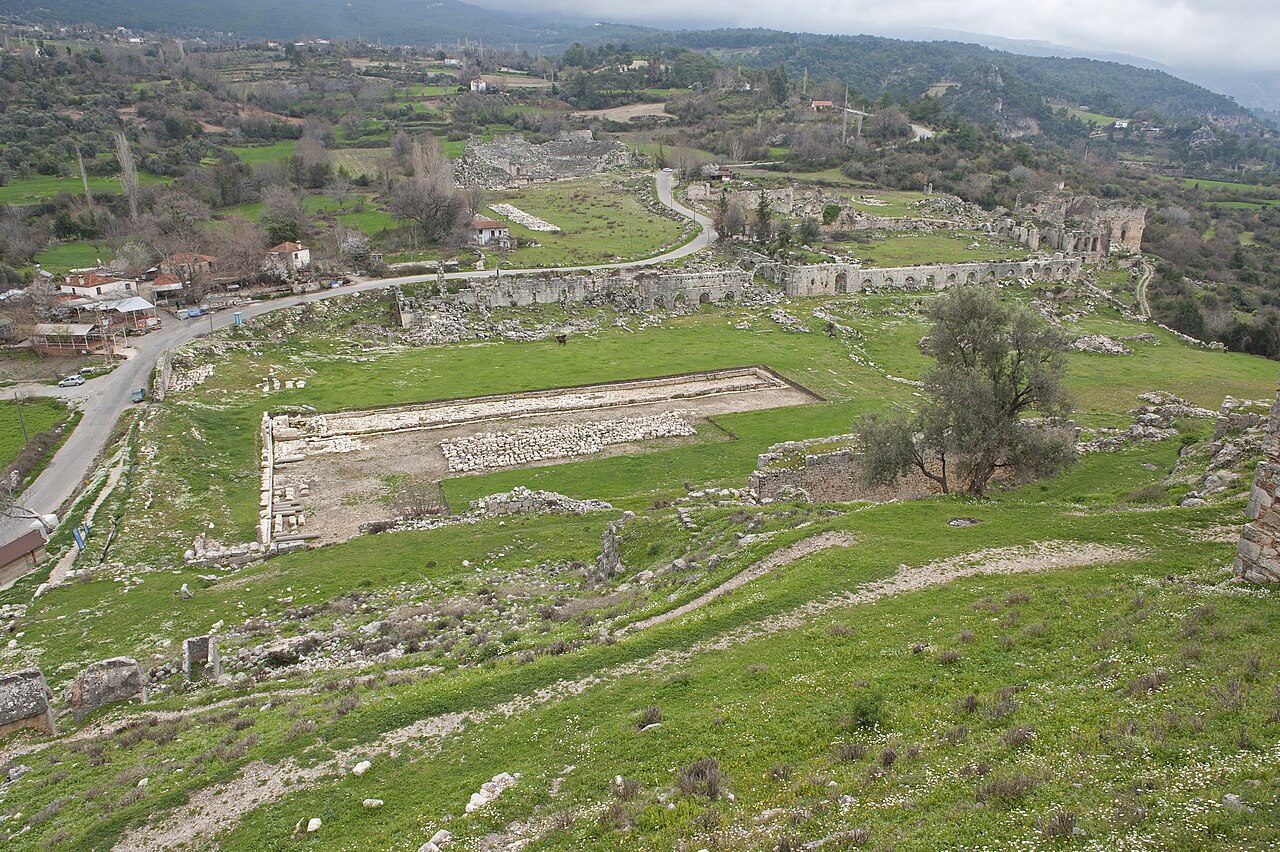
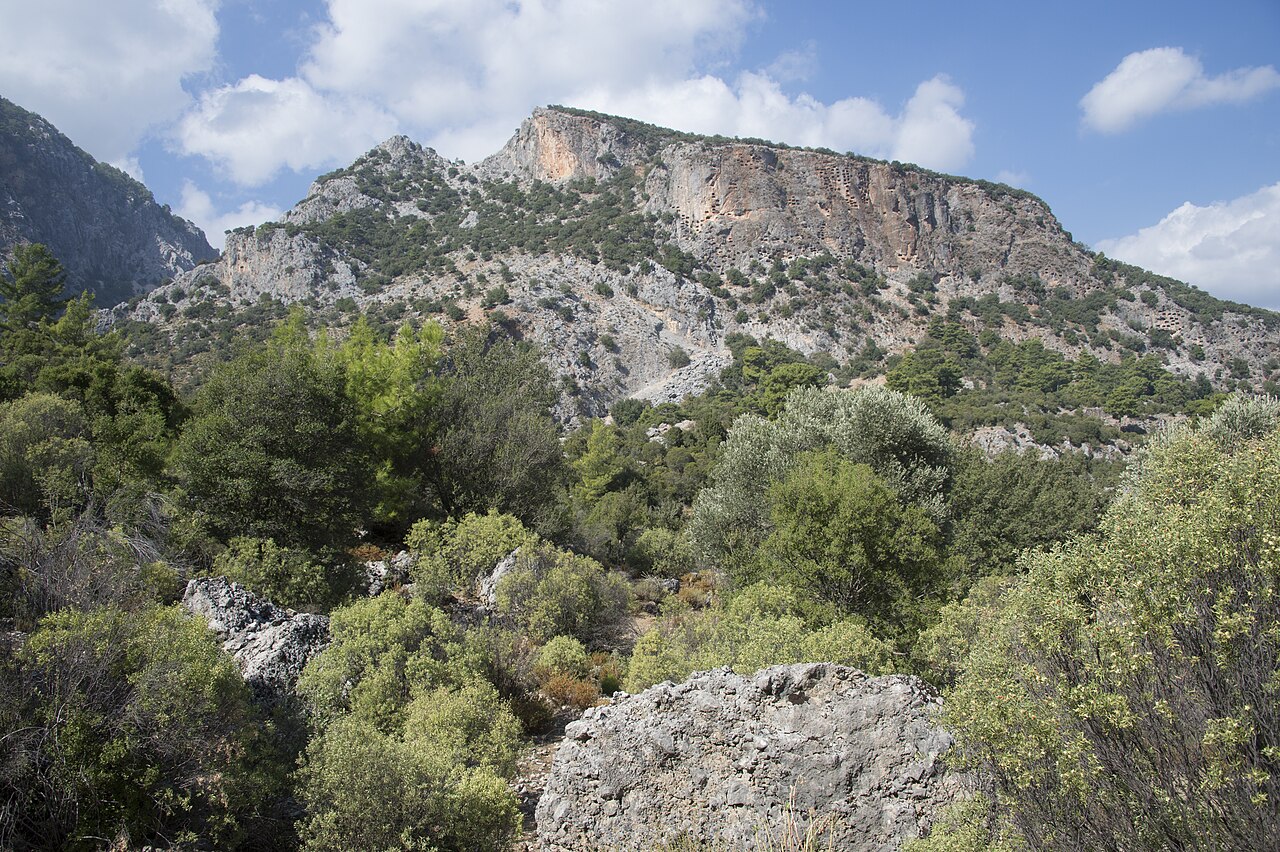
Perched on a steep rock outcrop above the Xanthos Valley, Tlos looks down on the plain like a city watching a painting it made itself. One of the oldest settlements in Lycia, it is also one of the clearest proofs in Anatolia that a single hilltop can stay inhabited for four thousand years without ever fully emptying. Climb to the acropolis and you won't need an archaeologist to explain why the Lycians chose this exact rock.
A Name Four Thousand Years Old
What makes Tlos remarkable starts with its name. It appears as Tlawa in Lycian inscriptions and as Dalawa in Hittite records — meaning the city was already a known place in the Late Bronze Age, around the 15th century BC. Tlos existed before the period we casually call "ancient Lycia" had even begun, and life continued on this rock through Roman, Byzantine and even Ottoman times.
In the Hellenistic era Tlos was among the largest cities of the Lycian League, holding the maximum three votes in its assembly. The League brought together some 23 cities and is regarded as one of the earliest known democratic federations: voting weight scaled with a city's size, and the assembly met at Patara. In 168 BC Rome granted the League autonomy rather than subordinating it to Rhodes — a rare gesture that says a great deal about Lycia's diplomatic standing.
What You'll See
The Tomb of Bellerophon
This is the site's signature. At the entrance of a monumental temple-fronted tomb cut straight into the cliff stands a relief of Bellerophon riding the winged horse Pegasus. In myth, Bellerophon slew the Chimaera from Pegasus's back, and Tlos claims him as its own. The façade was never finished — the half-completed four-column design preserves the moment a stonemason put down his tools two millennia ago.
The Rock-Cut Necropolis
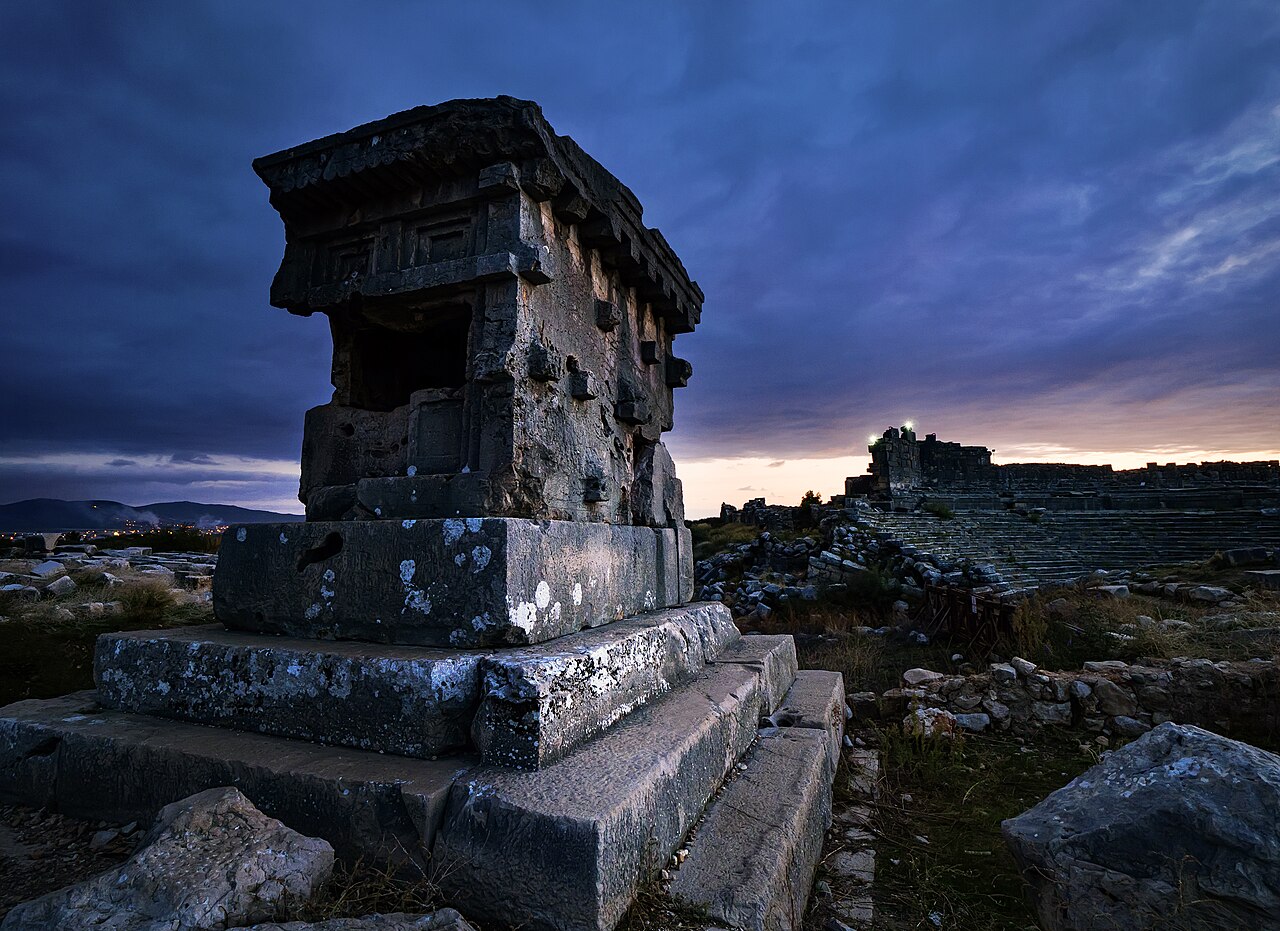
The western face of the acropolis is riddled with Lycian tombs, both house-type and temple-type. The Lycians buried their dead high up, and their tomb architecture translates timber houses into stone: beams, joists and door panels are all carved in rock. No other civilisation in Anatolia produced this at such density — and it is a central reason UNESCO's nomination treats the Lycian cities as one file.
Theatre, Stadium and Baths
- Theatre: Facing the plain on the eastern side, one of the best-preserved in Lycia, with carved architectural blocks still lying where they fell.
- Stadium: Estimated to have seated around 2,500 — proof the city was an athletic centre, not only a religious one.
- Roman baths: The arched section known as the "Seven Doors", opening onto the valley, is the most photographed spot at Tlos.
- Kanlı Ali Ağa fortress: The Ottoman-era castle crowning the acropolis, named after the local governor who ruled here in the 19th century. On one hill you can read Lycian, Roman, Byzantine and Ottoman layers stacked on top of each other.
Systematic excavation has run since 2005 under Prof. Dr. Taner Korkut of Akdeniz University, with the acropolis, necropolis, council house, stadium, theatre, great bath, Temple of Kronos and the basilica among the priority areas.
The UNESCO Status: A Candidate, Not Yet World Heritage
Let's correct a common mistake. Tlos is not on the UNESCO World Heritage List. Together with Pinara, Patara, Myra, Olympos and other Lycian cities, it was added in 2009 to the UNESCO World Heritage Tentative List under a single serial file titled "Ancient Cities of Lycian Civilization" (ref. 5408). A tentative list is a country's official shortlist of sites it intends to nominate later — so Tlos is a formal candidate, not an inscribed World Heritage site.
The confusion comes from the neighbours: Xanthos-Letoon, in the very same valley, has genuinely been on the World Heritage List since 1988 (ref. 484). You can see an inscribed World Heritage site and a candidate city on the same day — just don't mistake one for the other.
Practical Notes
- Time needed: 1.5–2 hours including the acropolis climb; closer to 2.5 if you take in the theatre and stadium properly.
- Best time of day: Early morning or late afternoon. In midsummer the acropolis climb is punishing at midday — there is no shade.
- Tickets: Paid archaeological site; the Turkish Museum Pass is valid. Prices and hours shift by season, so check the Ministry of Culture and Tourism listing before you set off.
- Bring: Grippy shoes (the rock is rough and sloped), a hat and water. Parking and toilets are available.
Getting There From Bodrum — The Honest Version
Tlos is roughly 245 km by road from Artemis Bodrum, around 3.5 hours of driving each way. This is not an easy day trip. Leave in the morning and return the same evening and you'll spend six or seven hours behind the wheel and miss the site's best light entirely.
We recommend an overnight Lycian route instead:
- Day 1: Bodrum → Fethiye (via Milas and Ortaca). Tlos in the afternoon; overnight around Fethiye or Seydikemer.
- Day 2: Pinara in the morning (very close to Tlos), Xanthos and Letoon in the afternoon.
- Day 3: Patara — ruins in the morning, beach in the afternoon, then back to Bodrum.
Don't underestimate the drive: the Muğla–Fethiye road is winding and busy. Plan your stops.
What Else Is Nearby
- Saklıkent Gorge: Very close to Tlos, and its ice-cold water is the perfect second stop on a hot day.
- Pinara: In the same valley — Lycia's quietest city, its huge cliff face pocked with honeycomb tomb niches.
- Xanthos and Letoon: Lycia's principal city and its sanctuary — these are inscribed World Heritage.
- Patara: The finale, with its parliament building, Nero's lighthouse and 18 km of sand.
Linking these four or five points rather than visiting Tlos alone is what makes the drive worth it — and what lets you read Lycia as a civilisation rather than a scatter of stones. Our reception team at Artemis Bodrum is happy to help you plan the route and the overnight stops.
Sources
- UNESCO Dünya Mirası Merkezi — Ancient Cities of Lycian Civilization (Geçici Liste, ref. 5408, 2009)
- Akdeniz Üniversitesi — Tlos Antik Kenti Kazıları (kazı başkanlığı ve kazı alanları)
- UNESCO Dünya Mirası Merkezi — Xanthos-Letoon (Kesin Liste, ref. 484, 1988)
- Kapak ve gövde görselleri: Tlos genel görünüm — Dosseman (Wikimedia Commons, CC BY-SA 4.0)
 Artemis Bodrum