Artemis Bodrum · Jul 16, 2026 · 8 min read · Travel Guide
The Bodrum peninsula is like a pocket: once you are inside, leaving does not occur to you. In the first article of this series we covered the 23 stops within 25 kilometres of the hotel — from the Mausoleum of Halikarnassos to the Lelegian dry-stone walls, from Gümüşlük’s King’s Road to Karaada’s sulphurous mud. Most of our guests’ holidays begin and end right there.
But one day, usually the third or fourth, you start to wonder: what lies behind those hills? This article answers exactly that. When we widen the circle to 50 kilometres, only two new stops join the list — and that is not because the list is poor, but because of geography. The peninsula hangs from the mainland by a narrow neck of land; the moment you cross it, you enter the world of two separate gulfs. Kisebükü and Bargylia are the gateways to those two worlds.
Both are half-day trips. Neither resembles anything on the peninsula. And both tell the same story from opposite directions: on this coast, the sea does not stay still.
Leaving the peninsula: why only two stops?
It looks surprising on the map. If there are 23 places within 25 kilometres, why only two between 25 and 50? The answer is simple: a 25-kilometre radius already covers the entire peninsula. Beyond that lies the mainland — and the mainland’s first 25 kilometres are thinly settled hills and olive groves reaching towards Bodrum. The real density resumes past 55 kilometres, along the Milas axis; we are saving that for the third article in the series.
This, then, is a transition ring. And transition rings tend to hold the quietest, least crowded places. That is exactly the case here.
Kisebükü: a Byzantine settlement where the pine forest meets the sea
From the village of Mazı in the east of the peninsula you descend southwards towards the Gulf of Gökova. The road narrows, the smell of pine thickens, and eventually you reach Kisebükü — also known as Alakışla Bükü. The dense pine forest around the bay runs straight down to the water; the sea is clear, the bottom sandy, the bay sheltered from the wind. It is 45 kilometres from the hotel, but around an hour by car: the character of the road matters more than the distance.
Read that far and you might think “another pretty bay”. What sets Kisebükü apart is the history on its shore: on the flat ground at the mouth of the bay, the remains of an early Byzantine settlement lie scattered among the pines — church walls, cisterns, the foundations of buildings. Coming out of the sea and sitting in the shade of a fifteen-hundred-year-old stone wall is what this bay offers you.
Why was there a settlement here?
The answer connects to everything you learned on the peninsula. In antiquity the Gulf of Gökova was one of the best-sheltered waterways in the Aegean; settlements lined the bays where ships could escape the wind, find fresh water and be repaired. Kisebükü was one of them. When a boat drops anchor here today, it does so for precisely the reason it did fifteen centuries ago: the bay blocks the wind.
That is why Kisebükü has for years been a quiet anchorage for blue-cruise boats and day trips. You can reach it by land, but it takes effort; if you are on a boat it will already be on your itinerary. Entry is free, there are no facilities, and the shade comes from pine trees. Bring water and food — this is not a beach club.
Bargylia: the harbour city the sea abandoned
Now turn in the opposite direction, to the north. On the shore of the Gulf of Güllük, near the village of Boğaziçi, a hill rises among reed beds and salt lagoons. On the hill and along the water lie scattered remains: traces of a theatre, stretches of city wall, building foundations. This is Bargylia — one of the harbour cities of Caria.
Pause on the phrase “harbour city” and look around. There is no harbour. There is no sea. There is a shallow, salty, reedy wetland. And this is where the real story of this article begins.
Where did the sea go?
Bargylia was once a busy port. Over the centuries the surroundings filled with alluvium: silt carried down by the rivers closed the mouth of the gulf, the sea withdrew, and the city was left inland. Where ships once moored, there are now reeds.
To see why this is so remarkable, remember Myndos from the first article: at Gümüşlük, part of the ancient city vanished beneath the water as sea levels rose. So the exact opposite happened at two ends of the same coastline — in the west the sea swallowed a city, in the north the sea deserted one. The “sunken harbour”, the “stranded port city” and the “water that was once a gulf and became a lake” that you will meet around Bodrum are all scenes from the same geological story. Lake Bafa, in the third article of the series, will be its climax.
The kick of Pegasus
Bargylia’s foundation legend is every bit as fine as its geology. The story goes that the hero Bellerophon founded the city in memory of his friend Bargylos, killed by a kick from the winged horse Pegasus. That same Bellerophon is depicted riding Pegasus on the façade of a rock tomb at Tlos, the Lycian city far to the south. These two distant points are therefore two ends of one legend: at Bargylia the city the hero founded, at Tlos the hero’s portrait.
And the flamingos
The retreat of the sea was bad for the city but good for the birds. Today the lagoon is a haunt of flamingos. Standing beside the traces of an ancient theatre and watching a pink flock feeding in the shallow salt water is a scene you will find nowhere else around Bodrum. Entry is free; it is a 55-minute drive from the hotel.
If you are coming for the birds, timing matters: the character of a wetland shifts with the season and the water level, so nobody can guarantee you flamingos. Early morning, and spring or autumn, improve your odds. Bring a telephoto lens for photographs, and do not approach the birds.
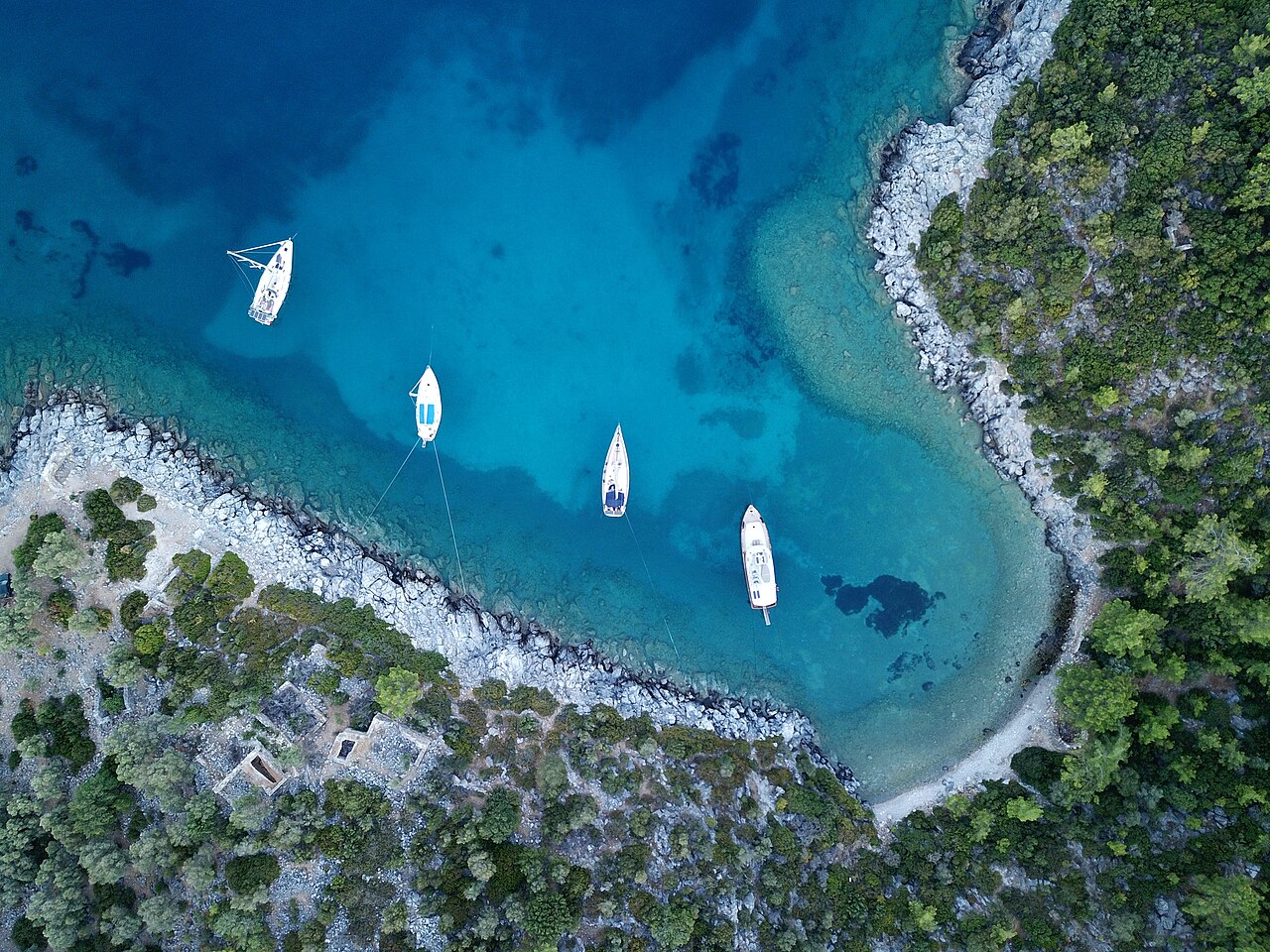
Mazı & Kisebükü
On the north of the Gulf of Gökova, an untouched cove where pine forest meets the sea — a hidden blue-cruise stop with Byzantine ruins on its shore.
Details →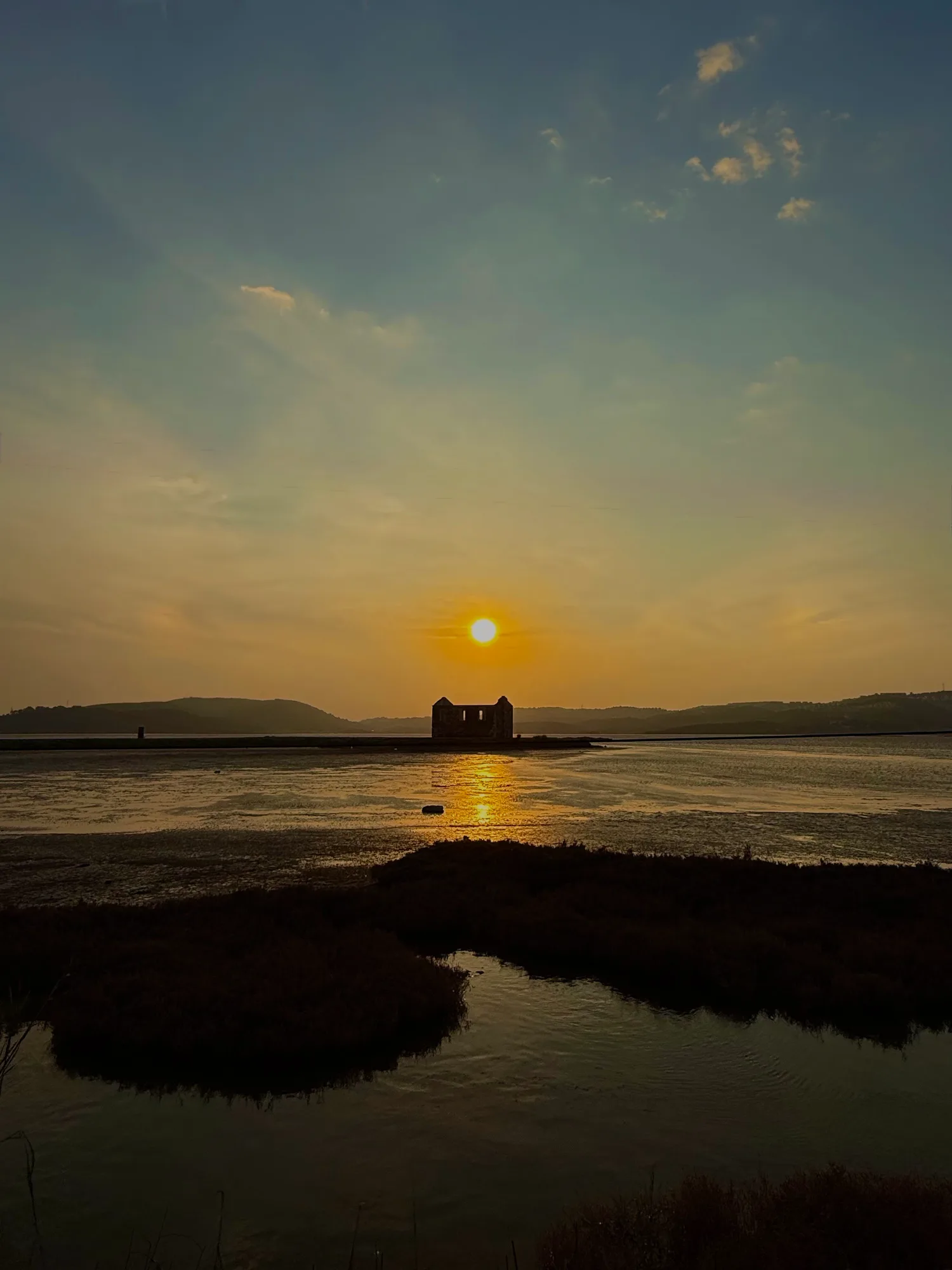
Bargylia & the Boğaziçi Lagoon
The remains of a Carian harbour city rising from a lagoon — a legend reaching back to Pegasus, and a quiet wetland that today hosts flamingos.
Details →How to plan these two stops
- Do not put them on the same day. One faces Gökova to the south-east, the other the Gulf of Güllük to the north; opposite directions. Each is a comfortable half day.
- Consider a boat for Kisebükü. You can drive, but the spirit of the bay makes sense when you arrive from the water. If it is already on your blue-cruise itinerary, there is no need to go separately.
- Bargylia is a morning job. The birds are active early, the light is better, and the reed beds get hot in the afternoon. Wear closed shoes.
- Both are free and have no facilities. No ticket office, no café. Water, a hat, food — carry it all with you.
- You need a car. Unlike the first ring, reaching these two by dolmuş is not practical. This is the ring where renting a car first makes sense.
The next ring: the heart of Caria
Fifty kilometres was a transition; one hundred is an explosion. When the third article doubles the ring, seven new stops join the list — and they are no ordinary stops: Euromos, whose sixteen columns still stand bolt upright among the olive groves; Labranda, the sacred mountain sanctuary hidden in the pine forest; Beçin, the capital of a principality; and Bafa, the gulf that turned into a lake. In other words, the Milas axis — the heart of Caria.
For these two stops, ask our reception: road conditions, wind and season will decide which one gets which day.
A reminder of the first ring: the 23 stops on the peninsula
This article is cumulative: the 50-kilometre ring also contains everything on the peninsula. We are not retelling them here — they are all covered in detail in the first article of the series. A quick reminder:
- Zeki Müren Art Museum — 0.4 km from the hotel
- Bodrum Marina — 0.6 km from the hotel
- Bodrum Castle — 0.7 km from the hotel
- Ancient Theatre of Bodrum — 1.2 km from the hotel
- Mausoleum at Halicarnassus — 1.3 km from the hotel
- Myndos Gate — 1.5 km from the hotel
- Bodrum Windmills — 1.5 km from the hotel
- Gümbet Beach — 2.5 km from the hotel
- Ancient City of Pedasa — 5 km from the hotel
- Karaada (Black Island) — 6 km from the hotel
- Torba Bay — 8 km from the hotel
- Aquarium Bay (Bitez) — 9 km from the hotel
- The Leleg Way — 10 km from the hotel
- Camel Beach (Kargı Bay) — 15 km from the hotel
- Cennet Cove (Göltürkbükü) — 18 km from the hotel
- Dilek Cave (Bağla) — 18 km from the hotel
- Yalıkavak & Sandıma Village — 18 km from the hotel
- Turgutreis — Sunset — 20 km from the hotel
- Kadıkalesi — 22 km from the hotel
- Orak Island — 22 km from the hotel
- Ancient Myndos (Gümüşlük) — 24 km from the hotel
- Aspat (Strobilos) — 25 km from the hotel
- Gümüşlük & Rabbit Island — 25 km from the hotel
Sources
- Kisebükü — Kaan Kösemen (CC BY-SA 4.0)
- Fotoğraflar: Artemis Bodrum arşivi — kendi çekimimizdir
 Artemis Bodrum