Artemis Bodrum · Jul 16, 2026 · 6 min read · Travel Guide
This is the final ring of our distance-band travel series. The arc we have been drawing from Artemis Bodrum now reaches 300 kilometres and contains 73 places. The 6 new places added in this ring include the boldest names of the whole series: Xanthos, capital of Lycia; Patara, home to one of the earliest known democratic assemblies; and Kaputaş, the most photographed beach view in Türkiye.
Let us say it up front: 300 km is not a distance you cover and return from in a single day from Bodrum. You do not come here to “see” something, you come to stay. This article will not pretend otherwise.
Where are we in the series?
Across the previous six articles we started on the peninsula and worked out to 250 km. Fethiye, Ölüdeniz, Kayaköy, Babadağ, Saklıkent and Lycia’s first great cities, Tlos and Pınara, were in the previous ring: Places to Visit Within 250 km of Bodrum. Efes, Afrodisias, Pamukkale and Dalyan were in the one before that: Places to Visit Within 200 km of Bodrum. For the closer bands there are the 150 km, 100 km, 50 km and peninsula articles. We do not repeat them here; our subject is the 6 new places between 250 and 300 km.
The new ring: what lies between 250 and 300 km?
The heart of Lycia: Xanthos, Patara and Kaputaş
Xanthos & Letoon (260 km) is the most important name in this ring — and perhaps in the whole series. Xanthos was the capital of the Lycian civilisation; Letoon was its religious centre. Together they have been firmly inscribed on the UNESCO World Heritage List since 1988. With its monumental tombs, its inscriptions and the tragic story of a city that twice destroyed itself rather than surrender, Xanthos feels less like ruins you walk through and more like a document you read.
Patara (285 km) was the capital of the Lycian League and holds the assembly building of one of the earliest known democratic federations. Behind it stretches roughly 18 kilometres of untouched sand, a nesting beach for loggerhead turtles. Careful — a common error: Patara is not a UNESCO World Heritage Site. Since 2009 it has been on UNESCO’s Tentative List as part of the “Ancient Cities of Lycian Civilization” nomination; that is, an official candidate. Xanthos–Letoon is inscribed, Patara is a candidate — being in the same region does not make them the same thing. Our detailed Patara guide keeps the same distinction.
Kaputaş Beach (300 km) sits exactly on the edge of the arc: on the Kaş–Kalkan road, where a canyon opens to the sea, a turquoise strip wedged between sheer cliffs. From the road you get the famous postcard view; getting down to the beach means a long staircase, and at midday in summer there is almost no shade.
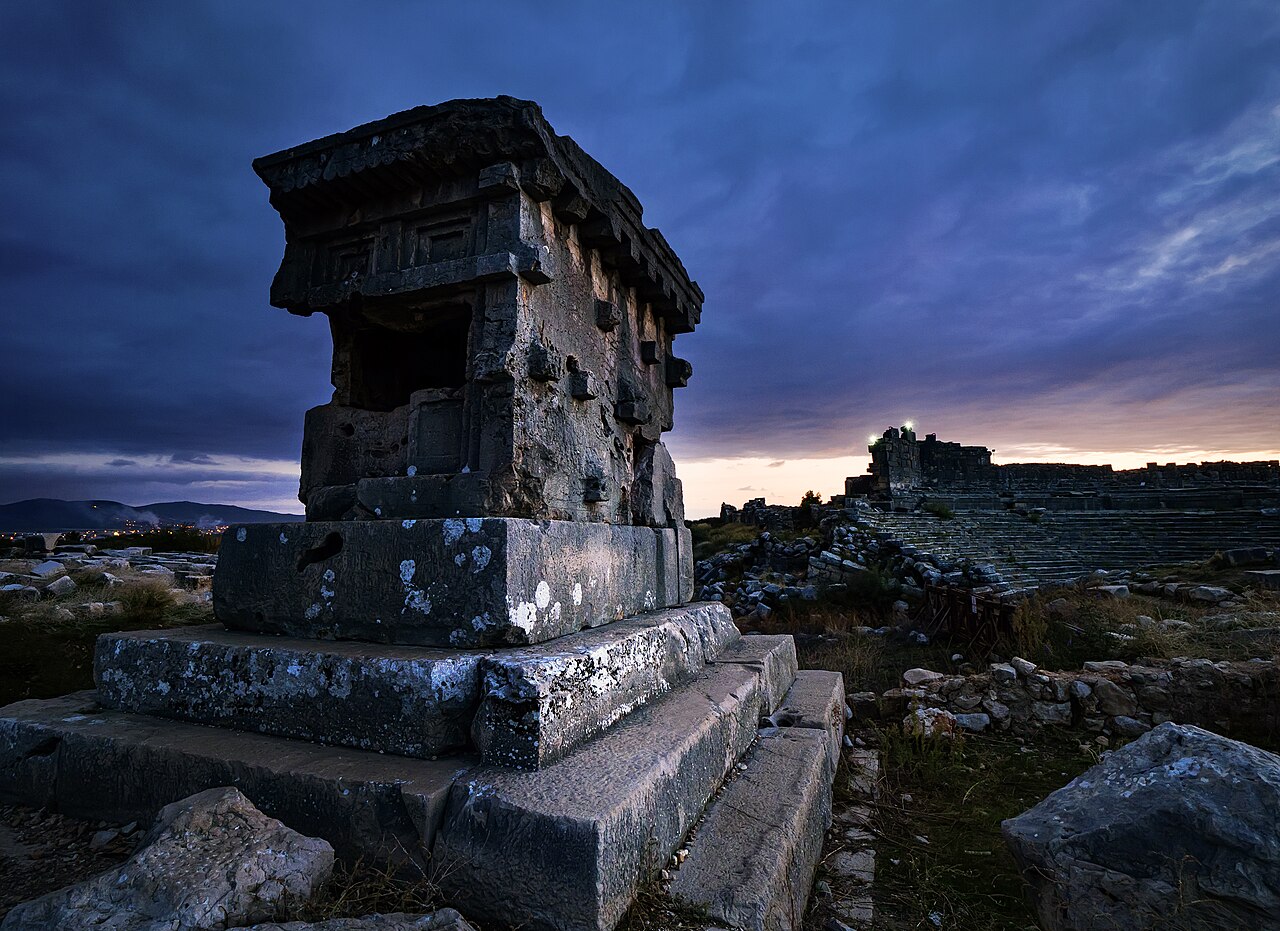
Xanthos & Letoon
The capital and religious centre of the Lycian civilisation; a UNESCO World Heritage site since 1988 for its tombs, inscriptions and tragic story of resistance.
Details →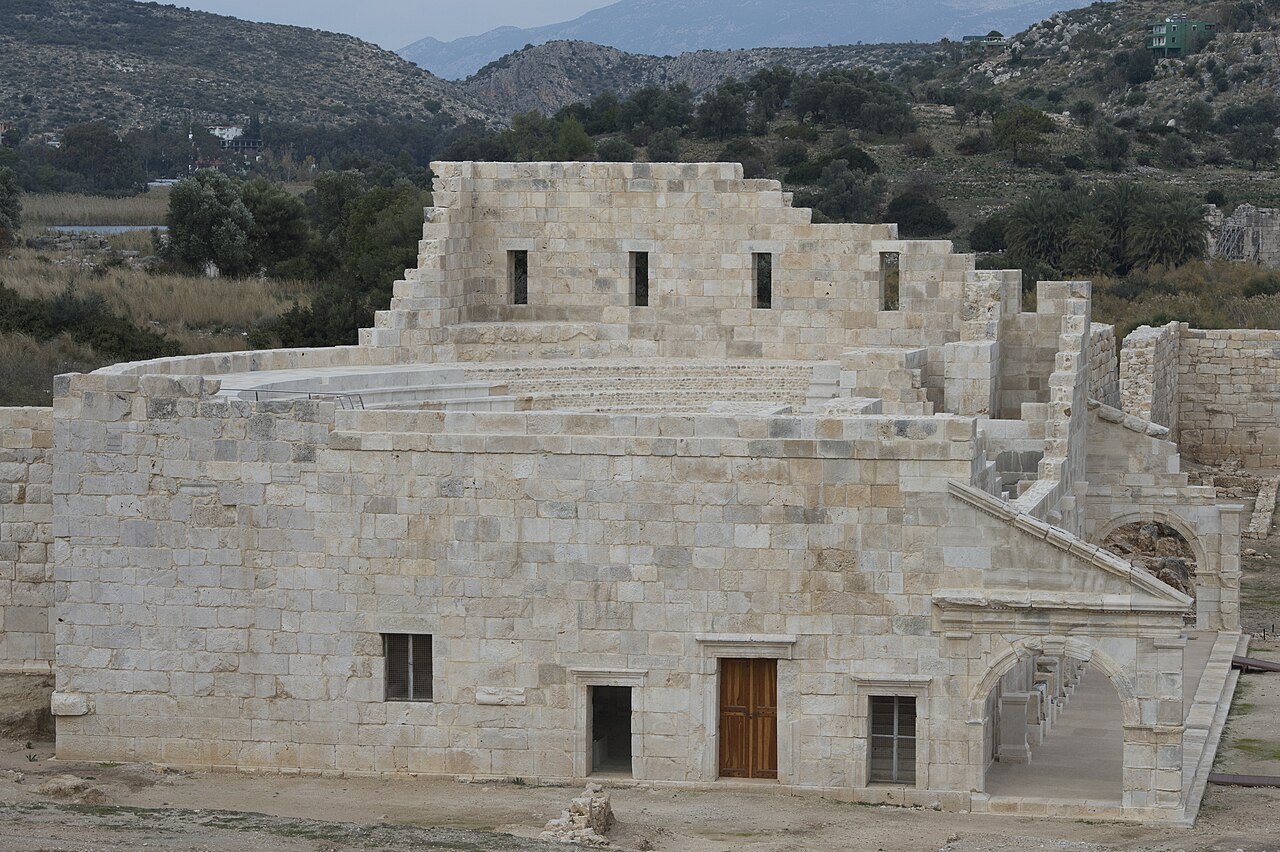
Patara (Ancient City & Beach)
Capital of the Lycian League and home to one of the world’s first democratic parliaments — behind it, 18 km of untouched sand and turtle nests.
Details →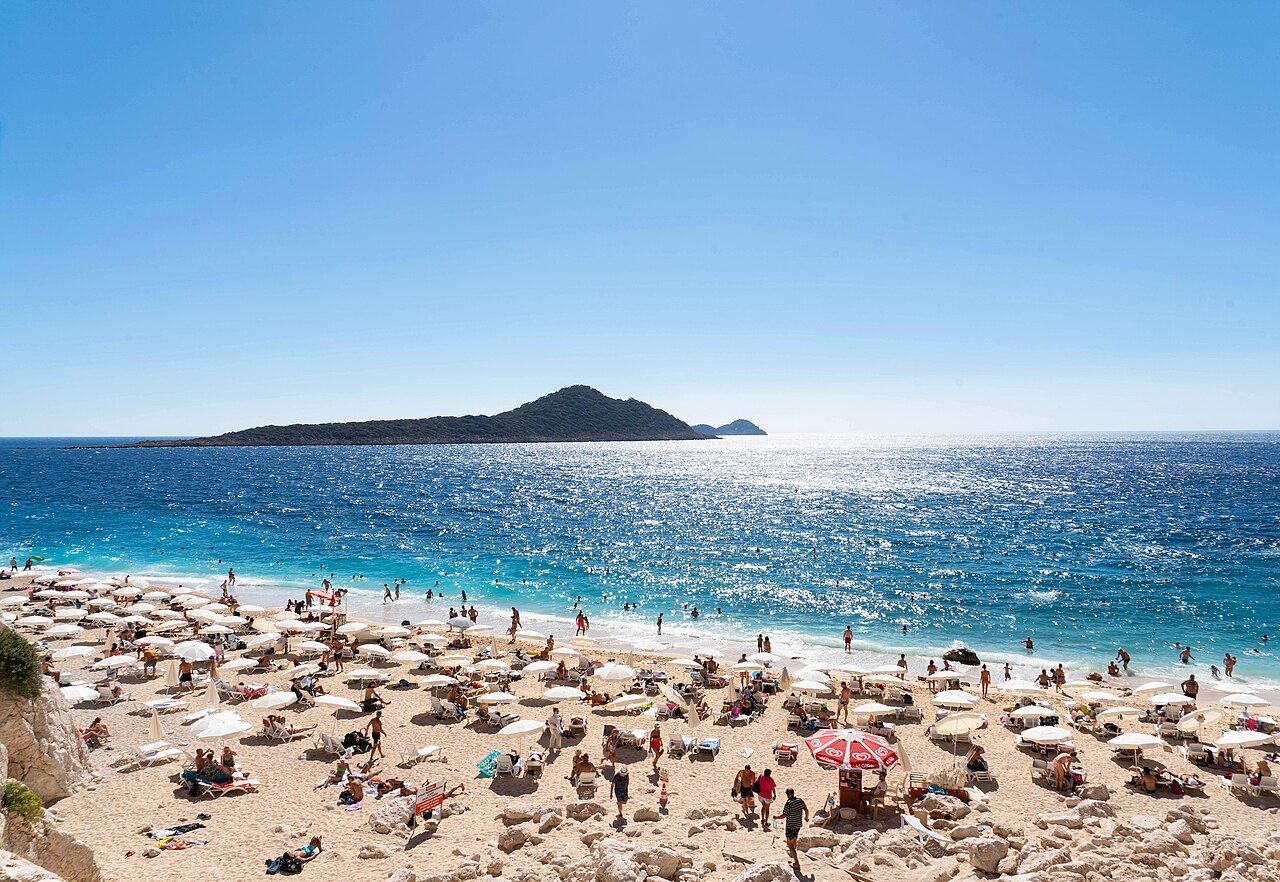
Kaputaş Beach
On the Kaş–Kalkan road, where a canyon opens to the sea — Turkey’s most famous beach view, a turquoise strip wedged between sheer cliffs.
Details →The Denizli side and south of İzmir
Laodikeia (290 km) lies right next to Pamukkale and is a broad Roman metropolis most visitors skip: colonnaded streets, two theatres and one of the “Seven Churches” named in the Book of Revelation. It too is on the Tentative List (2013) — a candidate, not a World Heritage Site. Karahayıt (300 km) is Pamukkale’s red sibling: a spa town where iron-rich thermal water stains the travertine orange and red. Both attach naturally to a Pamukkale itinerary; neither needs a journey of its own.
Teos & Sığacık (260 km) falls in an entirely different direction, south of İzmir. The largest Temple of Dionysos in the ancient world stood here, and the city hosted history’s first actors’ guild. Neighbouring Sığacık is the walled village of Türkiye’s first Cittaslow — its Saturday market is famous. It makes sense to add Teos to a northbound itinerary along the Efes or Şirince line, not to a Lycian route.
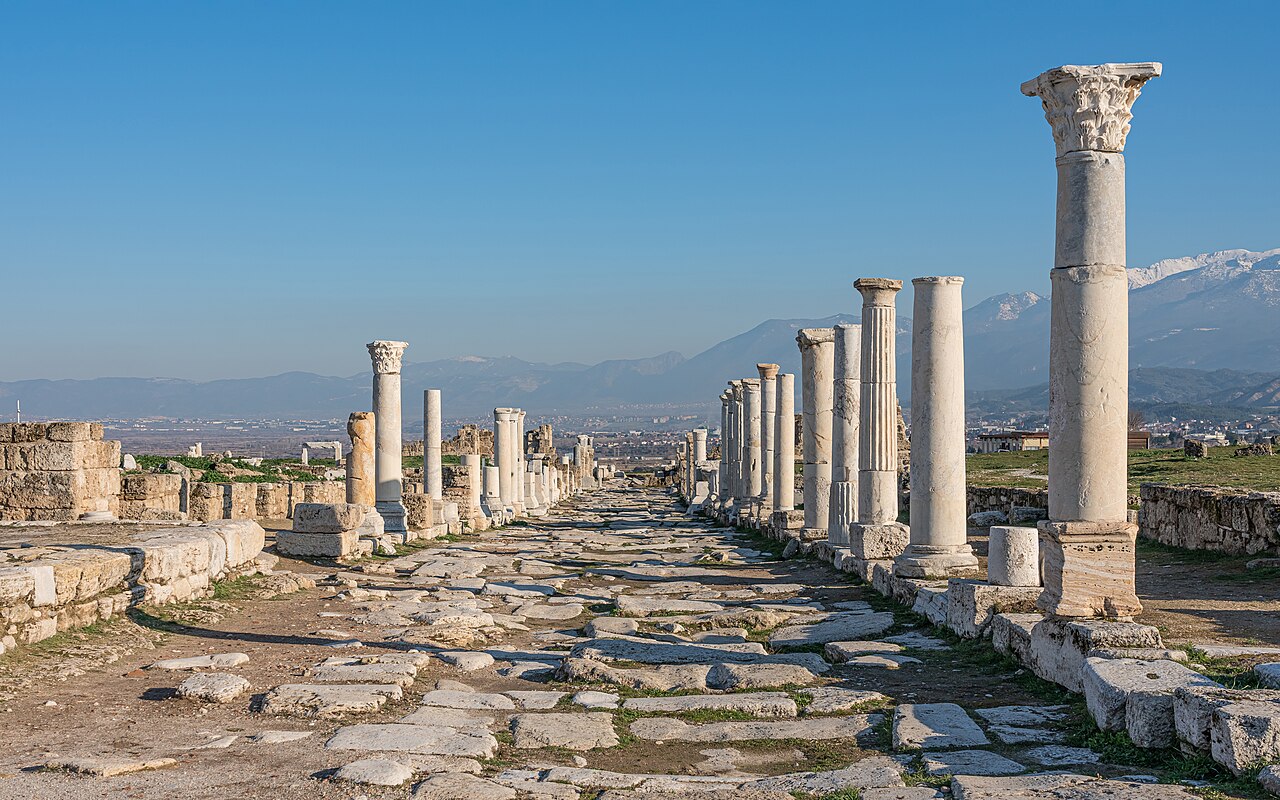
Laodicea Ancient City
Right beside Pamukkale — a vast Roman metropolis with colonnaded streets, two theatres and one of the “Seven Churches” named in the Bible.
Details →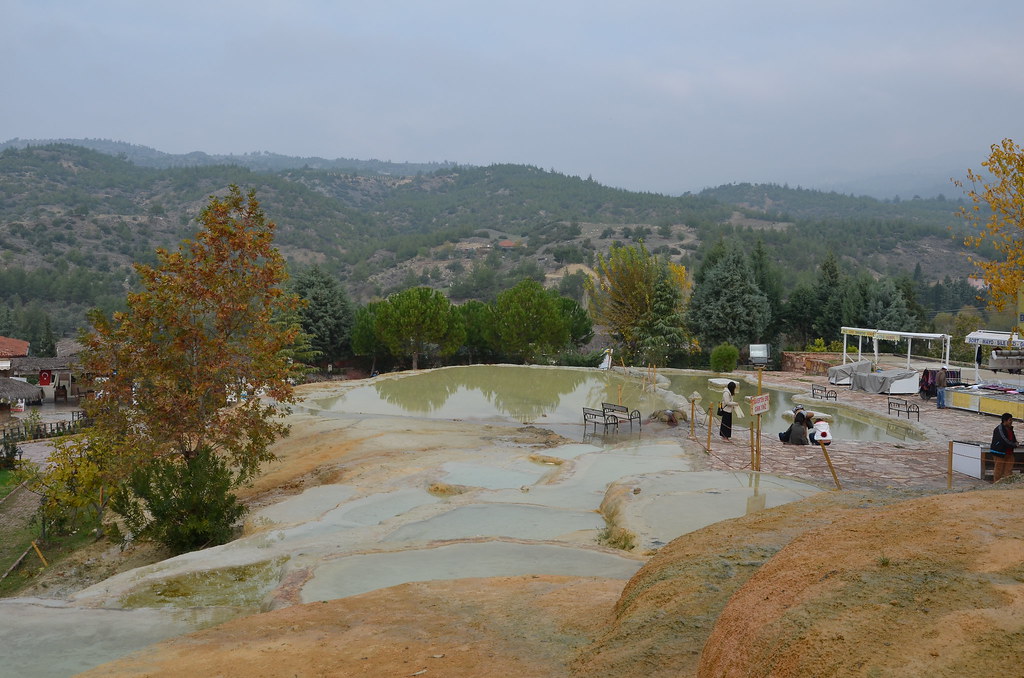
Karahayıt (Red Water)
Pamukkale’s crimson sibling: a spa town known as “Red Water,” where iron-rich thermal water stains the travertines orange and red.
Details →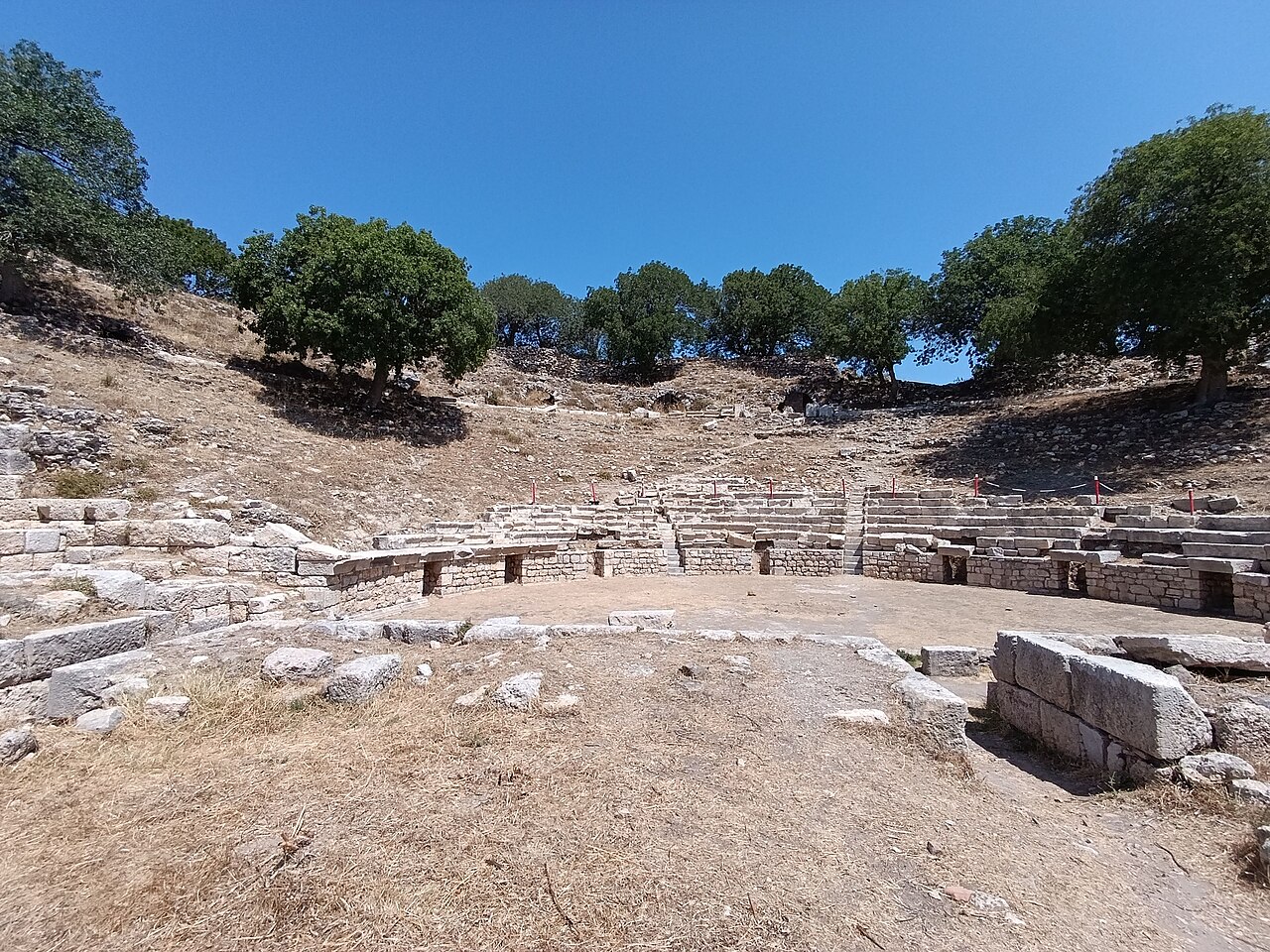
Teos & Sığacık
The ancient world’s largest Temple of Dionysos and home of history’s first actors’ guild — beside the castle village of Turkey’s first Cittaslow.
Details →Realistic routes: at this distance, the only answer is to stay
- The Lycia trip (at least two nights, ideally three): drive down from Bodrum to the Fethiye/Kalkan line and continue from there. For example: day 1, the transfer to Fethiye; day 2, Xanthos + Letoon + Patara; day 3, Kaputaş and the Kalkan area. Xanthos and Letoon are close together and together take more than half a day.
- The Patara day: the assembly building, the lighthouse and the beach all sit within the same dune; the excavation site in the morning and the beach in the afternoon is a sensible order. In nesting season the beach is closed at night and rules apply on the sand.
- The Pamukkale extension (one night): if you are already staying a night for Pamukkale, put Laodikeia and Karahayıt on the second day of the same trip. No separate journey needed.
- Teos & Sığacık (one night, or added to an Efes trip): plan this as the İzmir direction, not Lycia; combine it with the Efes–Şirince line.
- Do not: try to reach Patara or Kaputaş from Bodrum as a day trip. One way runs to 4–5 hours; the whole day disappears behind the wheel.
Short notes
- UNESCO accuracy (the most critical fact in this ring): inscribed World Heritage: Xanthos–Letoon (1988). On the Tentative List, i.e. candidates: Patara (2009) and Laodikeia (2013). Sources that call those two “UNESCO World Heritage Sites” are wrong.
- Fees: Xanthos–Letoon, Patara, Laodikeia and Teos charge admission. Kaputaş Beach and Karahayıt are free. Current prices and hours change; check before you set off.
- Loggerhead turtles: Patara is a nesting beach; night access is prohibited in season and rules such as the ban on driving stakes into the sand apply. Follow the signs.
- Shade: at Xanthos, Patara and Laodikeia there is almost none. Go early in the morning or late in the afternoon.
What lies further out?
A few places fall outside the arc but may still tempt you: Kaklık Cave (310 km), Foça (320 km) and the Kekova sunken city (350 km). They are beyond the 300 km band and so are not in this article’s list — but if you are spending several nights in the region, they can be worked in.
The end of the series
Over seven articles we started at the hotel door and opened out to a 300-kilometre arc: from the peninsula to Caria, from Ionia to Lycia. If there is one lesson, it is this: as the distance grows, it is not the number of sights that increases but the time you have to give them. The near rings save a day; the far rings require you to fit a separate holiday inside your holiday.
To see every destination sorted by distance, visit our places to visit page. And if you would like help planning a route, our reception is always at your side.
Sources
- UNESCO Dünya Mirası Merkezi — Xanthos-Letoon (ref. 484, 1988)
- UNESCO Dünya Mirası Merkezi — Ancient Cities of Lycian Civilization (Geçici Liste, ref. 5408, 2009; Patara dahil)
- UNESCO Dünya Mirası Merkezi — Ancient City of Laodikeia (Geçici Liste, ref. 5823, 2013)
- Xanthos & Letoon — Xanthos nekropolü — Buğra Kaan Ersoy (CC BY-SA 4.0) (CC BY-SA 4.0)
- Patara (Antik Kent & Plaj) — Patara — Likya Birliği Meclis Binası — Dosseman (CC BY-SA 4.0) (CC BY-SA 4.0)
- Kaputaş Plajı — Kaputaş Plajı — Liselotte Diehl (CC BY-SA 4.0) (CC BY-SA 4.0)
- Laodikeia Antik Kenti — Laodikeia — Suriye Caddesi — A.Savin (Free Art License) (Free Art License (FAL))
- Karahayıt (Kırmızı Su) — Görsel: “The mud pools of Karahayit near Denizli” — shankar s. (Flickr, CC BY 2.0) (CC BY 2.0)
- Teos & Sığacık — Teos tiyatrosu — Isabeau (CC BY-SA 4.0) (CC BY-SA 4.0)
 Artemis Bodrum