Artemis Bodrum · Jul 16, 2026 · 10 min read · Travel Guide
The first article in this series began with one man: Mausolos. The Carian satrap who made Halikarnassos his capital and left himself the Mausoleum as a tomb. This fourth article ends with his sister — and where it ends brings the story right back to Bodrum.
Widening the circle to 150 kilometres brings five new stops onto the list. The Milas axis of the third article was the heart of Caria; this ring crosses the border. To the north it is no longer Caria but Ionia: grid-planned Priene, the oracle at Didyma and a national park at the end of ancient Mount Mykale. To the east lies something else entirely: a “Cittaslow” town at the head of Gökova, on the bank of an ice-clear river.
This ring is the outer edge of what a day trip can bear. A hundred and fifty kilometres can mean two and a half hours in Bodrum traffic. But two of these places — one a queen, one a river — are more than worth the drive.
Queen Ada: where the story returns to Bodrum
Built on a slope commanding the plain in the district of Karpuzlu in Aydın, Alinda is a Carian city directly bound up with Bodrum’s history and yet almost unknown. Its heroine is Queen Ada.
Ada was the sister of Maussollos, the man who built the Mausoleum at Halikarnassos. When her brother Pixodaros deposed her, she withdrew to Alinda and lived here in a kind of exile. When Alexander the Great came to Caria in 334 BC, Ada handed him the keys of the city; Alexander formally declared her his “mother”. And with Alexander’s backing, Ada returned to Halikarnassos as satrap.
Consider what that means. While Alexander’s siege was raging in front of the Myndos Gate we described in the first article, the person who handed him the key to the city was a woman living in exile on this hill. In other words, the thread of Bodrum’s ancient government ran, for a time, precisely through Alinda. You walk 1.3 kilometres from your hotel to the Mausoleum; the exile city of its owner’s sister lies 110 kilometres away and is almost entirely empty.
The city’s most striking building today is the three-storey market hall set into the slope. Entry is free.
Didyma: the temple that was never finished
The ancient name of Didim is Didyma. It was one of the foremost sanctuaries on the Ionian coast and, after Delphi, the most famous oracle of the ancient world.
The colossal Temple of Apollo here was one of the most ambitious architectural projects of the Hellenistic age. Its construction ran for hundreds of years and was never fully completed — and that unfinishedness makes it more impressive still today. Remember Euromos from the third article: there too the temple was left half-done, with its unfluted columns. Unfinished monuments are no coincidence on this coast; the ancient world knew about cost overruns as well.
The temple was once surrounded by more than 120 giant Ionic columns; the height of those still standing and the fine work on the column bases show the scale the building was reaching for. The sacred spring and laurel trees in the inner court (the adyton) were where the priests delivered their prophecies. There is an admission charge.
Priene: the textbook of town planning
Priene, commanding the plain of the Büyük Menderes from terraces on the steep slope of Mount Mykale (Samsun Dağı), is the best-preserved example of a “planned city” in the ancient world.
The city was built on the grid plan associated with the architect Hippodamus: streets crossing at right angles, equal insulae, and public buildings whose places were all fixed in advance. That order shows the origin of modern town planning and makes Priene priceless to archaeologists. At the city’s heart, among the pines, rise the elegant Ionic columns of the Temple of Athena Polias; we know from a surviving votive inscription that Alexander the Great himself paid for it. On the slope stands a superbly preserved theatre.
UNESCO: a third time, with the same care
Priene was proposed for UNESCO’s Tentative List in 2018. This is the third time in the series we are saying the same thing — we said it for Bodrum Castle (2016) and for Beçin (2012): a tentative list is a list of candidates; it is not a declaration of World Heritage. Priene is not a UNESCO World Heritage Site. All three are candidates, and that is good enough to need no embellishment.
Paid archaeological site; the Museum Pass is valid. The climb is steep — wear solid shoes.
Akyaka: after a sea that never stays still, a river that never changes
Now leave the north and go east, to the very head of the Gulf of Gökova. Built where the pine-clad mountains meet the sea, Akyaka is a member of the international “Cittaslow” network and guards that identity scrupulously.
What defines the town are the traditional houses with carved wooden bay windows, revived by the architect Nail Çakırhan. This distinctive architecture gives Akyaka a character no other coastal town has — this is not “another holiday town” but a deliberate architectural stance.
At the heart of the town runs the Azmak river, fed by underground springs. On a boat trip along this very short but extraordinarily clear waterway, the plants on the bottom, the fish and the sweetgum trees on the bank are visible with almost aquarium clarity. The water temperature stays virtually constant summer and winter.
And here the series’ motif turns inside out. In the second article we described Bargylia: the sea retreated and the city was stranded. At Iasos the harbour sank. Bafa was a gulf and became a lake. On this coast no water stays put. The Azmak is the exact opposite: it comes out of a spring, runs for a few kilometres and never changes its temperature. After a whole series about nothing staying the same, the one water that does. Entry is free.
The Dilek Peninsula: the other end of Priene’s mountain
The ring’s last and farthest stop: south of Kuşadası, starting at Güzelçamlı and reaching out into the Aegean, the Dilek Peninsula is protected as a national park together with the Büyük Menderes Delta.
And here there is a lovely connection: the mountain along the spine of the peninsula is called Samsun Dağı — known in antiquity as Mykale. That is to say, the very mountain on whose terraces Priene was built. Priene is at 120 kilometres, the national park at 150; the two are opposite ends of the same ridge. On one, a temple paid for by Alexander; on the other, pebble coves and wildlife.
The mountain’s pine and maquis run steeply down to a succession of pebbled coves: the clear, ice-cold water of İçmeler, Aydınlık, Kavaklıburun and Karasu is among the cleanest sea in the region. The forest road between the coves is ideal for cycling and walking. There is also the Cave of Zeus.
But the park’s real value is the life it holds: wild boar, jackals, badgers and a rich variety of birds live in these mountains, while the Büyük Menderes Delta section is a haunt of flamingos and migratory birds.
And one final link: the river that created Lake Bafa was also the Büyük Menderes. The same river built the delta of the farthest stop in this series. Paid (national park entry); 150 km from the hotel, around 140 minutes by car.
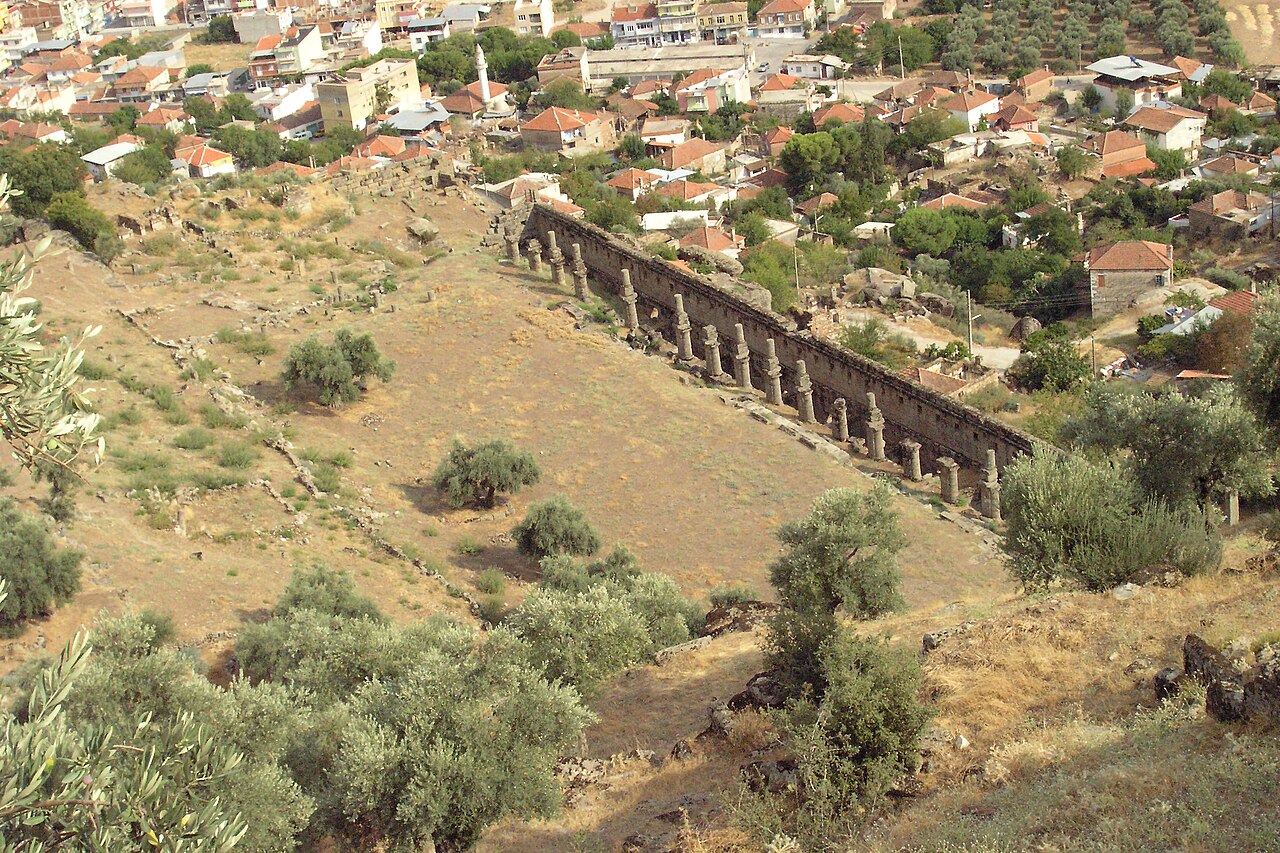
Alinda Ancient City
The city where Queen Ada of Caria took refuge — the woman who adopted Alexander the Great and regained Halicarnassus — and its three-storey market hall.
Details →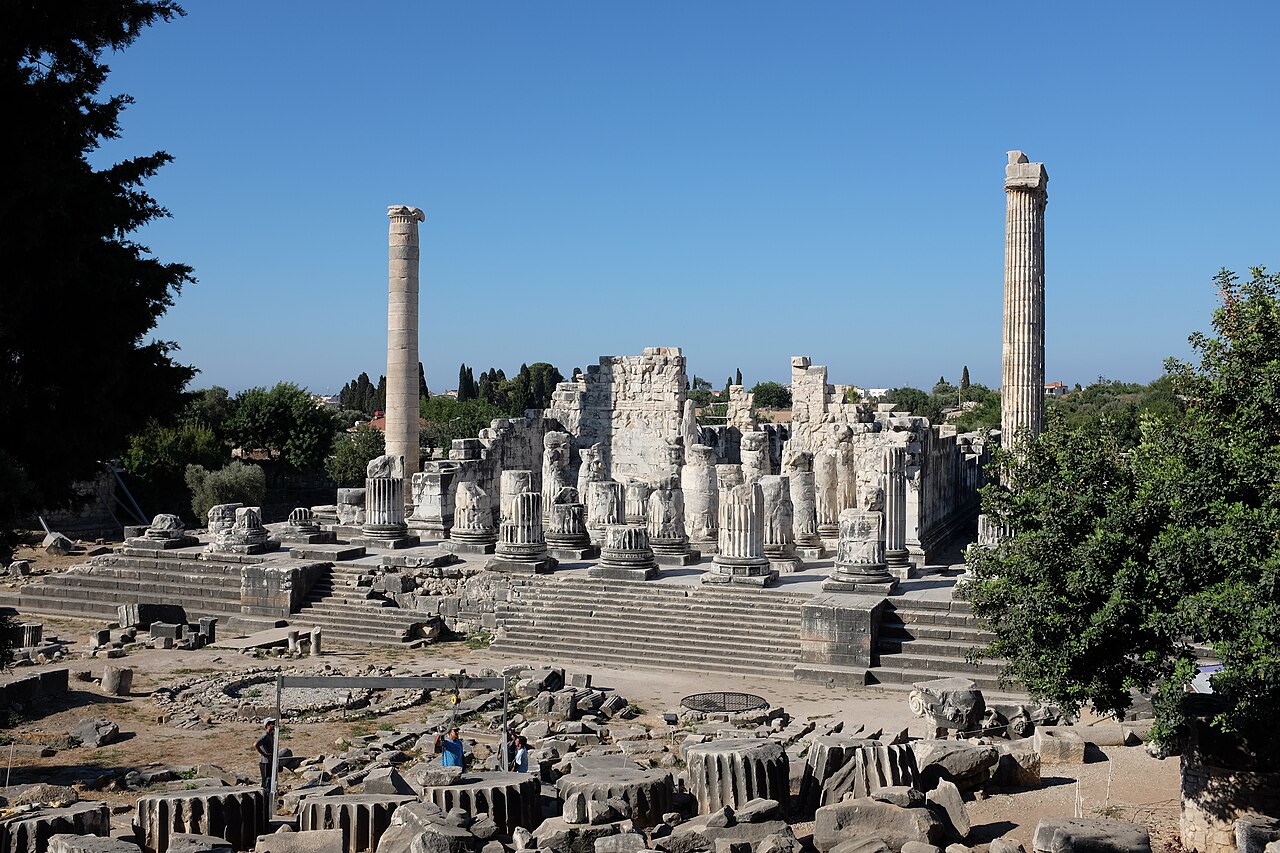
Didyma — Temple of Apollo (Didim)
In Didim, Aydın — the colossal Temple of Apollo, the most famous oracle of the ancient world after Delphi. A sanctuary that awes with its unfinished grandeur.
Details →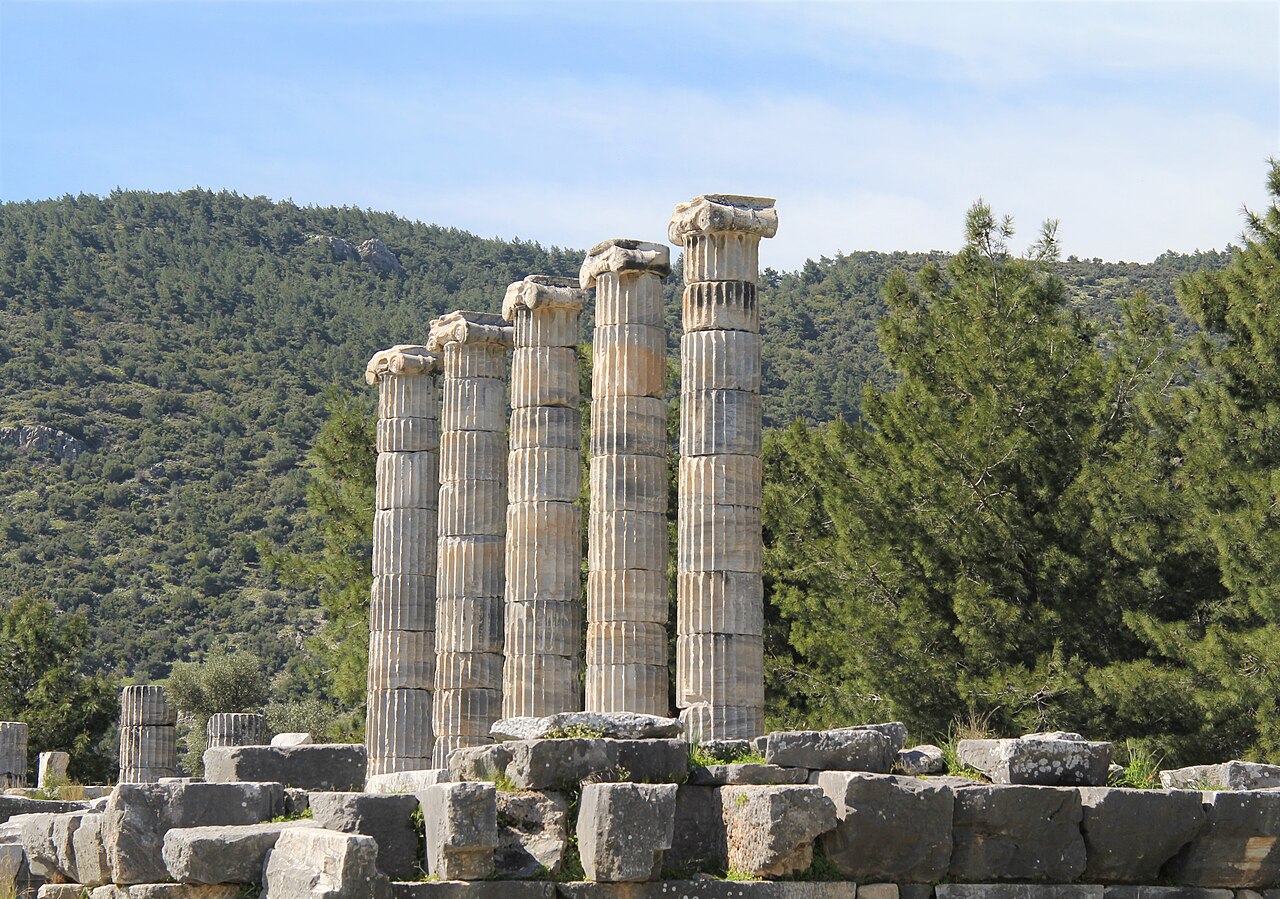
Priene Ancient City
Terraced at the foot of Mount Mykale — the textbook example of ancient urban planning, its Athena Temple columns rising among the pines.
Details →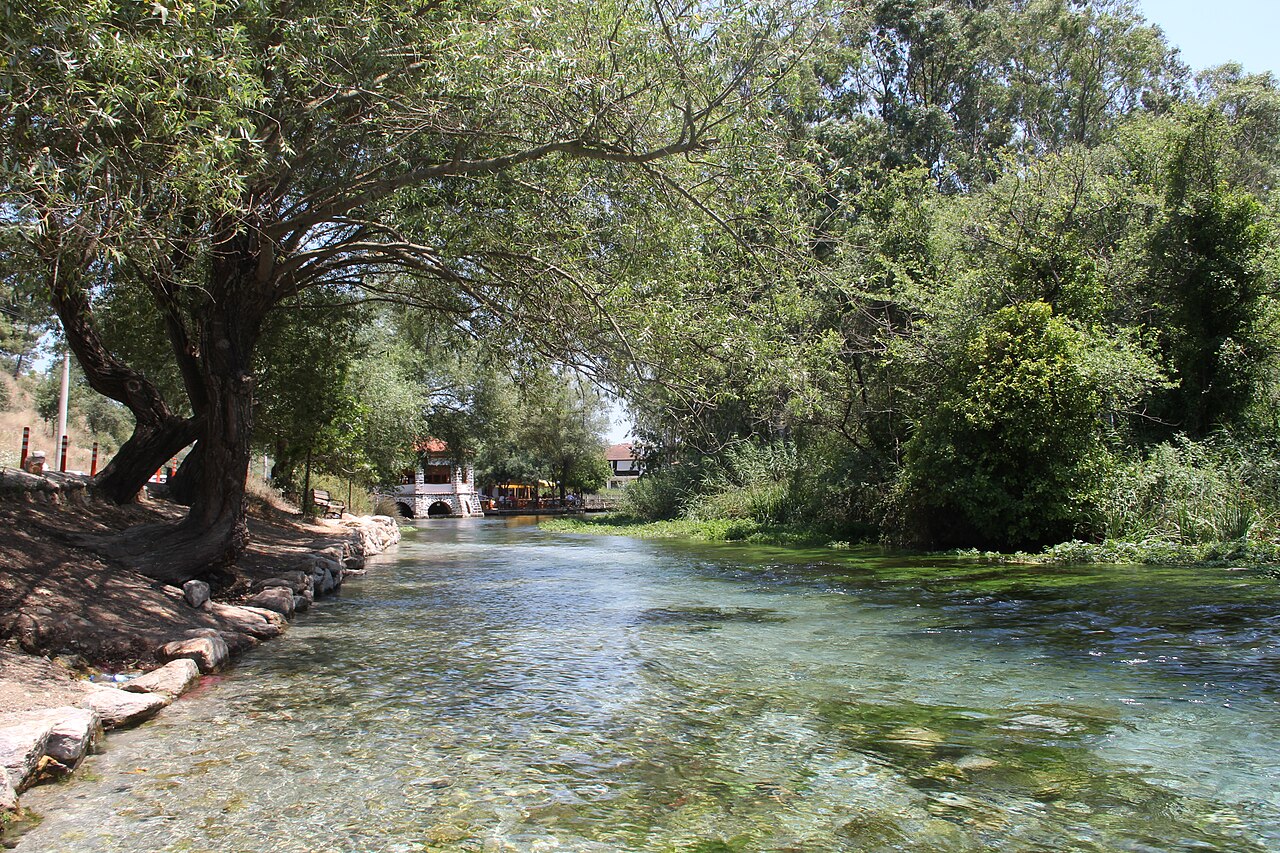
Akyaka & Azmak River
At the head of the Gulf of Gökova, a Cittaslow “slow city” with its own timber architecture and the ice-clear Azmak River.
Details →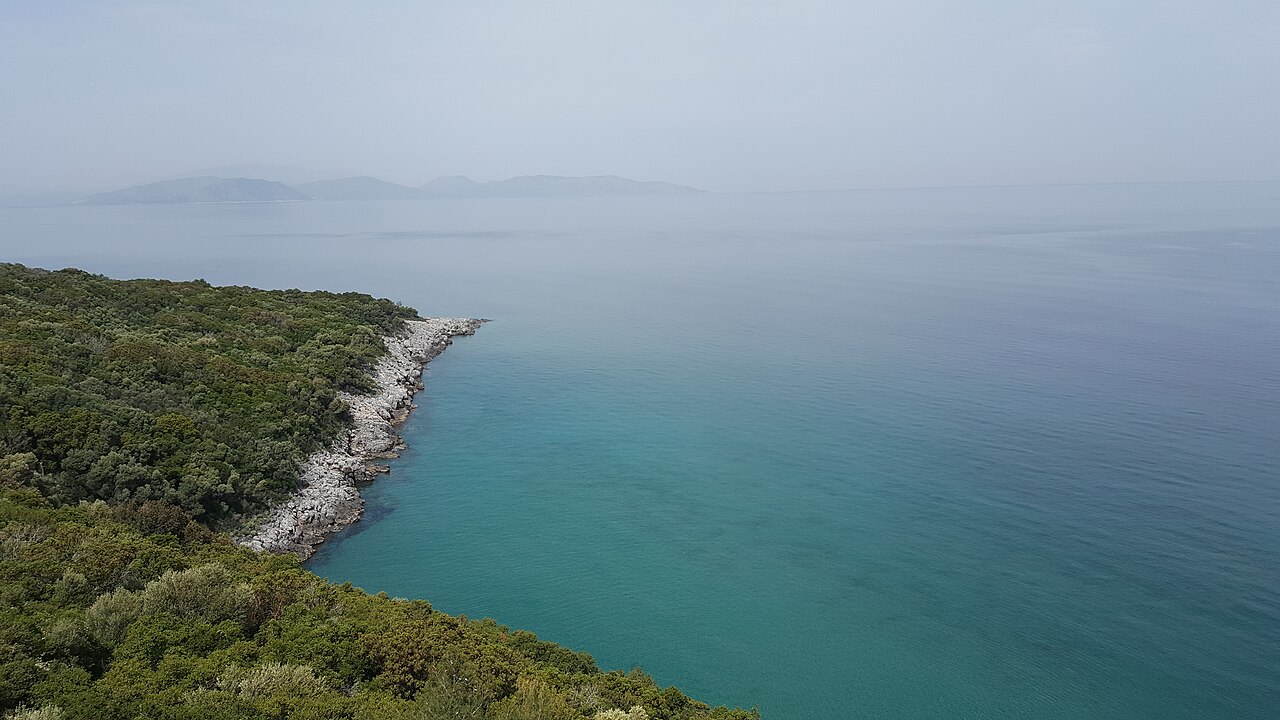
Dilek Peninsula National Park
South of Kuşadası — a protected national park where pine forest drops to pebble coves, with clear water, wildlife and the Zeus Cave.
Details →How to plan this ring
- Separate north from east. Priene–Didyma–Dilek are north; Akyaka is east. Never put them on the same day.
- Priene and Didyma together. Both are in the same corridor. Add the third (Miletus) in one day and you have done the Three Ancient Cities route from the third article.
- Go to Alinda on its own. Karpuzlu lies in a different direction and you are going for the silence anyway. Take the Mausoleum’s story with you; visiting knowing about the queen’s exile is another thing entirely.
- Akyaka is worth a night. 110 km and 95 minutes; the Azmak boat trip in the morning, the wooden houses in the afternoon, the evening in town.
- The Dilek Peninsula is a full day. A 140-minute drive plus coves plus forest. Set off early; on summer weekends the park can be busy with an entry quota.
- Admission: Alinda and Akyaka are free. Didyma, Priene (Museum Pass valid) and Dilek National Park all charge.
As the ring closes
Four articles, 37 stops, 150 kilometres. And if you have been paying attention, the story has come back to where it started: the Mausoleum of Mausolos is 1.3 kilometres from the hotel; the exile city of his sister Ada is 110. Between the two lie Lelegian walls, sunken harbours, gulfs turned into lakes, half-finished temples and a sand you must not touch.
The series does not end here — the circle widens to 250 and 300 kilometres, and those rings hold something you have not seen on this list at all: genuine UNESCO World Heritage Sites. Not one of the 37 stops in these four articles is World Heritage; three of them (Bodrum Castle, Beçin, Priene) are on the tentative list. The definitive ones lie further out.
But do not forget the nearest of all: walk six minutes out of the hotel and there is a museum. Before you drive 150 kilometres, try 400 metres.
The previous rings: 32 stops, three articles
The series is cumulative — the 150-kilometre ring contains everything that came before. We are not retelling it here; it is covered in detail in the first, second and third articles. A quick reminder:
- Zeki Müren Art Museum — 0.4 km from the hotel
- Bodrum Marina — 0.6 km from the hotel
- Bodrum Castle — 0.7 km from the hotel
- Ancient Theatre of Bodrum — 1.2 km from the hotel
- Mausoleum at Halicarnassus — 1.3 km from the hotel
- Myndos Gate — 1.5 km from the hotel
- Bodrum Windmills — 1.5 km from the hotel
- Gümbet Beach — 2.5 km from the hotel
- Ancient City of Pedasa — 5 km from the hotel
- Karaada (Black Island) — 6 km from the hotel
- Torba Bay — 8 km from the hotel
- Aquarium Bay (Bitez) — 9 km from the hotel
- The Leleg Way — 10 km from the hotel
- Camel Beach (Kargı Bay) — 15 km from the hotel
- Cennet Cove (Göltürkbükü) — 18 km from the hotel
- Dilek Cave (Bağla) — 18 km from the hotel
- Yalıkavak & Sandıma Village — 18 km from the hotel
- Turgutreis — Sunset — 20 km from the hotel
- Kadıkalesi — 22 km from the hotel
- Orak Island — 22 km from the hotel
- Ancient Myndos (Gümüşlük) — 24 km from the hotel
- Aspat (Strobilos) — 25 km from the hotel
- Gümüşlük & Rabbit Island — 25 km from the hotel
- Mazı & Kisebükü — 45 km from the hotel
- Bargylia & the Boğaziçi Lagoon — 50 km from the hotel
- Iasos Ancient City — 55 km from the hotel
- Euromos & Temple of Zeus — 65 km from the hotel
- Beçin Castle — 70 km from the hotel
- Labraunda — 85 km from the hotel
- Lake Bafa & Herakleia — 95 km from the hotel
- Sedir Island (Cleopatra Beach) — 100 km from the hotel
- Priene · Miletus · Didyma (Three Ancient Cities) — 100 km from the hotel
 Artemis Bodrum