Artemis Bodrum · Jul 16, 2026 · 6 min read · Travel Guide
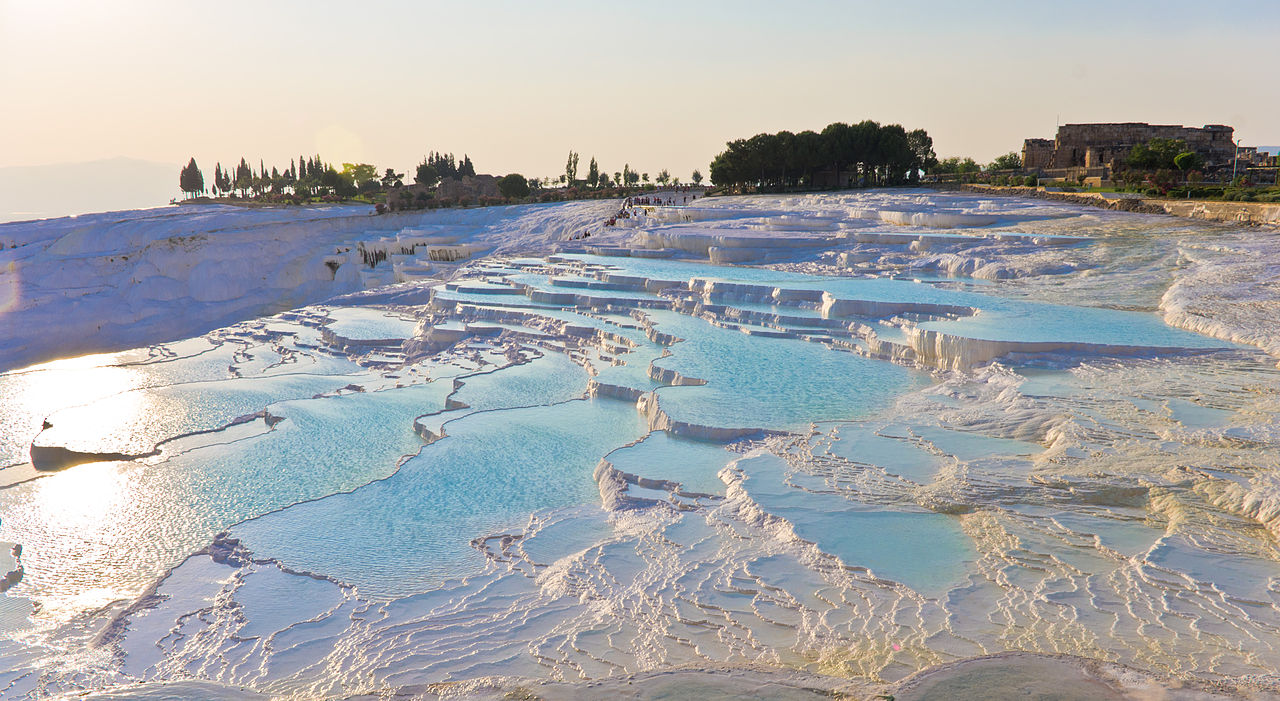
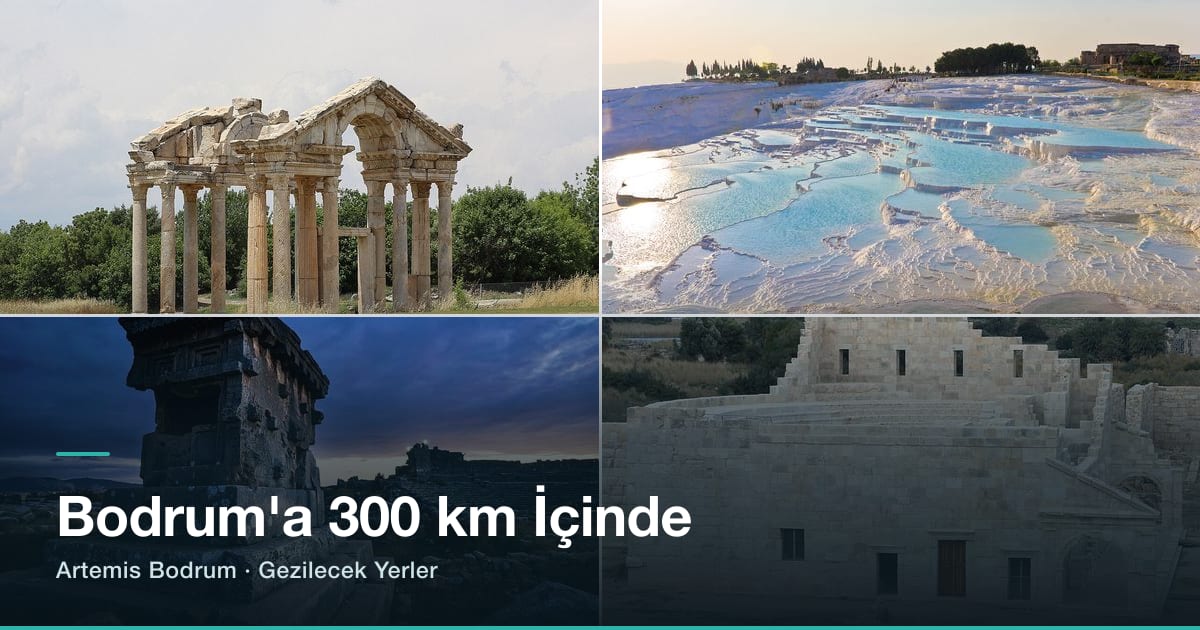
As you approach the Denizli plain, a brilliant white stain appears on the hillside ahead. From a distance you take it for snow; closer up, you realise it isn't snow at all but limestone, laid down drop by drop over thousands of years. This is Pamukkale — and directly above it, the ancient city of Hierapolis, founded beside a phenomenon its people considered sacred. Together they have been a UNESCO World Heritage Site since 1988, and one of the rare places inscribed for both natural and cultural value.
How the Travertines Form
Pamukkale's secret is geological. Thermal water rises to the surface supersaturated with calcium carbonate. The moment it meets the air, carbon dioxide degasses out of it; the calcium carbonate left behind precipitates and crystallises into the white stone we call travertine. Every terrace you see is, quite literally, a trace left by water exhaling.
The numbers are striking: the travertine formation is roughly 2,700 metres long, 600 metres wide and 160 metres high. There are 17 hot springs in the area, and water temperatures range from 35 °C to 100 °C depending on the source.
Hierapolis: The Sacred City
Its name already means "Sacred City". Hierapolis was founded in the 3rd century BC by the Seleucids under Antiochus I, and later received formal city status under Eumenes of Pergamon. But this was never empty ground: the settlement rose on an older Phrygian cult centre dedicated to the mother goddess Cybele. The healing waters turned the city into something like an ancient health resort — people came here to be cured, and some died here. Which is why its necropolis is extraordinarily large.
A City of Earthquakes
The history of Hierapolis is a history of destruction and rebirth. In AD 17, under Tiberius, a major earthquake levelled the city. An even more severe quake in AD 60 left it entirely in ruins. Most of the magnificent buildings you see today are the product of the rebuilding that followed that disaster. A 7th-century tremor finally ended the city's life.
What to See
The Theatre
The most impressive structure at Hierapolis is the theatre, built under Hadrian after the earthquake of AD 60. It has 50 rows of seats divided into seven sections and a capacity of roughly 15,000. Septimius Severus renovated it in the early 3rd century, and the reliefs on the stage building are remarkably well preserved. From the upper tiers, the theatre and the plain beyond fall into the same frame.
The Necropolis
Spreading over more than 2 kilometres and holding some 1,200 tombs, this is one of Anatolia's largest necropolises. Tumuli, sarcophagi and house-type tombs stand side by side, spanning the Hellenistic period to early Christian times. This is where the city of those who came seeking a cure — and did not find one — begins.
The Ploutonion (Pluto's Gate)
One of antiquity's eeriest cult sites. Carbon dioxide rising from underground forms a lethal layer of gas in front of the cave, and animals led into it died. The castrated priests of Cybele would descend and walk out alive, staging a demonstration of divine protection. We know the explanation now: the gas pools at ground level, and a standing person's head stays above the layer. The area is fenced for safety today and viewed from outside.
The Martyrium of St Philip
On the hill northeast of the city stands this monumental octagonal building of the 5th century. The Apostle Philip is believed to have been martyred here, and the structure made Hierapolis an important pilgrimage destination in early Christianity. The climb takes some breath, but the view repays it.
The Frontinus Gate and the Colonnaded Street
Built by the proconsul Julius Frontinus in AD 84–86, this monumental triple-arched gate marks the northern entrance to the city. The main colonnaded street running from it is about 1,500 metres long and 13.5 metres wide — the spine of Hierapolis.
The Antique Pool (Cleopatra's Pool)
A pool with few equals anywhere: you swim among ancient marble columns toppled by earthquakes. The water sits between 36 °C and 57 °C, with a pH of 5.8, and contains bicarbonate, sulphate and radon compounds. There is a separate admission charge, and it gets busy at peak hours.
The Hierapolis Archaeology Museum
Housed since 1984 inside the city's great bath complex, it displays sarcophagi, statues, coins and finds from neighbouring ancient cities. Being inside the site, it slots naturally into your visit.
Practical Notes — Protecting the Travertines
Pamukkale was nearly loved to death. Hotels were once built directly on the travertines and the water was diverted into their pools. After inscription on the World Heritage List, those hotels were demolished and conservation measures came into force. The rules that matter today:
- You may walk on the travertines barefoot only. The shoe ban isn't about aesthetics — soles abrade the surface of the stone. Bring a bag to carry your shoes.
- Water is rotated deliberately. Sections of the terraces are rested, so you may find some pools dry. That is not a fault; it is part of the conservation programme.
- The surface is slippery and hard in places. Walk slowly.
- Time to allow: Budget 3–4 hours for the travertines, Hierapolis and the museum. Ninety minutes covers the terraces alone, but skipping the city would be a real loss.
- Best time of day: Early morning is ideal for avoiding crowds. On the other hand, sunset is the legendary moment, when the travertines turn pink and orange. You may have to choose — or arrive early and stay until evening.
- Admission: This is a paid site. Confirm current prices, opening hours and which gate is open from official sources before you go; there are separate northern and southern entrances.
Getting There from Bodrum
Pamukkale is about 200 km from Artemis Bodrum, roughly 3 hours by car, via Milas and Yatağan towards Denizli. A day trip is feasible but full — an early start is essential. Remember that this place welcomes more than two million visitors a year: the early riser wins.
Our tip: If you want the sunset, plan an overnight stay or a late return. See our Pamukkale & Hierapolis destination page for details.
Nearby Stops
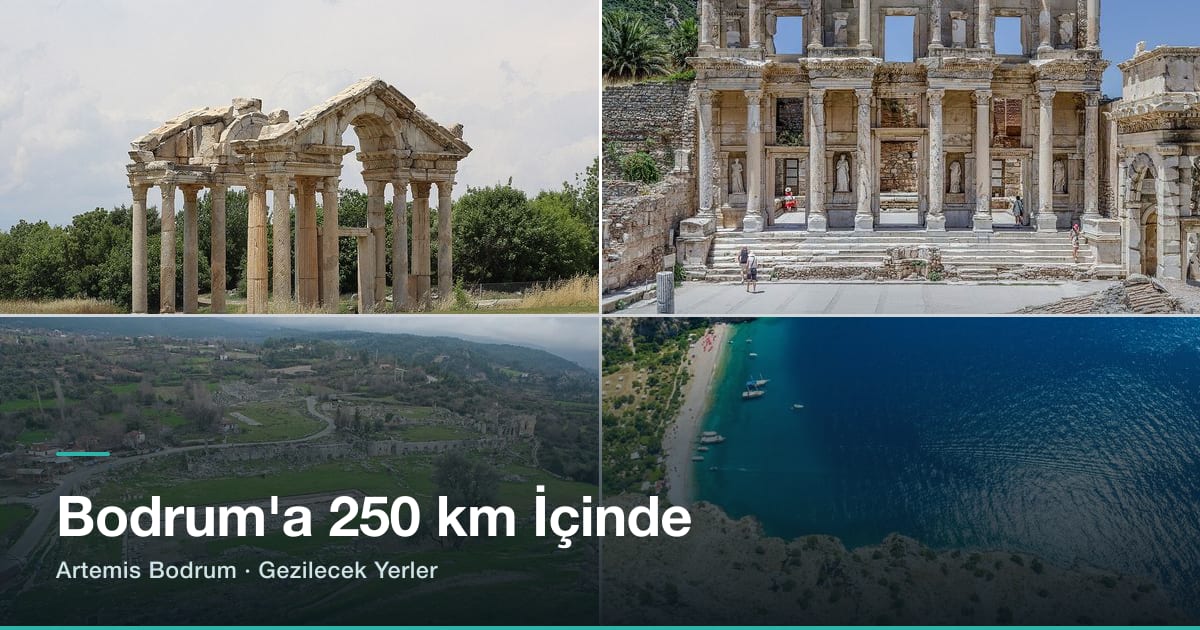
Aphrodisias lies on the same route and makes a natural second UNESCO stop. Fitting two World Heritage Sites into one weekend is a favourite plan among travellers setting out from Bodrum. The ancient city of Laodicea, near Denizli, sits in the same area.
Seeing Pamukkale in photographs is one thing; stepping barefoot into that warm water is another. This is one of those rare places where nature and history lie directly on top of one another — and it is a day's reach from Artemis Bodrum. Ask our reception team when you plan your route.
 Artemis Bodrum