Artemis Bodrum · Jul 16, 2026 · 8 min read · Travel Guide
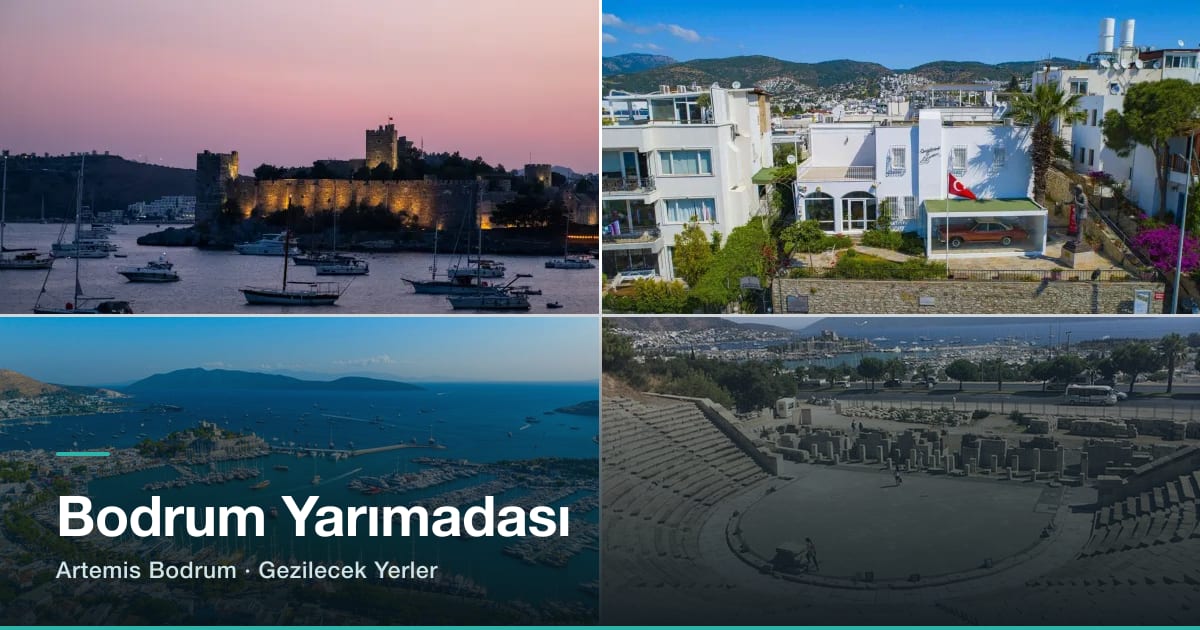
The first question our guests ask us is almost always the same: “Do we need to rent a car?” The honest answer, at least for the first few days, is usually no. The moment you step out of Artemis Bodrum you are standing in the middle of the peninsula’s densest layer of history and sea. Draw a radius of three kilometres around the hotel: inside it you will find one of the Seven Wonders of the Ancient World, a six-hundred-year-old crusader castle and a theatre from the 4th century BC.
This article covers the 23 destinations that lie less than 25 kilometres from the hotel — in other words, the whole Bodrum peninsula. Everything you can reach on foot or with a drive of half an hour at most. It is the first article in a series that widens ring by ring according to distance; but let us say it straight away: most of our guests spend their entire holiday inside this first ring and nobody feels they have missed out.
Step outside: Halikarnassos within walking distance
Bodrum’s modern name comes from a knights’ castle, but the city’s real name is far older: Halikarnassos. In the 4th century BC the Carian satrap Mausolos made it the capital of the region, and when he died his wife and sister Artemisia built him a tomb so extraordinary that every language on earth now calls monumental tombs “mausoleums” because of him.
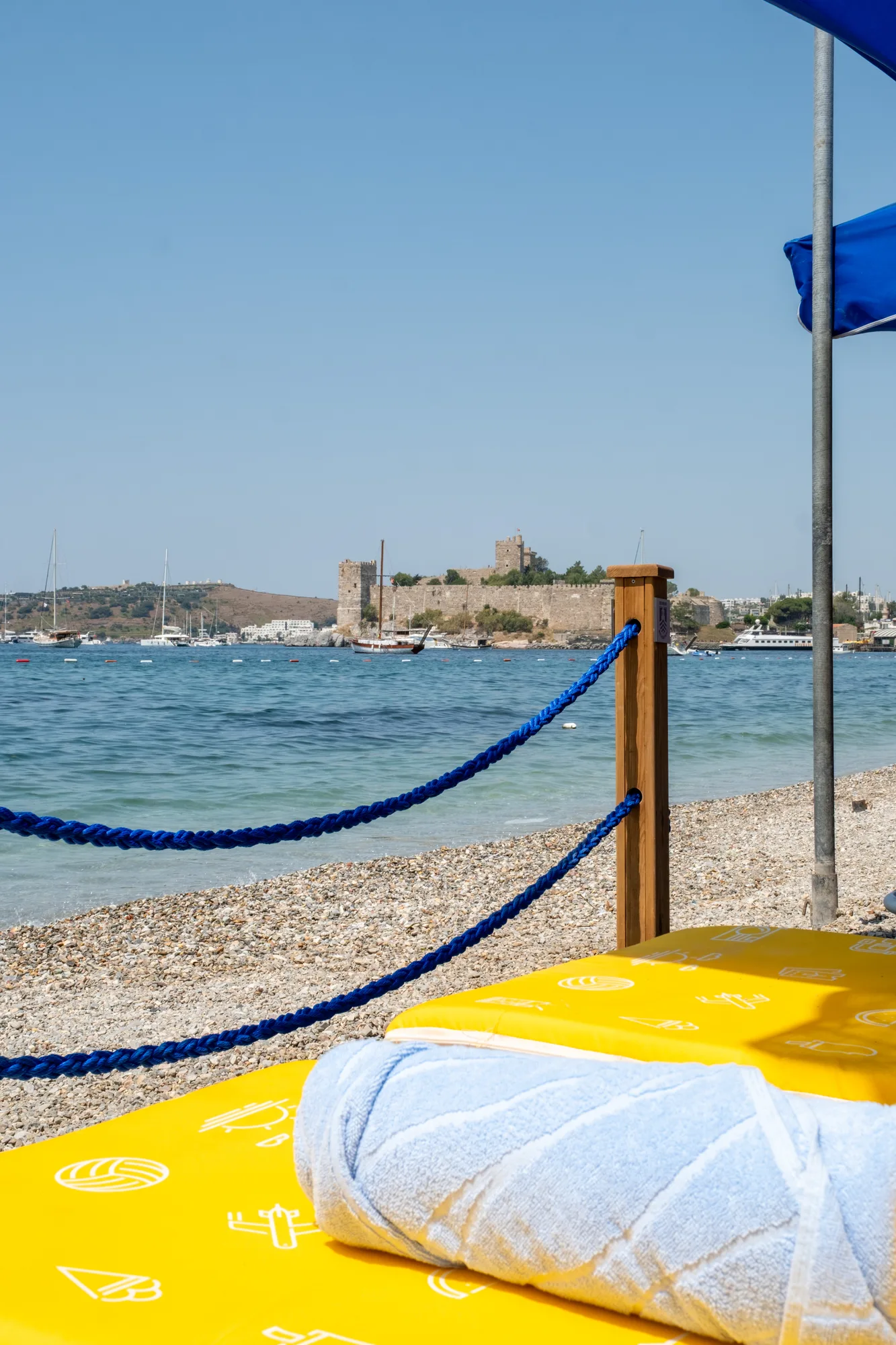
Very little of the Mausoleum survives, and the reason is the second stop within walking distance: when the Knights of St John began building the Castle of St Peter in 1402, they used the dressed stone and marble of the by-then ruined Mausoleum. Pieces of one of the Seven Wonders are therefore still sitting in the castle walls. Since 1962 the castle has housed the world-renowned Museum of Underwater Archaeology, and its towers are still named after the nations of the knights who paid for them: the English, French, Italian and German towers.
Let us be precise about UNESCO
One common mistake needs correcting here: Bodrum Castle is not a UNESCO World Heritage Site. In 2016 Türkiye proposed it for UNESCO’s Tentative List — the list of candidates. A tentative listing is a country’s record of “I may nominate this in the future”; it does not mean inscription on the definitive list. The Mausoleum of Halikarnassos is not a UNESCO site either: it is one of the Seven Wonders of the Ancient World, an entirely different and far older list. The distinction matters, because a great many guides online confuse the two.
The Myndos Gate, at the western exit of town, is the least known but perhaps the most dramatic stop within walking distance. When Alexander the Great besieged Halikarnassos in 334 BC, the bloodiest fighting of the siege took place precisely in front of this gate; the wide defensive ditch dug before it proved a lethal obstacle for the attackers. Its two towers still stand today, and entry is free.
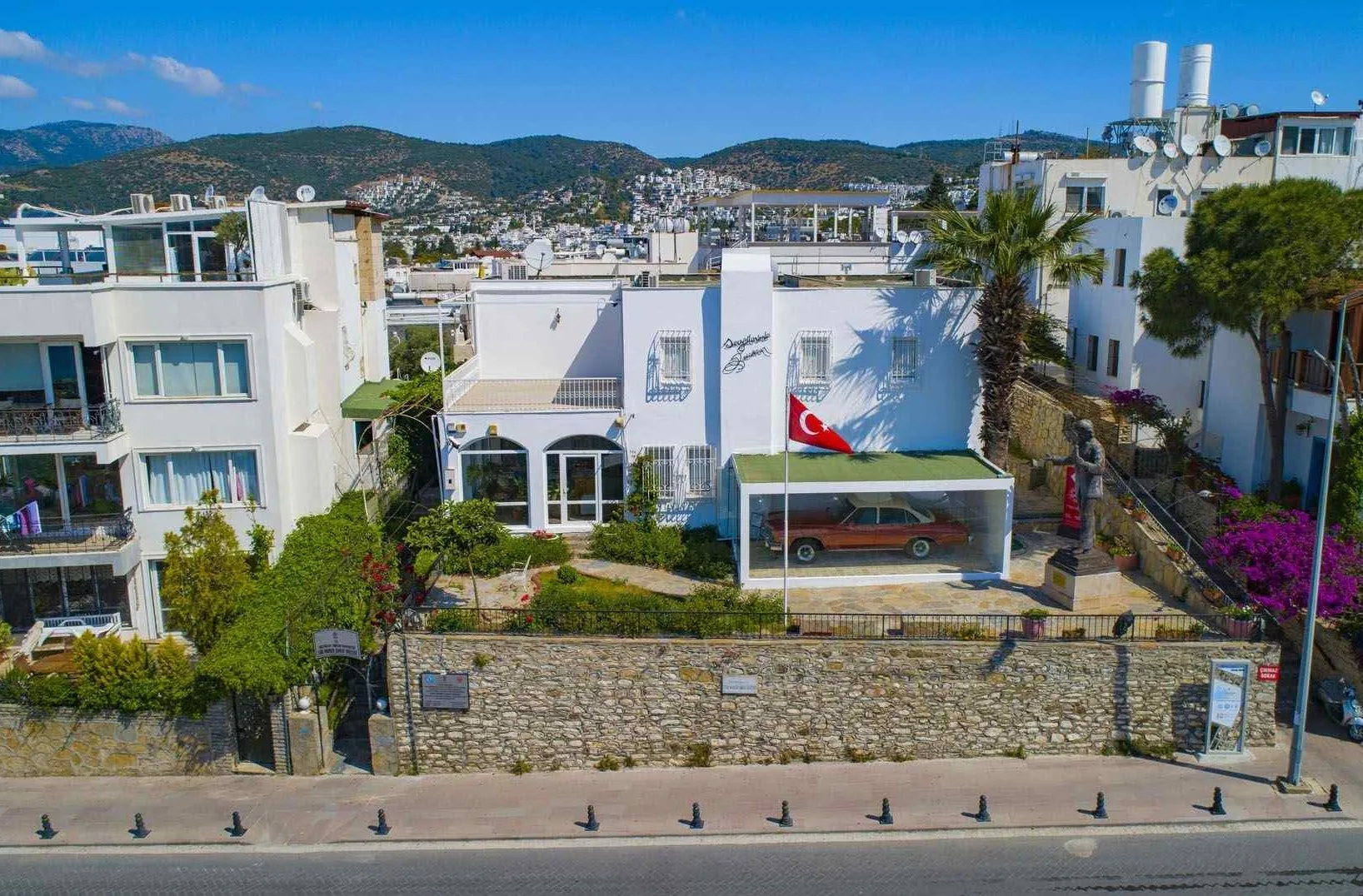
Zeki Müren Art Museum
The Bodrum home where Zeki Müren — the legendary "Sun of Art" of Turkish classical music — spent his final years; now a museum of his stage costumes, paintings and car.
Details →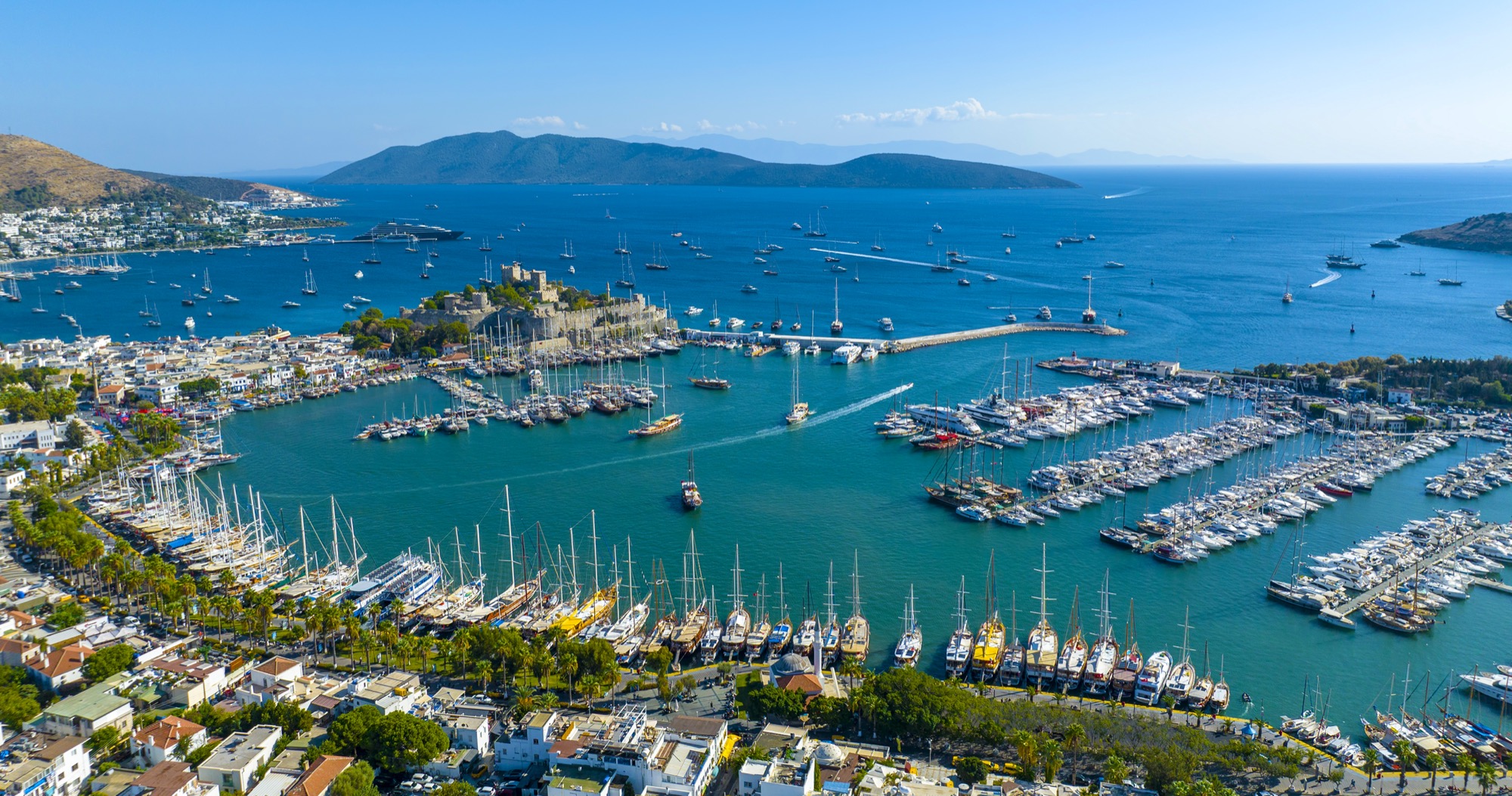
Bodrum Marina
The harbour where yachts and gulets line the castle bay — departure point for 'blue voyage' cruises and, with its waterfront cafés and restaurants, the heart of Bodrum.
Details →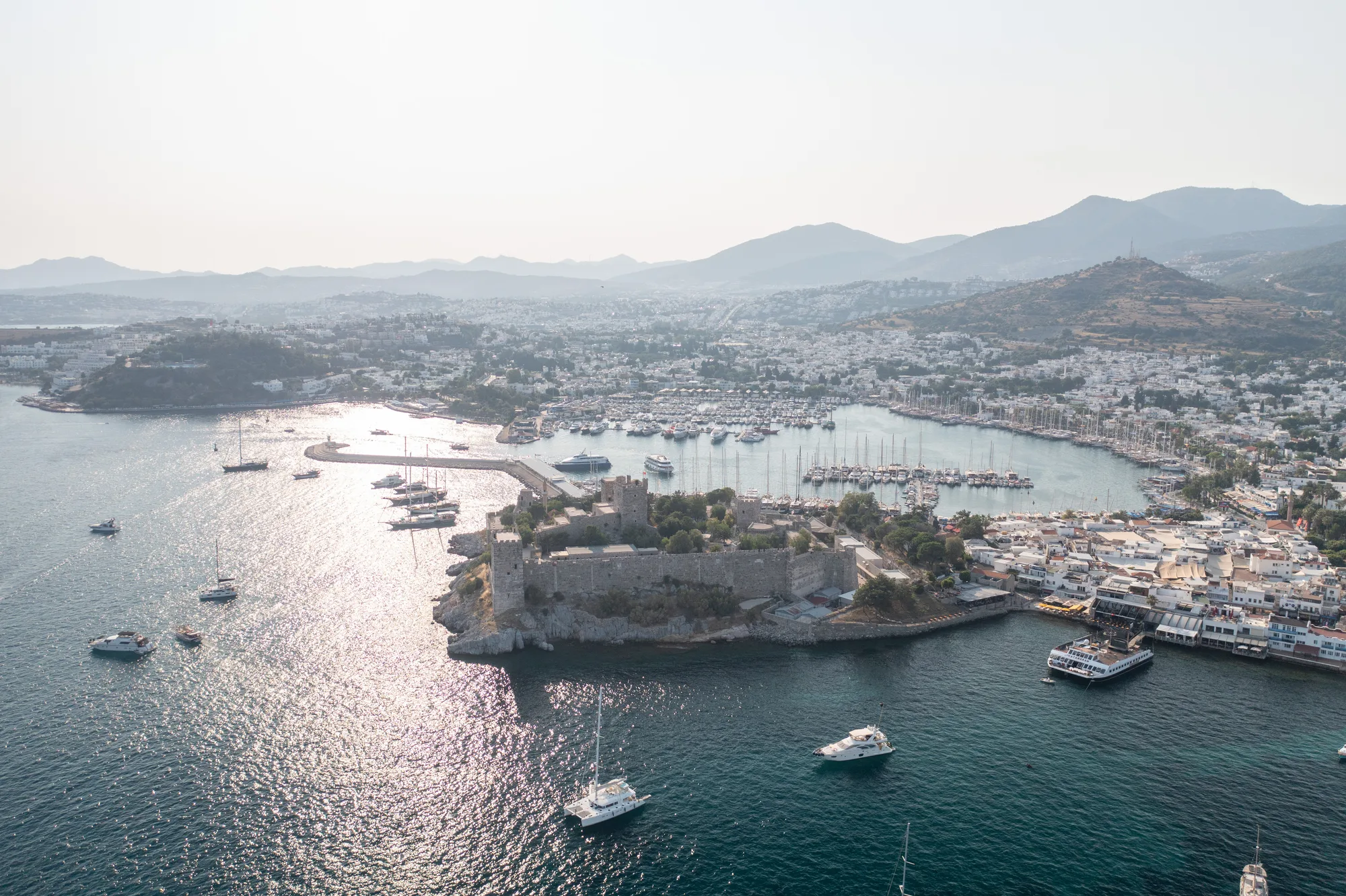
Bodrum Castle
The symbol of Bodrum; built in 1402 by the Knights of St John as the Castle of St Peter, partly from the stones of the Mausoleum. Today it houses the world-renowned Museum of Underwater Archaeology.
Details →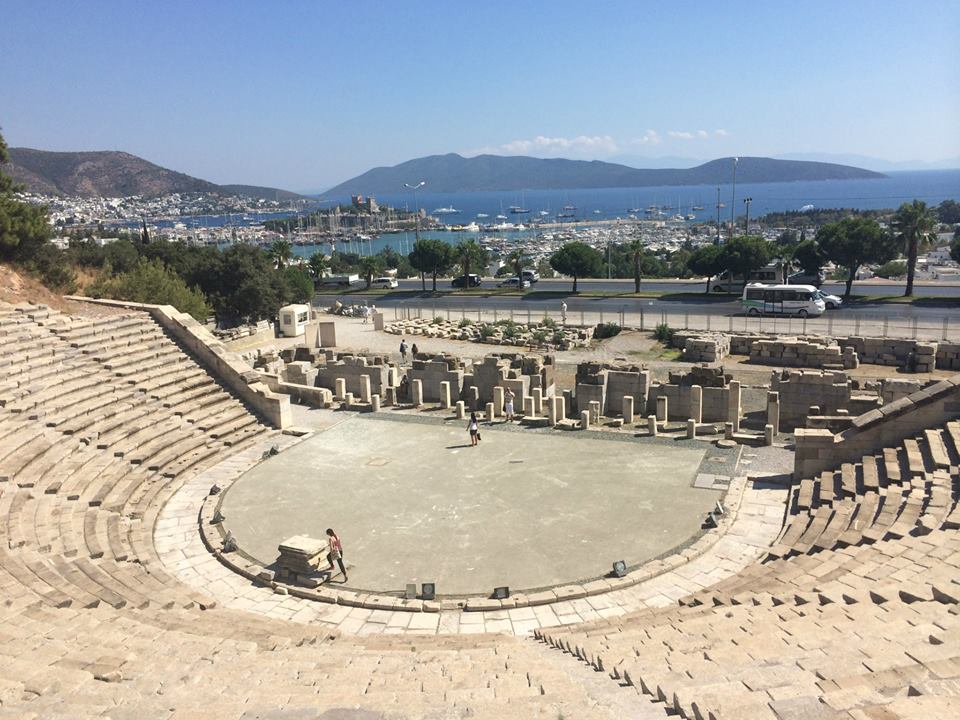
Ancient Theatre of Bodrum
Carved into the hillside in the 4th century BC under King Mausolus — one of the oldest theatres in Anatolia. Today it hosts concerts and festivals.
Details →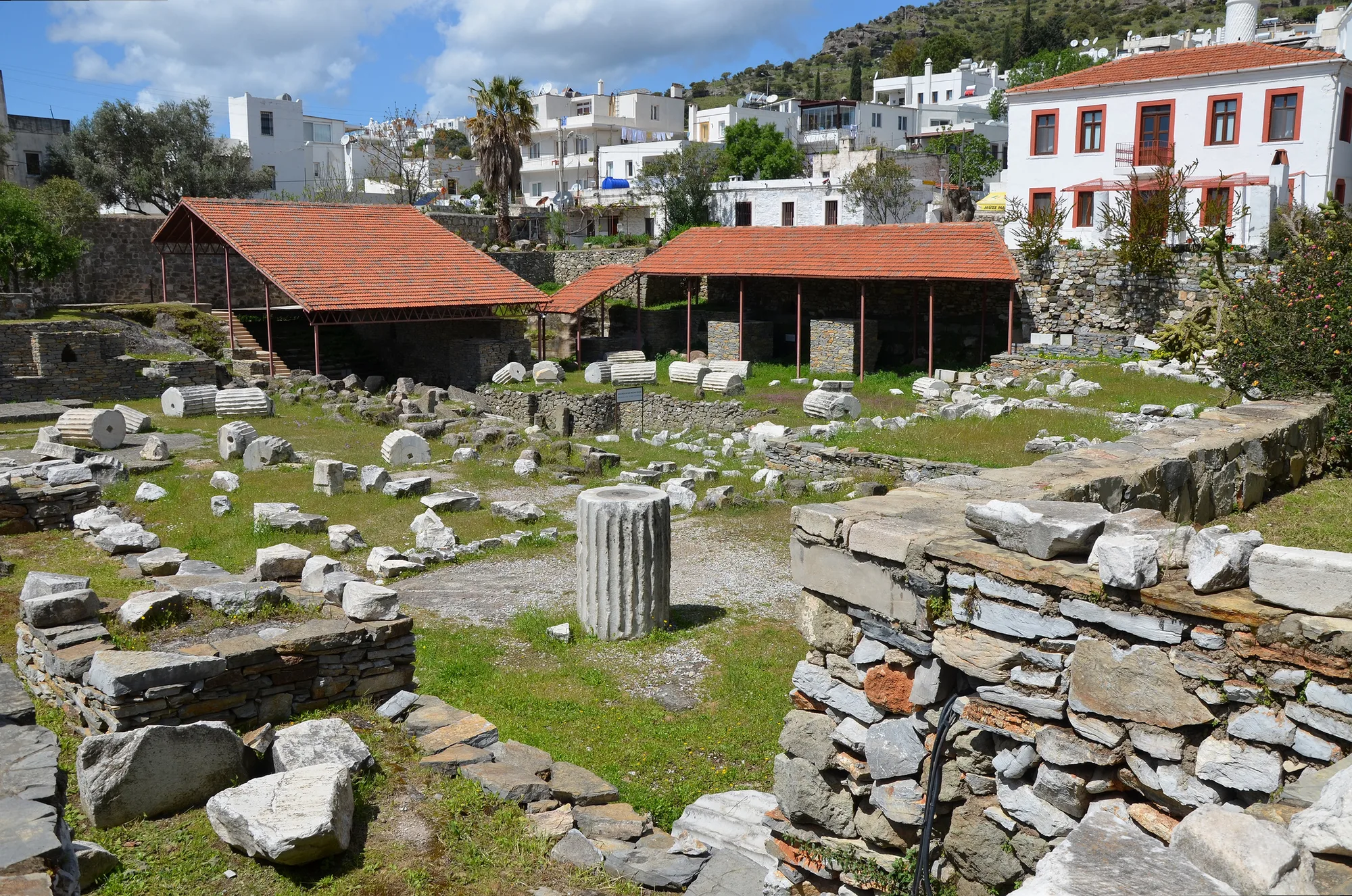
Mausoleum at Halicarnassus
One of the Seven Wonders of the Ancient World — the very word "mausoleum" comes from King Mausolus, honoured by this Bodrum monument.
Details →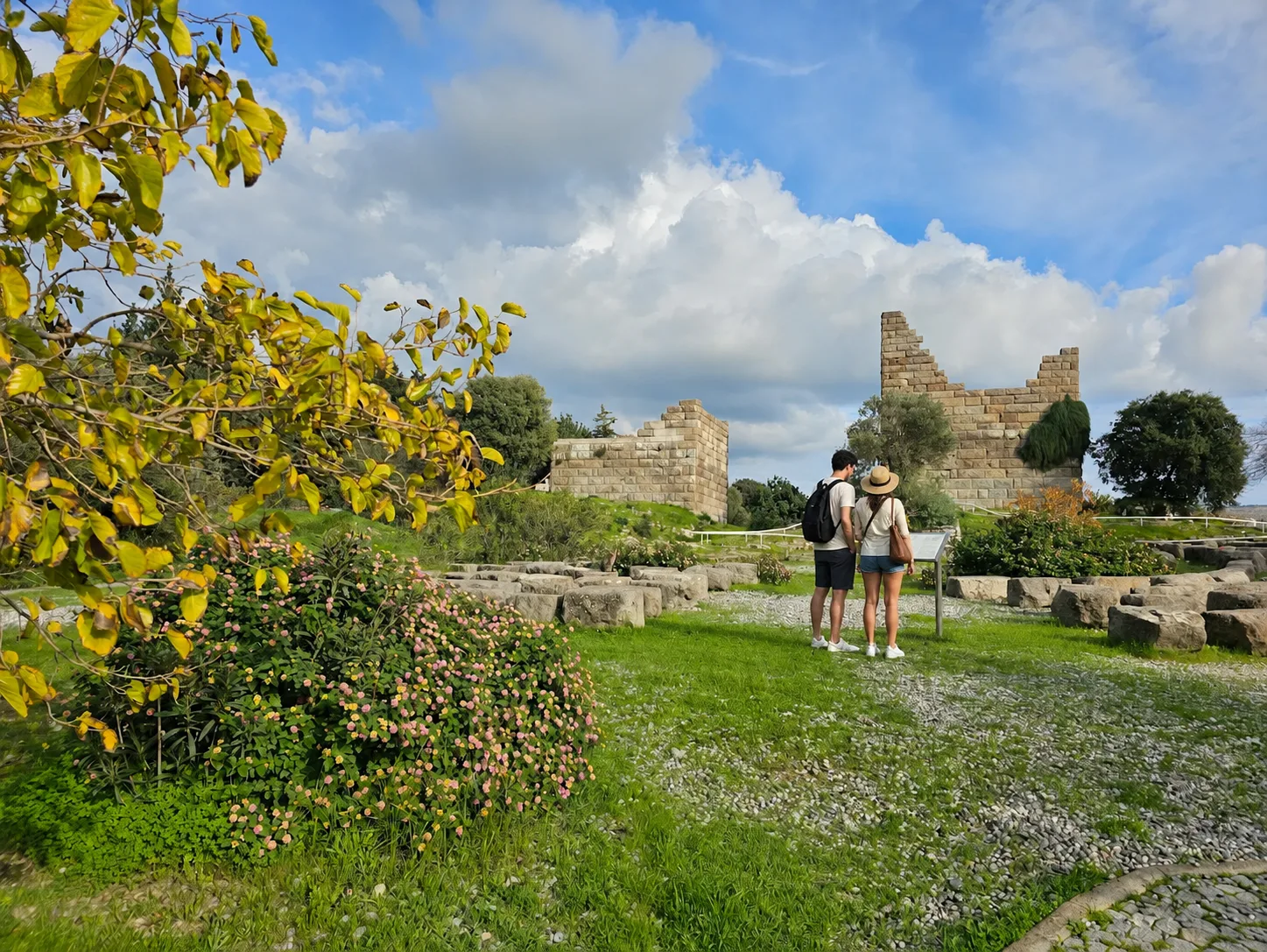
Myndos Gate
The twin-towered monumental western gate of the Halicarnassus walls — where the bloodiest fighting of Alexander the Great’s siege took place.
Details →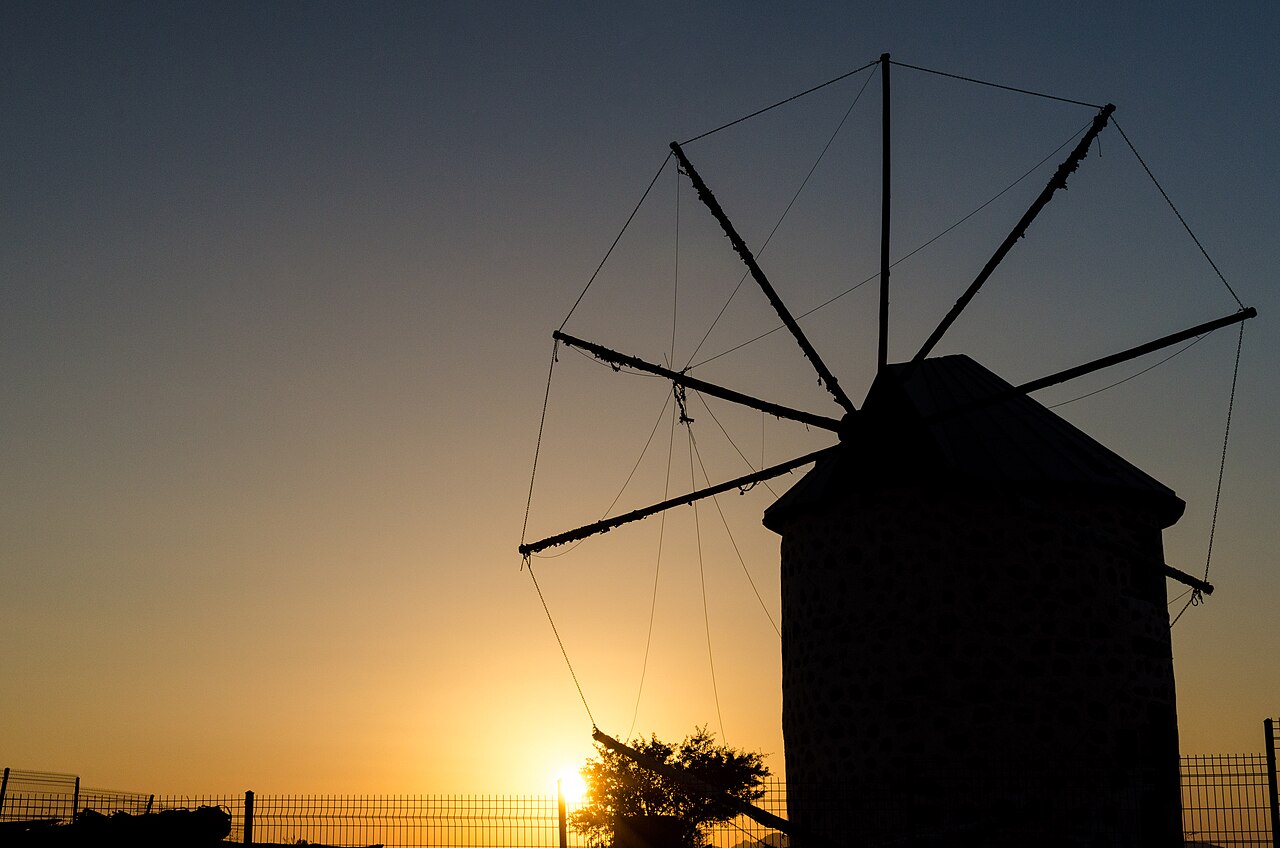
Bodrum Windmills
The 18th-century stone windmills lined along the ridge between Bodrum and Gümbet — famous for their sunset panorama over the town and two bays.
Details →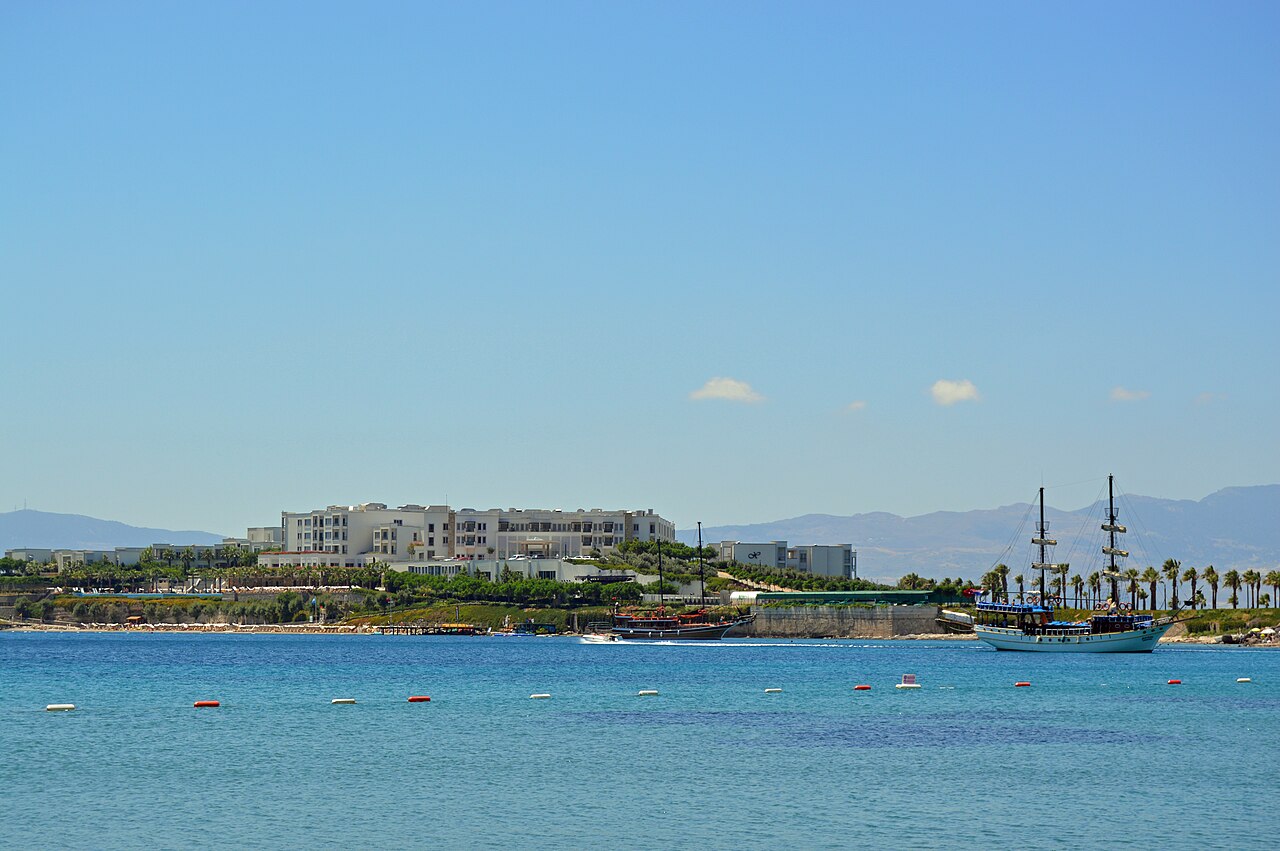
Gümbet Beach
One of the bays closest to central Bodrum — known for its shallow, sand-and-shingle shore, water sports and lively beach clubs.
Details →All eight of these stops are less than 2.5 kilometres from the hotel. The walk to the Ancient Theatre takes about 16 minutes and it is uphill; do not attempt it at midday in summer — go early in the morning or in the late afternoon. The only reason to climb to the Windmills is the view: the ridge shows you Bodrum Castle and its harbour on one side and Gümbet Bay on the other, at the same time. The marina, the Myndos Gate and the windmills are free; the Zeki Müren Arts Museum, the castle and the Mausoleum charge admission.
Who was here before the Greeks? The Leleges
The most surprising thing about the peninsula is something guidebooks rarely mention: long before the Greeks and Romans, this was the land of the Leleges. The geographer Strabo speaks of eight Lelegian settlements on the peninsula. What survives of them are the dry-stone walls that run for kilometres across the hills: built without mortar, the stones simply locked into one another, and standing for thousands of years. Once you have noticed them, you start seeing them everywhere you go on the peninsula.
The waymarked Leleg Way follows these walls and links the settlements together; its most important stop is Pedasa, the largest Lelegian city on the peninsula, on the Gökçeler hill above Konacık. Herodotos records a curious belief there: when the beard of Athena’s priestess grew, it was taken as an omen of danger to come. In the 4th century BC Mausolos ended Pedasa’s independence, attaching it and the surrounding Lelegian towns to Halikarnassos. Its defensive walls, tumuli and the traces of a Temple of Athena can still be seen; entry is free.
Myndos, at the western tip, belongs to the same story: a settlement with Lelegian roots that Mausolos refounded as a planned harbour city. Part of it disappeared beneath the water as sea levels rose — swimming in the clear shallows at Gümüşlük you pass directly over ancient walls. Aspat adds another layer: a conical hill rising from flat ground like an almost perfect pyramid, known in antiquity as “Strobilos”, the cone; on its summit are the traces of a Byzantine castle, cisterns and a church.
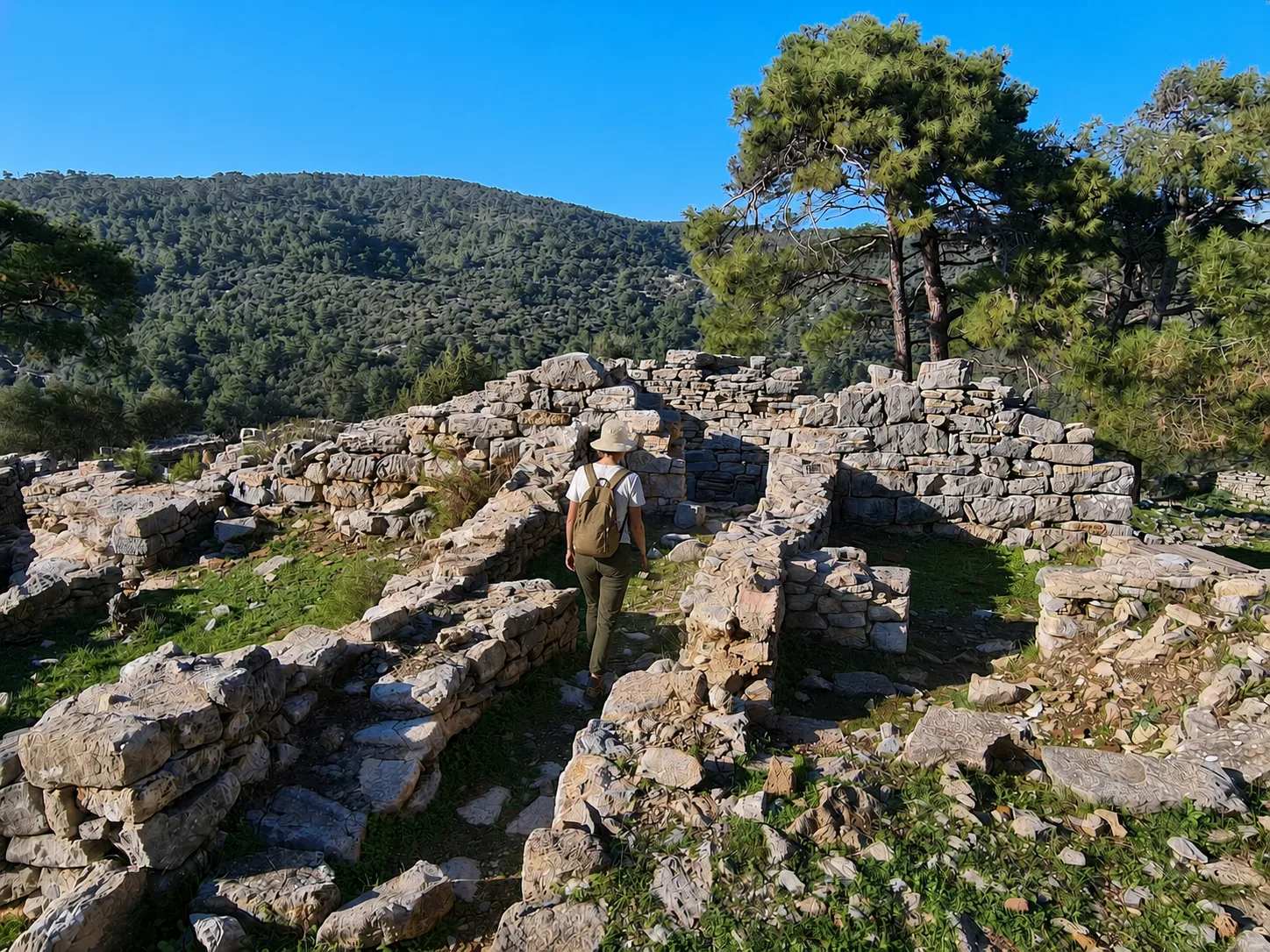
Ancient City of Pedasa
On Gökçeler hill just above Bodrum, the peninsula's oldest Lelegian-Carian city — known for its walls, tumuli and commanding view over Bodrum.
Details →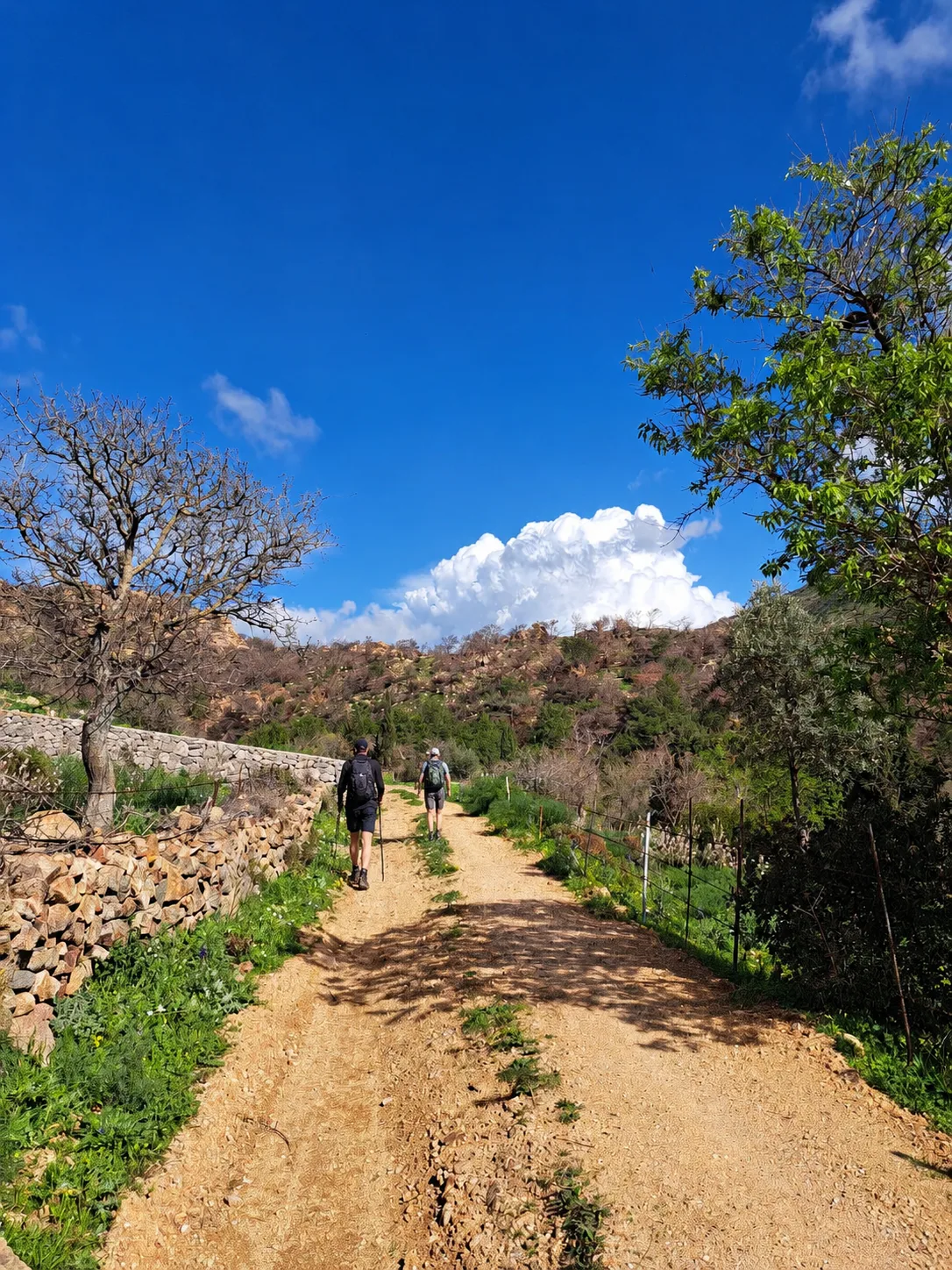
The Leleg Way
A waymarked trail linking the settlements of the Leleges, the peninsula’s people before the Greeks — a journey through time between dry-stone walls.
Details →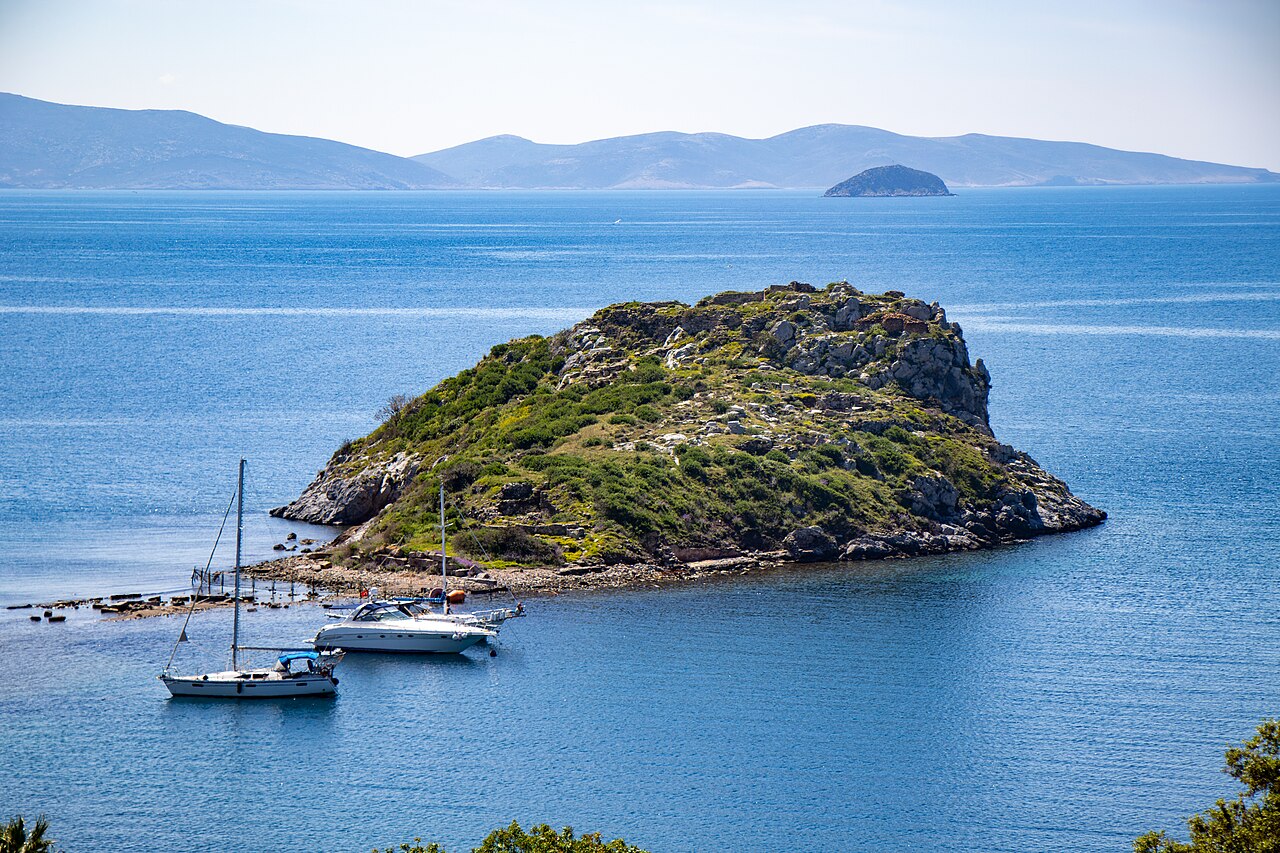
Ancient Myndos (Gümüşlük)
At the westernmost tip of the Bodrum peninsula in Gümüşlük — an ancient port city partly submerged beneath the sea, famed for the shallow crossing to Rabbit Island and its sunsets.
Details →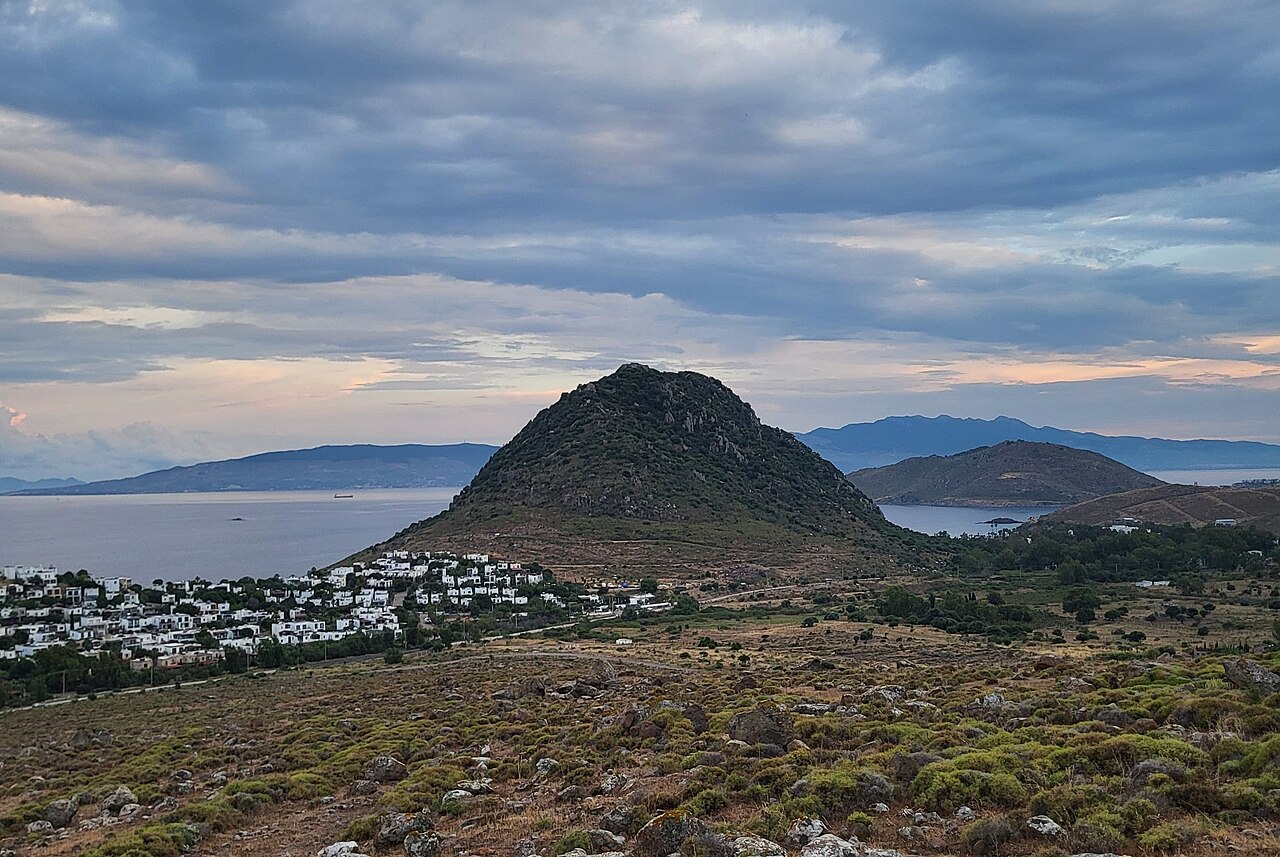
Aspat (Strobilos)
On the peninsula’s southwest, a striking pyramid-like conical hill crowned by an ancient castle, above a shallow bay open to windsurfing.
Details →The bays: the real reason for the peninsula
With the history dealt with, here is the other half: the bays that ring the peninsula. There is one practical rule worth knowing — the north and south coasts behave differently. North-facing bays (Torba, Göltürkbükü) are largely sheltered in the afternoon and their water usually stays calm; the south coast comes alive with the afternoon breeze — which is exactly why Aspat is the centre of windsurfing here. Plan around the wind and you will have a much better holiday.
Three places cannot be reached by land, and all three are among the finest on the list: Karaada, Orak Island and the Dilek Cave. Karaada is boat-only; its fame comes from the hot spring water flowing out of a cave and from its yellow sulphurous mud — smearing on the mud, drying it in the sun and then diving into the sea is the island’s classic ritual. The water in Orak Island’s bay is so clear that you can pick out the sandy floor and the shoals of fish metres below the boat. The Dilek Cave is a sea cave opening into the white cliffs of the Bağla headland; the light entering it bounces off the white stone and turns the water an almost illuminated turquoise. Do not approach the mouth of the cave when there is a swell.
Two names stand out for families with children: Camel Beach (Kargı Bay) and Kadıkalesi. At both, the sea stays shallow for a long way out. Camel Beach takes its name from the camels walked along the sand — yes, there really are camels, and for children it tends to be the most memorable half hour of the holiday.
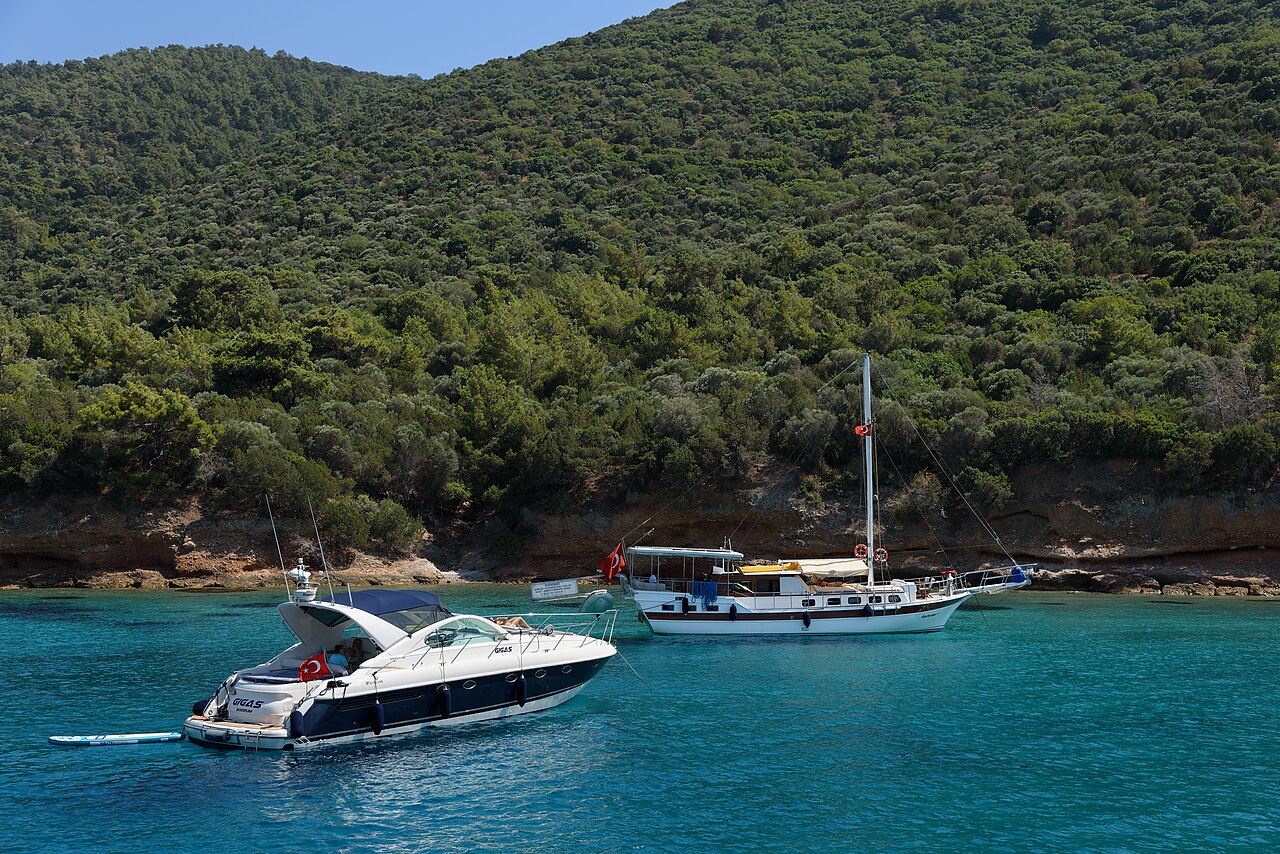
Karaada (Black Island)
The largest island in the Gulf of Bodrum — a classic Blue Voyage stop with its cave hot spring, healing yellow mud and turquoise coves.
Details →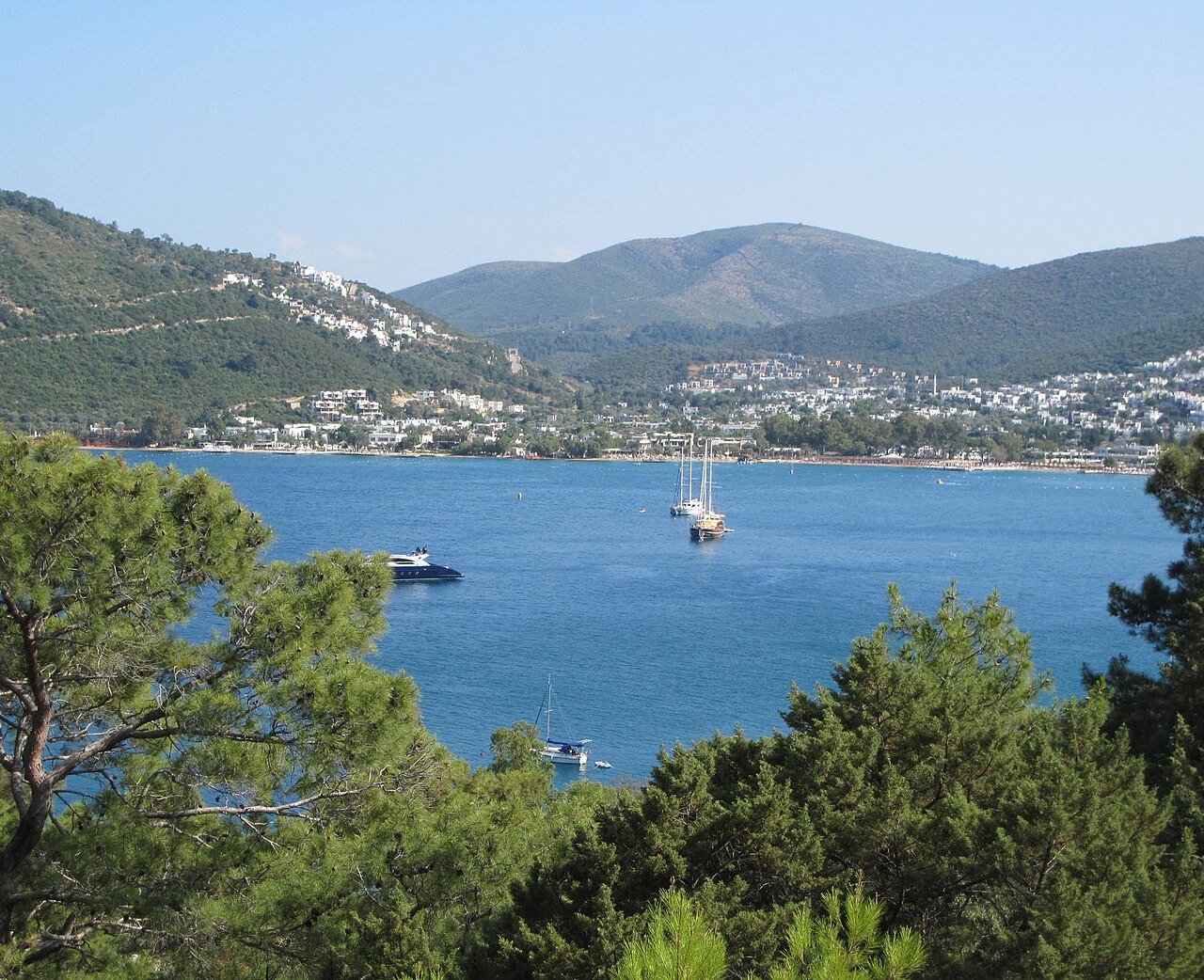
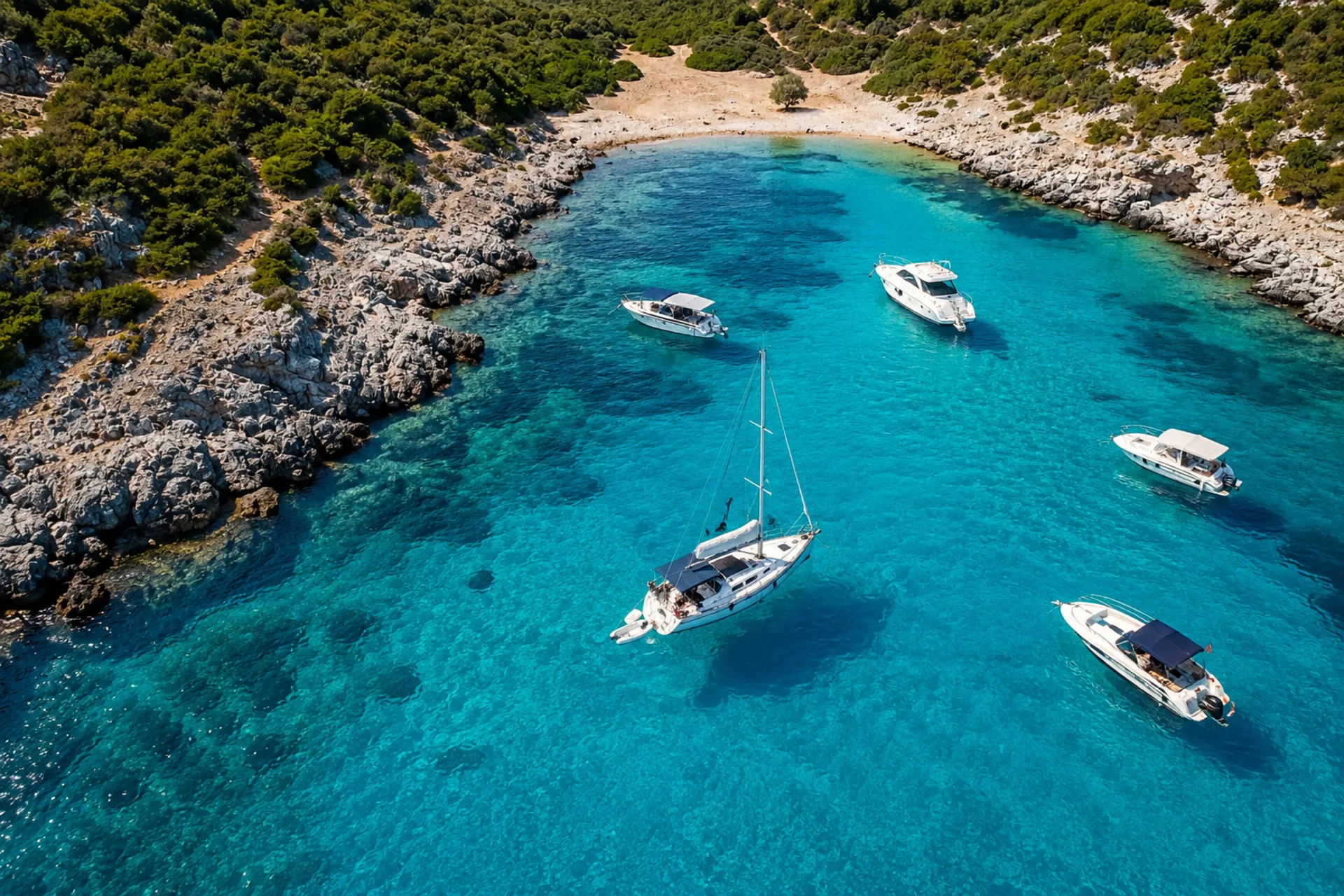
Aquarium Bay (Bitez)
A sheltered cove between Bitez and Ortakent, named for its aquarium-clear water — a favourite for snorkelling and boat trips.
Details →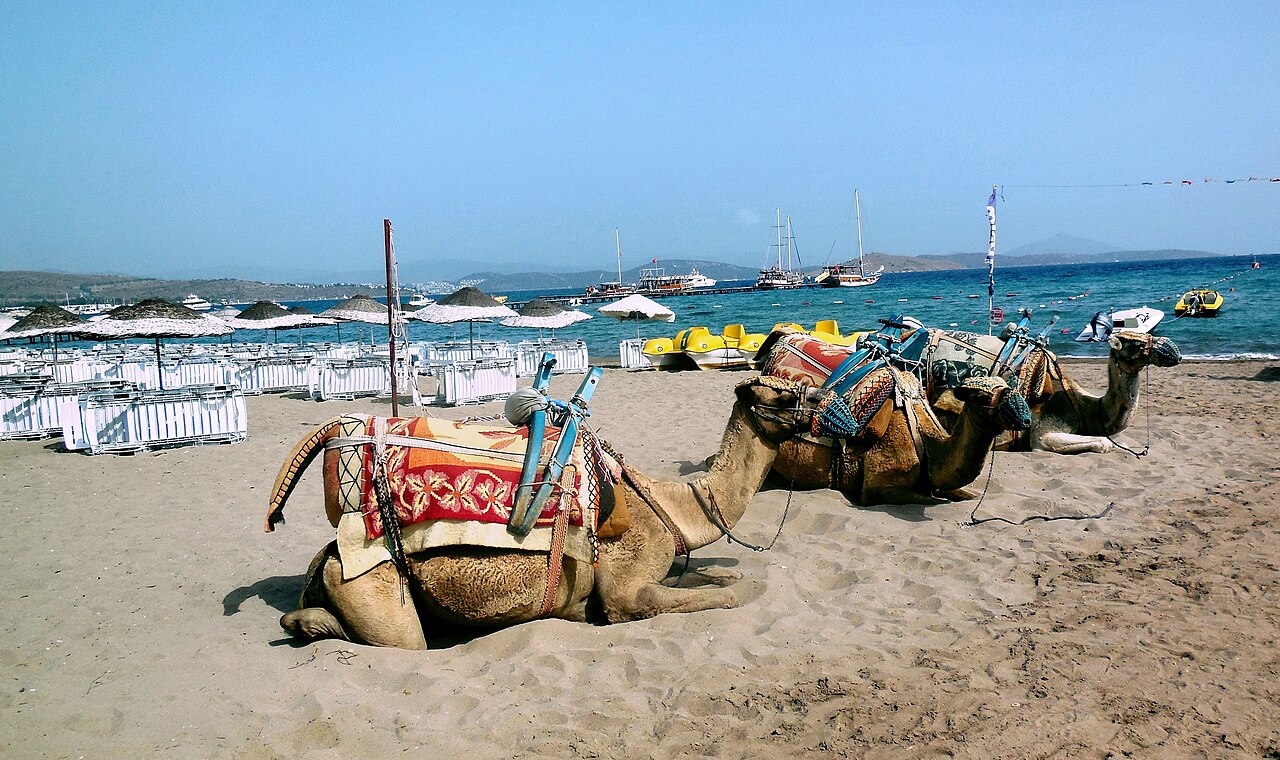
Camel Beach (Kargı Bay)
A golden-sand cove in Ortakent facing Kargı Island — named after the camels walked along its shore, an ideal family beach.
Details →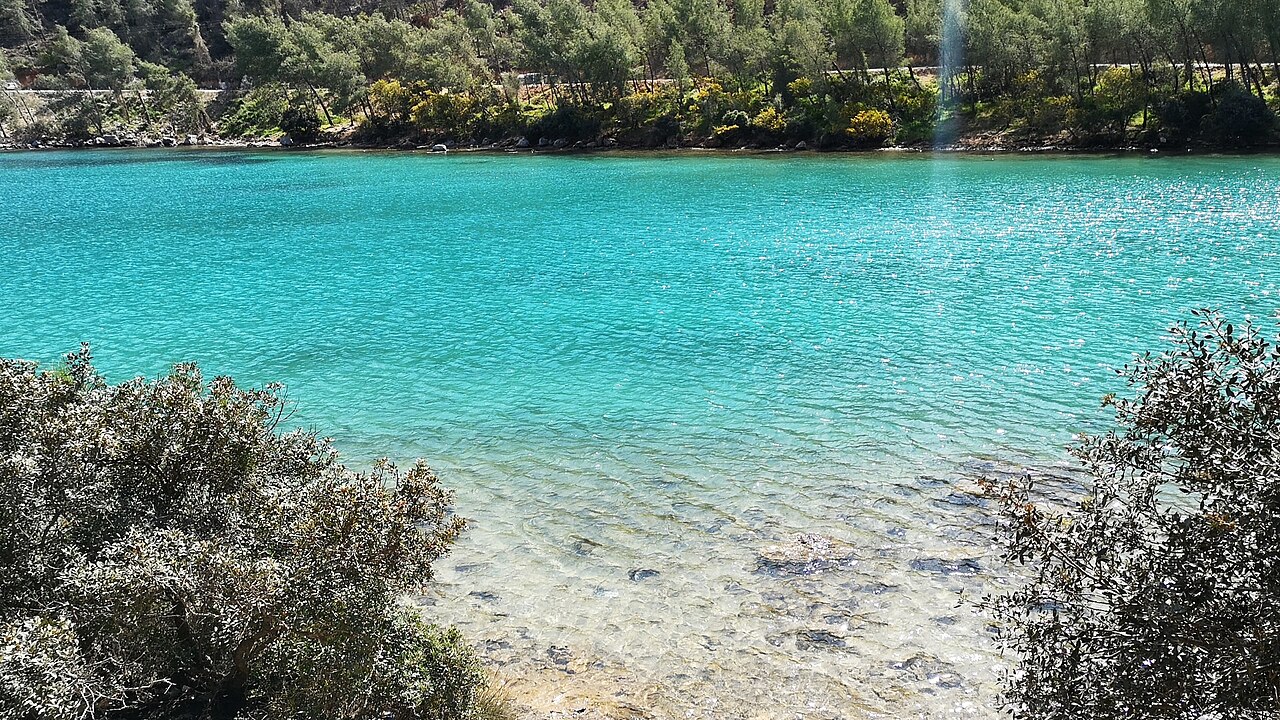
Cennet Cove (Göltürkbükü)
A small hidden cove worthy of its name (“Paradise”), where pines meet the sea on the peninsula’s north, with turquoise, shallow water.
Details →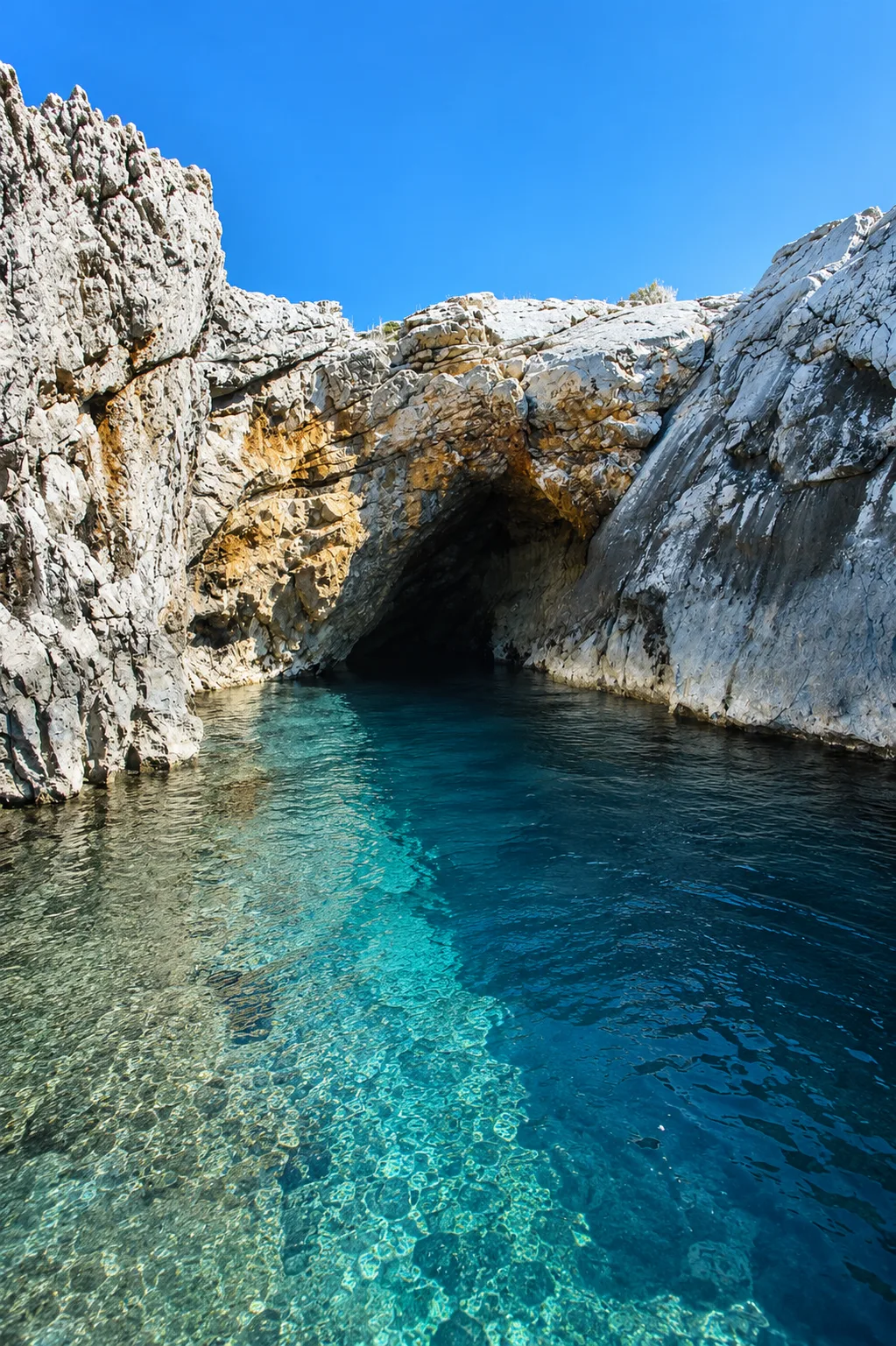
Dilek Cave (Bağla)
A sea cave opening into the white cliffs of Bağla headland — turquoise water at its mouth and cool shade, one of the peninsula’s hidden corners.
Details →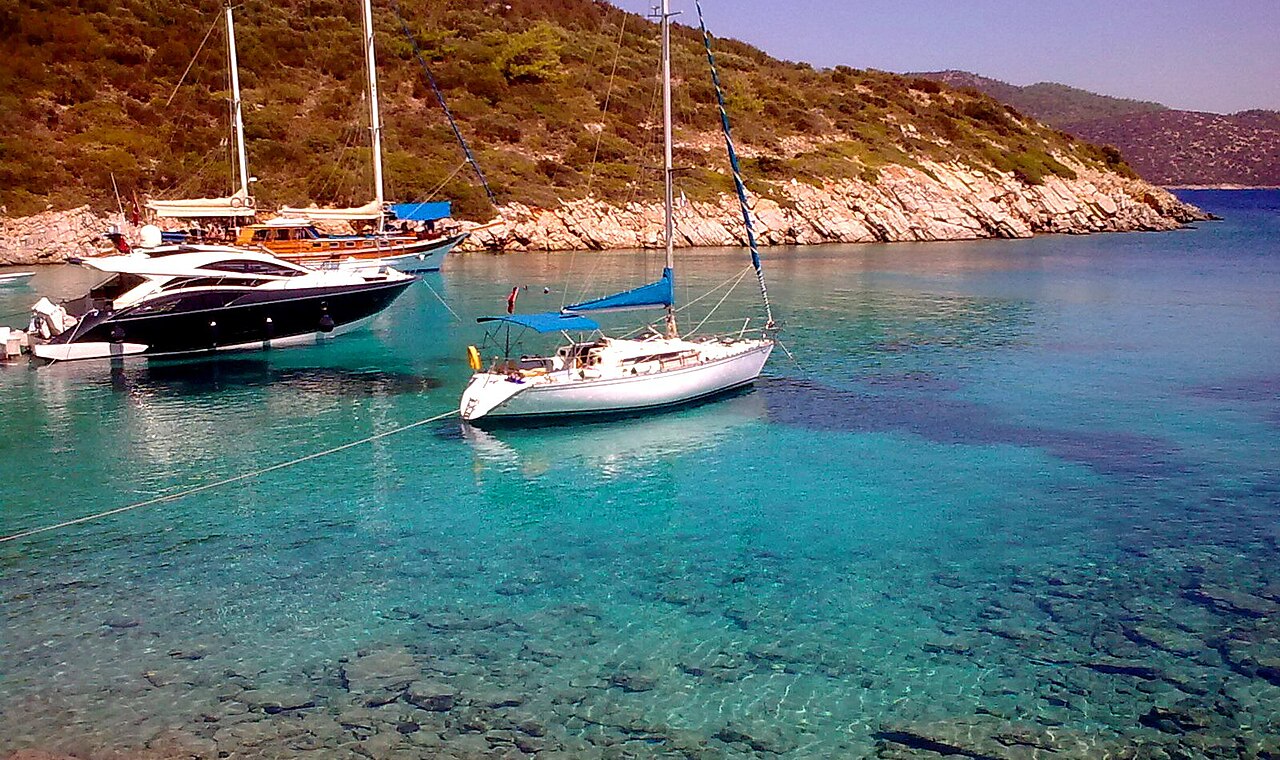
Orak Island
South of Bodrum: glass-clear turquoise water and a snorkelling paradise — the classic blue-cruise anchorage.
Details →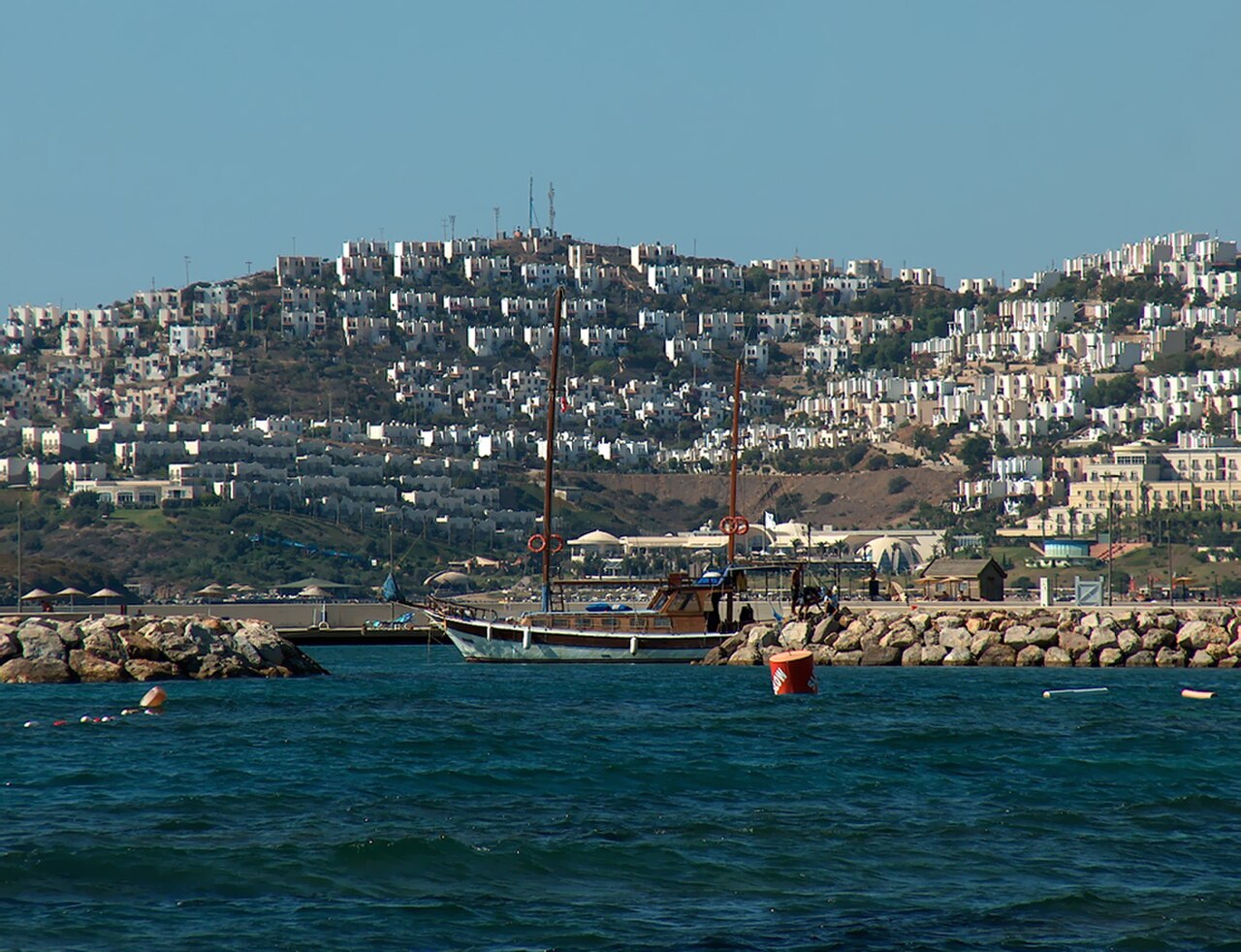
Kadıkalesi
Near Turgutreis, a long beach famed for its shallow clear water — a calm sunset bay named after the castle ruins overlooking the shore.
Details →The western tip: three stops that earn the sunset
Keep the western tip of the peninsula for the late afternoon. Turgutreis is the westernmost point of Bodrum; it is named after the 16th-century Ottoman admiral Turgut Reis, and every evening the sun goes down behind the silhouettes of the Greek islands. The Tuesday street market is the most colourful shopping in the area.
Gümüşlük is one of the rare fishing villages saved from concrete by its protected status, and it sits on top of the sunken harbour of ancient Myndos. Its signature experience is walking across to Tavşan Adası (Rabbit Island) along a submerged ancient breakwater — the path locals call the “King’s Road”. The water is usually somewhere between knee and waist deep.
Yalıkavak once lived from sponge diving and tangerine groves; today it hosts the most fashionable marina on the peninsula. But the place you should really go is Sandıma on the slope just above it: abandoned when its inhabitants moved down to the shore in the mid-20th century and founded the new Yalıkavak, its stone houses now stand like a silent open-air museum, light falling through the empty doors and windows.
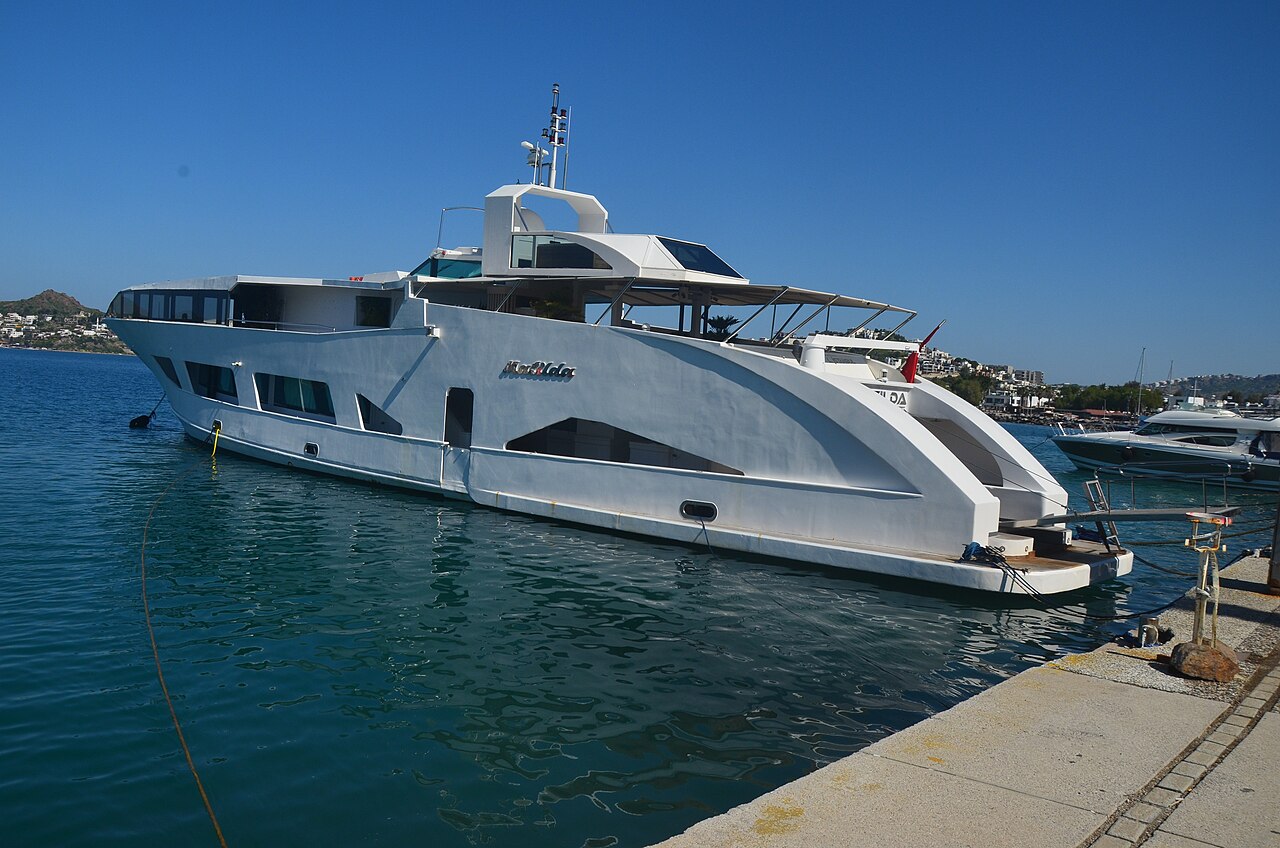
Yalıkavak & Sandıma Village
On the peninsula’s northwest tip: a glamorous marina, quiet coves and the melancholic beauty of Sandıma’s abandoned stone village.
Details →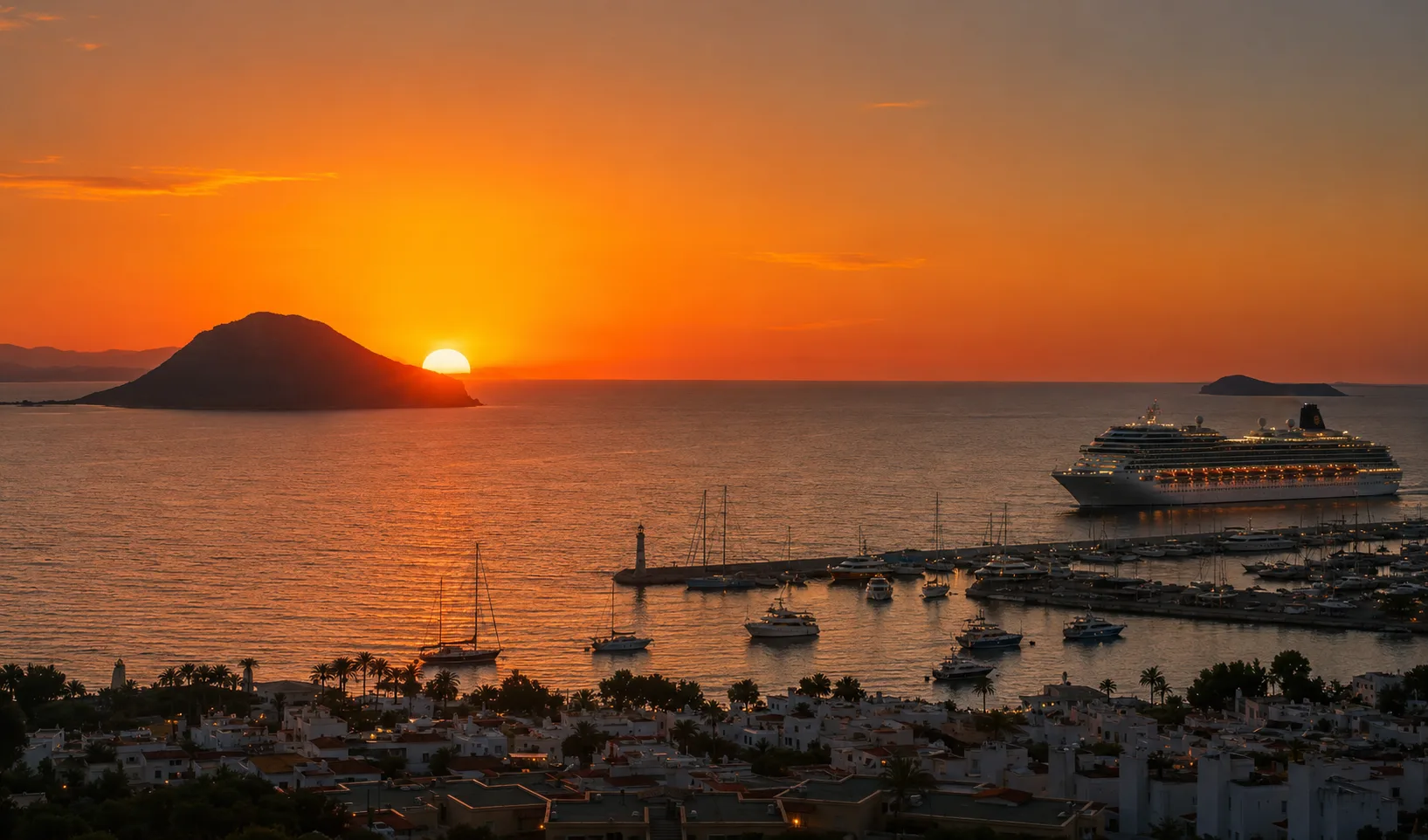
Turgutreis — Sunset
The westernmost tip of the Bodrum peninsula — a coastal town offering the region's finest sunset as the sun sinks behind the Aegean islands.
Details →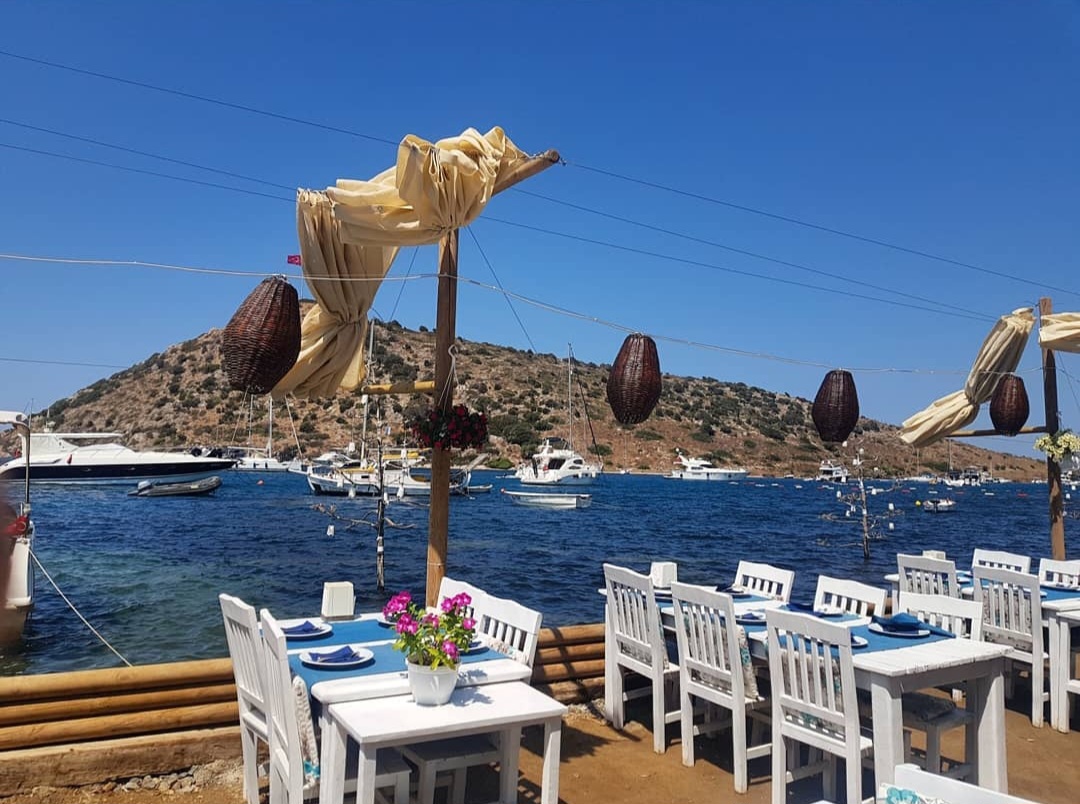
Gümüşlük & Rabbit Island
A fishing village atop the sunken harbour of ancient Myndos — waterside tables, Rabbit Island reached on foot via the “King’s Road,” and a legendary sunset.
Details →How to plan this ring
- Without a car: the eight stops within walking distance fit comfortably into a single day. There are dolmuş minibuses to Torba, Ortakent, Yalıkavak, Turgutreis and Gümüşlük; Bodrum bus station is the departure point.
- Choose by the wind: on windy days head for the northern bays (Torba, Cennet Koyu); on calm days go south (Akvaryum, Bağla) and take a boat trip.
- Admission: most of the 23 stops on this list are free. Those charging entry are Bodrum Castle, the Mausoleum of Halikarnassos and the Zeki Müren Arts Museum.
- Boat required: Karaada, Orak Island, Akvaryum Bay and the Dilek Cave are best reached from the water. The day trips leaving from Bodrum Marina usually include the first two.
- Morning or late afternoon: the Ancient Theatre, Pedasa, the Windmills and Aspat have no shade. Do not climb at midday in summer.
The next ring
Once you have finished the peninsula, the circle starts to widen. In the second article of the series we move out to the 50-kilometre ring and cover the two gateways out of the peninsula — Kisebükü on the Gulf of Gökova and Bargylia, standing in the middle of a lagoon on the Gulf of Güllük. Both are made for your first real excursion day.
All 23 stops here are less than 25 kilometres from our hotel, and our reception desk will tell you exactly which day to give to which one — reading the wind and the crowds for you.
Sources
- Foto: Gargarapalvin (Wikimedia Commons)
- Bilgi kaynağı: Vikipedi — Zeki Müren Sanat Müzesi
- Foto: ZEKİ MÜREN SANAT MÜZESİ
- Görsel: “Aerial view of Bodrum — Saint Peter Castle & marina” · esindeniz — Envato Elements (ticari lisans)
- Fotoğraflar: Artemis Bodrum arşivi — kendi çekimimizdir
- Foto: Onur CİHAN (Wikimedia Commons)
- Bilgi kaynağı: Vikipedi — Bodrum Antik Tiyatrosu
- Foto: Serhio Magpie (Wikimedia Commons)
- Fotoğraflar: Thomas Dahlstrøm Nielsen (Wikimedia Commons)
- Foto: Koray (Wikimedia Commons)
- Bilgi kaynağı: Vikipedi — Myndos
- Aspat / Strobilos — Ari Fischkopf (CC BY-SA 4.0)
- Foto: Mustang Joe (Wikimedia Commons)
- Torba Koyu — Dw updike (CC BY-SA 4.0)
- Bitez Koyu — foto: Raicem (Wikimedia Commons)
- Bitez Koyu — foto: Tanya Dedyukhina (Wikimedia Commons)
- Camel Beach, Ortakent — Tanya Dedyukhina (CC BY 3.0)
- Cennet Koyu, Göltürkbükü — Gargarapalvin (CC BY 4.0)
- Orak Adası — Tamer BÜKE (CC BY 3.0)
- Kadıkalesi — Yılmaz Kilim (CC BY 3.0)
- Yalıkavak Marina — CeeGee (CC0)
- Foto: bazylek (Flickr, Wikimedia Commons)
- Görsel: Bodrum Gümüşlük — Bright estrellas (CC BY-SA 4.0)
 Artemis Bodrum