Artemis Bodrum · Jul 16, 2026 · 11 min read · Travel Guide
The first two articles in this series were a warm-up. The 23 stops on the peninsula were the backbone of the holiday; the two gateways at 50 kilometres were the first step onto the mainland. Now the circle widens to 100 kilometres and the view changes completely: seven new stops join the list, and not one of them is “another bay”.
Because this ring opens up the real geography behind Bodrum’s touristic face: Caria. The country of Mausolos, the man who made Halikarnassos his capital. And the heart of Caria is not on the coast but inland — along the Milas axis. Here you will find a temple whose sixteen columns still stand bolt upright among olive groves, a sacred mountain hidden in pine forest, a principality’s capital on a rock plateau, and a body of water that was once a gulf and became a lake.
You cannot finish this ring in a day. But with two well-planned days you will see a region that ninety per cent of Bodrum’s visitors never lay eyes on.
The temple among the olive trees: Euromos
You are driving along the Milas–Söke road. It is an ordinary road, olive trees on both sides. And then, without any warning, sixteen columns appear on your right.
The Temple of Zeus Lepsynos at Euromos is one of the most impressive ancient temples still standing in Türkiye. It was built in the Corinthian order in the 2nd century AD, under the emperor Hadrian. On some of the columns you can still read inscriptions bearing the names of those who donated towards the construction — two thousand years ago somebody paid for this temple and wanted their name carved on it; the name is still there.
But the finest detail is this: the temple was never finished. We know because some of the columns were left unfluted. Fluted and unfluted columns stand side by side — an ancient building site interrupted mid-work, waiting exactly like that for two millennia. Go early in the morning or towards sunset, when the light filters between the columns and the olive leaves turn silver. There is an admission charge; the Museum Pass is valid.
Caria’s sacred mountain: Labranda
Hidden in the pine forests of the mountains rising north of Milas, Labranda was the most sacred sanctuary of ancient Caria — and probably the least visited, most deserving stop on this list.
This mountain sanctuary of Zeus Labraundos was linked to the city of Mylasa (today’s Milas) on the plain below by a sacred way. On festival days priests and people processed up this paved road towards the temple. Zeus was depicted here in a distinctive form: holding a double-headed axe in one hand — labrys in Greek. The sanctuary takes its name from that axe.
On terraces cut into the steep slope stand the temple, the sacred spring house, the great halls called “andrones” where the priests held their banquets, and monumental tombs carved into the rock. In the 4th century BC the Carian satraps — that is, the dynasty that built the Mausoleum — endowed the site magnificently. So the Mausoleum in Bodrum and the stones on this mountain are the work of the same family.
It is 85 kilometres from the hotel but around 90 minutes by car: the final stretch is a mountain road. Entry is free. Pine shade, mountain silence and almost nobody at all. If you are looking for peace on this list, this is the answer.
A principality’s capital: Beçin Castle
South of Milas rises a steep rock plateau some two hundred metres above the plain. Thanks to its position, Beçin was a strategic centre for centuries; in the 14th century it became the capital of the Menteşe principality. A rich settlement of madrasas, baths, a mosque, a caravanserai and tombs grew up on the plateau.
Today you can walk inside the walls of the castle — Byzantine in origin, repaired under the principality — and take in the panorama of the Milas plain and its olive groves from the towers. In the archaeological site outside the castle stand the Ahmed Gazi Madrasa (14th century), the Orhan Mosque, the Bey Baths and rock tombs.
UNESCO: let us be precise here too
Beçin was proposed for UNESCO’s Tentative List in 2012. Let us repeat here what we said about Bodrum Castle in the first article: a tentative list is a list of candidates, not a declaration of World Heritage. Beçin is not a UNESCO World Heritage Site. Getting this right takes nothing away from the place — it is simply honest.
Paid archaeological site; the Museum Pass is valid. The plateau has no shade and is hard going in the midday heat of summer.
The city on a dolphin’s back: Iasos
Built on a peninsula in the north of the Gulf of Güllük, now cradled by the village of Kıyıkışlacık, Iasos was one of Caria’s most distinctive harbour cities. It was so entwined with the sea that its economy rested on fishing; ancient sources describe the fame of Iasos fish and the rich waters here. That maritime culture even reached its coinage: a figure riding on a dolphin’s back.
Across the peninsula, the ancient theatre, the agora, the bouleuterion and the remains of Roman buildings lie scattered among pine trees with the gulf as a backdrop. The city walls running down to the shore show how the city was defended from both land and sea; part of the harbour structures now lies underwater.
And here is the series’ central motif once again. In the second article we described Bargylia: the harbour city the sea abandoned, in this very same Gulf of Güllük. At Iasos the opposite happened — the harbour is under the water. Two cities on one gulf, two different endings. There is an admission charge; the Museum Pass is valid.
Bafa: the water that was a gulf and became a lake
In the second article we made a promise: the climax of the “the sea does not stay still” story belongs to this ring. Here it is.
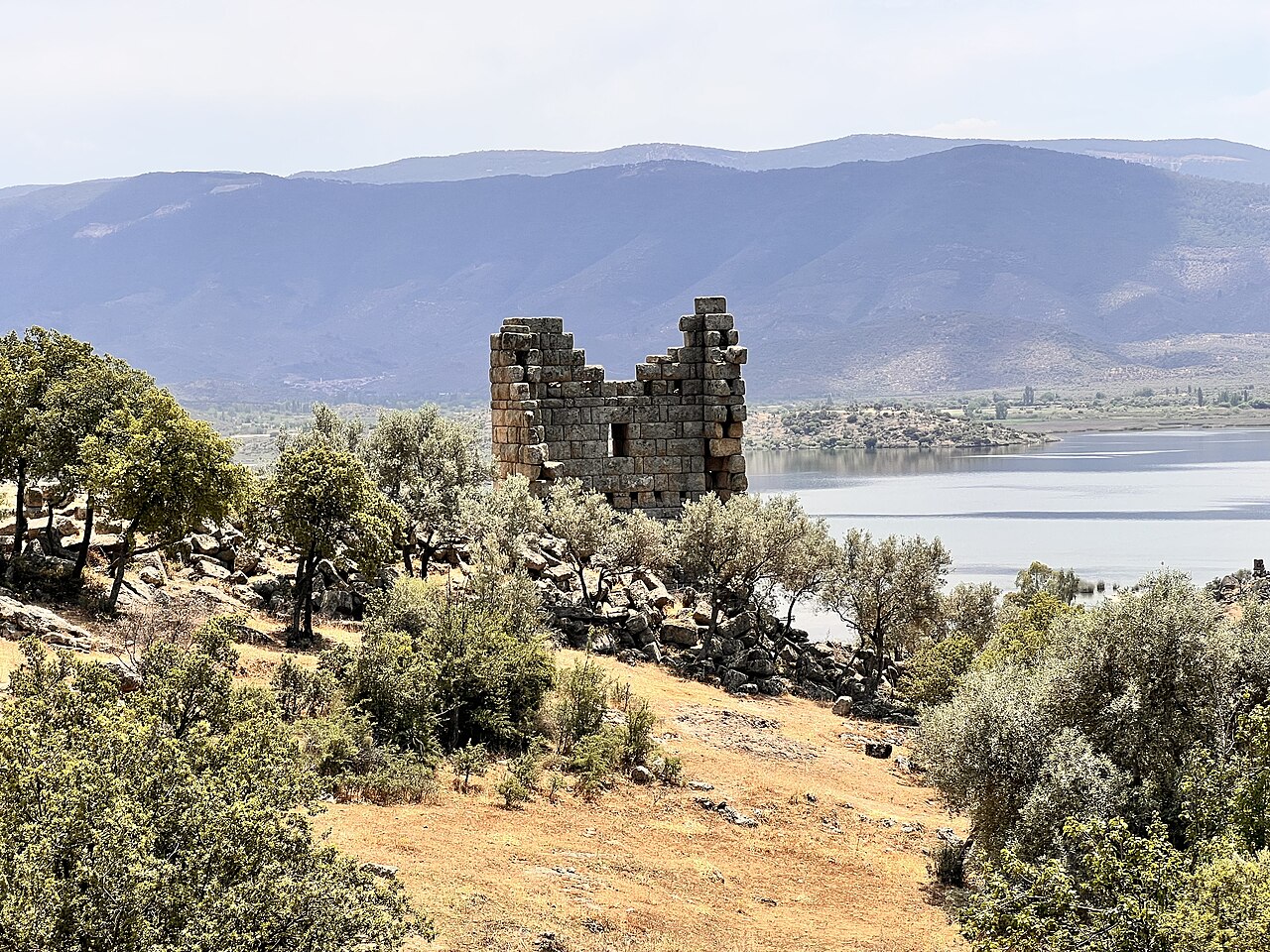
Lake Bafa was formed over geological time when alluvium carried down by the Büyük Menderes river closed the mouth of the old gulf that opened onto the Aegean. In other words, the spot where you stand today on the lakeshore was open sea thousands of years ago. That single sentence explains everything around you: it is why the ancient cities here were once harbour cities, and why not one of them faces the sea today.
The eastern shore is framed by the Beşparmak mountains — known in antiquity as Latmos — whose bare granite draws a fairy-tale silhouette. In the lakeside village of Kapıkırı, the remains of ancient Herakleia are tucked in among the houses and olive groves: the ruins of the Temple of Athena looking out over the water, city walls, a bouleuterion and rock tombs on the peninsula reaching into the lake. Here the archaeological site and the village are interwoven; a garden wall may well be two thousand years old.
Entry is free. It is 95 kilometres from the hotel. Spend the sunset here — as the colour of the granite shifts, the lake turns into a mirror.
Sedir Island: the sand you will not touch
Sedir Island, in the Gulf of Gökova, is both an ancient city and a natural marvel. The island is covered with the theatre, temple and wall remains of ancient Kedrai. But its fame comes from the oval, brilliant white and astonishingly coarse sand of Cleopatra Beach.
Legend says the sand was shipped from North Africa for Cleopatra, the lover of the Roman commander Antony. It is a lovely story; the truth is a little different. Scientific study shows the sand is geologically native to the region — it did not come from Africa. But the structure of its grains really is of a kind found in very few places on earth; even without the legend, it is extraordinary.
The rule here is not a joke
To protect that uniqueness the beach is strictly conserved: you may not step on the sand, lay a towel on it, or take a single grain away. Wooden platforms are provided for swimming. This is not a touristic whim — the sand cannot be replaced, and every grain carried off on the sole of a shoe never comes back. Paid archaeological site; the Museum Pass is valid.
Three ancient cities, one day: Priene, Miletus, Didyma
The last stop to enter the 100-kilometre ring is not really a single place but a route: three great Ionian cities around the Büyük Menderes delta, linked in antiquity by the “Sacred Way” and visitable today in a single day.
- Priene — an Ionian city built on the slopes of Mount Mykale, famous for its flawless grid plan; its grandest building is the Temple of Athena, to which Alexander the Great contributed.
- Miletus — one of the ancient world’s foremost harbours and centres of learning: Thales, held to be the father of philosophy, and Anaximander both came from this soil. The city’s magnificent theatre, seating 15,000, still stands.
- Didyma — after Delphi, the most famous oracle of the ancient world; the unfinished grandeur of its colossal Temple of Apollo still casts a spell.
We list this route as a stop in its own right because “three cities in one day” is an experience in itself — and a warning: it is tiring. It is 100 kilometres from the hotel but about two hours by car, and then three archaeological sites on top. Set off early.
Note: we cover Priene and Didyma individually, at their own distances (120 and 110 km), in the fourth article of the series. Here you see them as a one-day route; there, city by city and story by story.
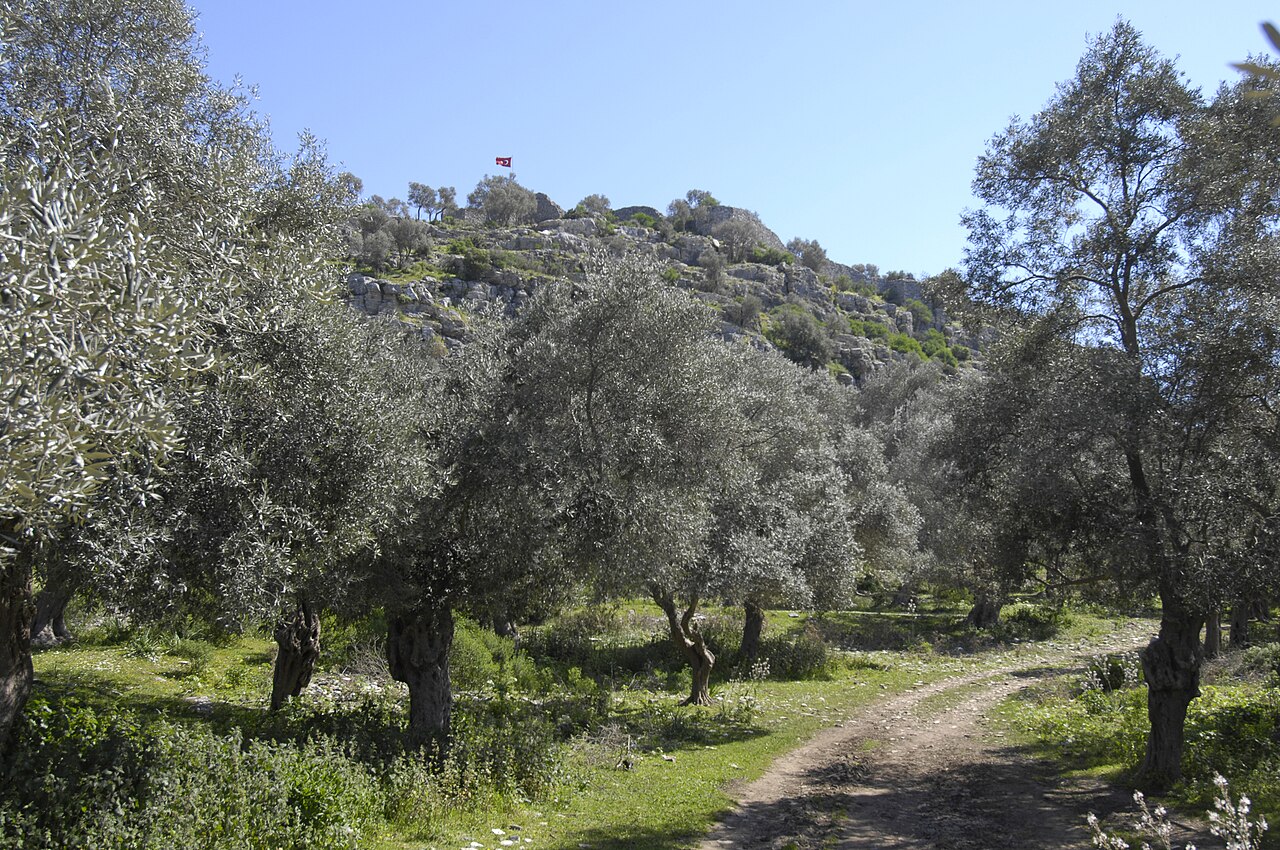
Iasos Ancient City
A Carian harbour city on the Güllük Gulf, once famed for its fish — an agora, theatre and walls right by the sea.
Details →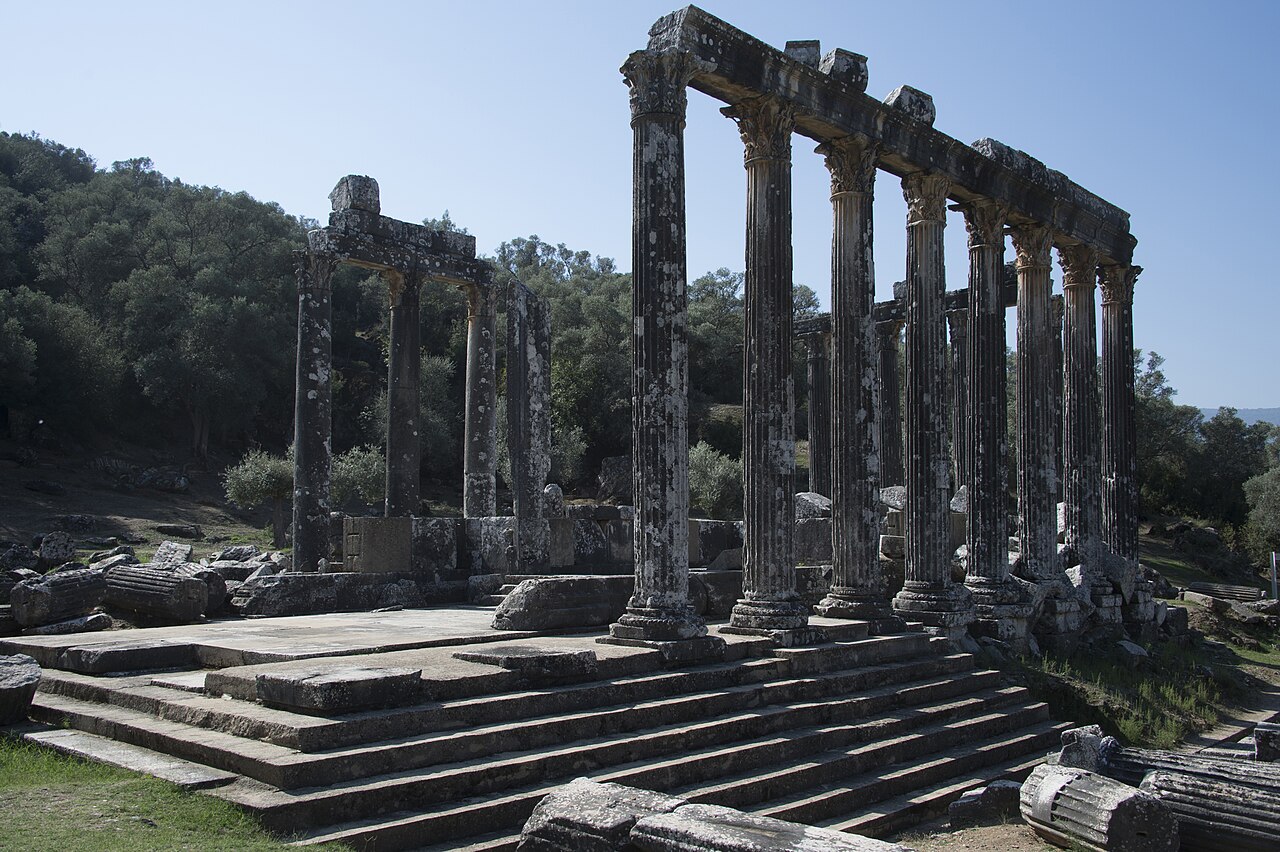
Euromos & Temple of Zeus
Rising among olive groves, one of Anatolia’s best-preserved ancient temples — spellbinding with its sixteen standing columns.
Details →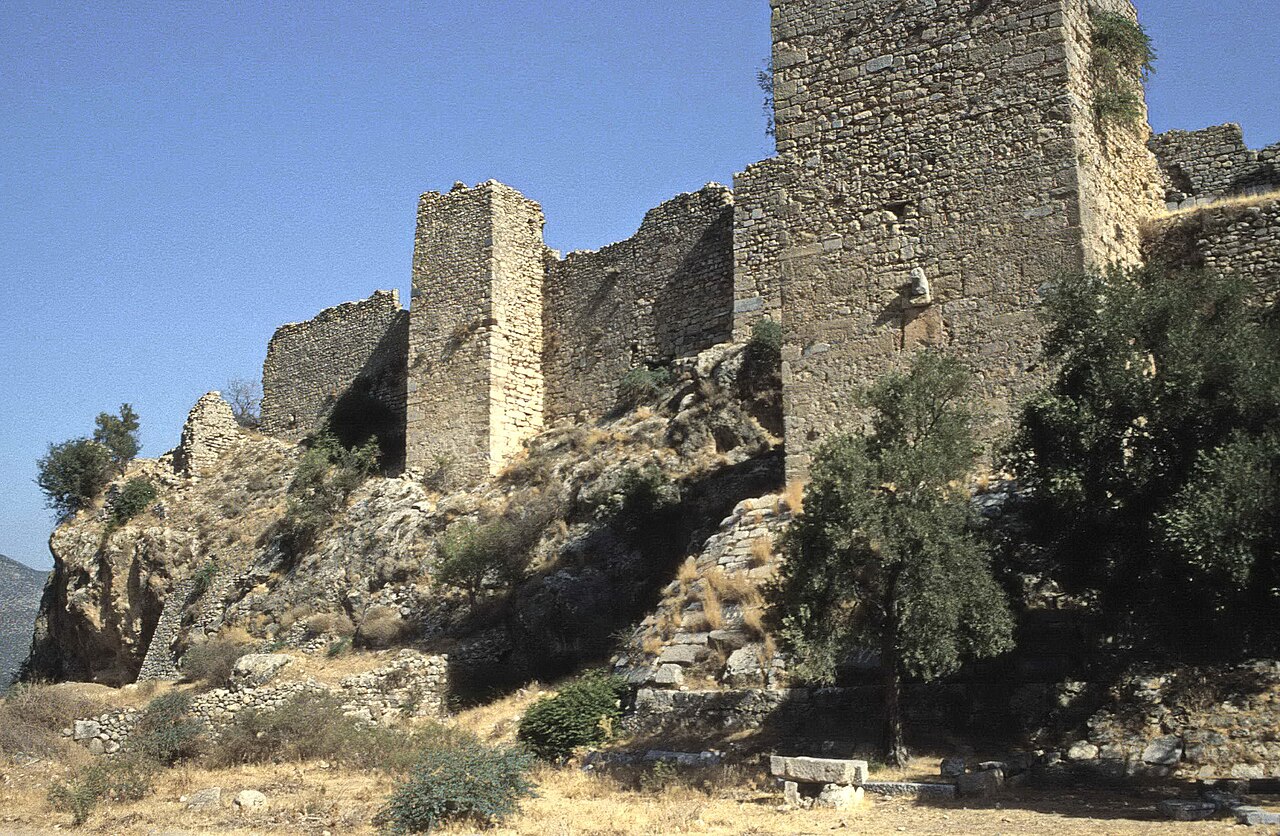
Beçin Castle
On a rocky plateau overlooking the Milas plain — the castle and ruins that hosted the capital of the Menteşe principality.
Details →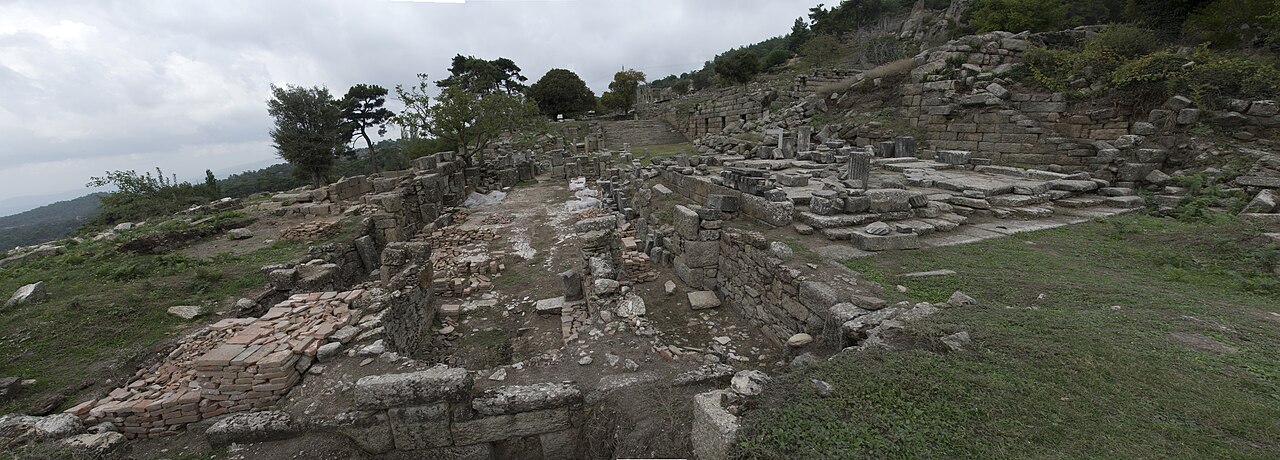
Lake Bafa & Herakleia
Once a sea gulf, now a lake — its waters meet the ancient ruins of Herakleia at the foot of the Beşparmak mountains.
Details →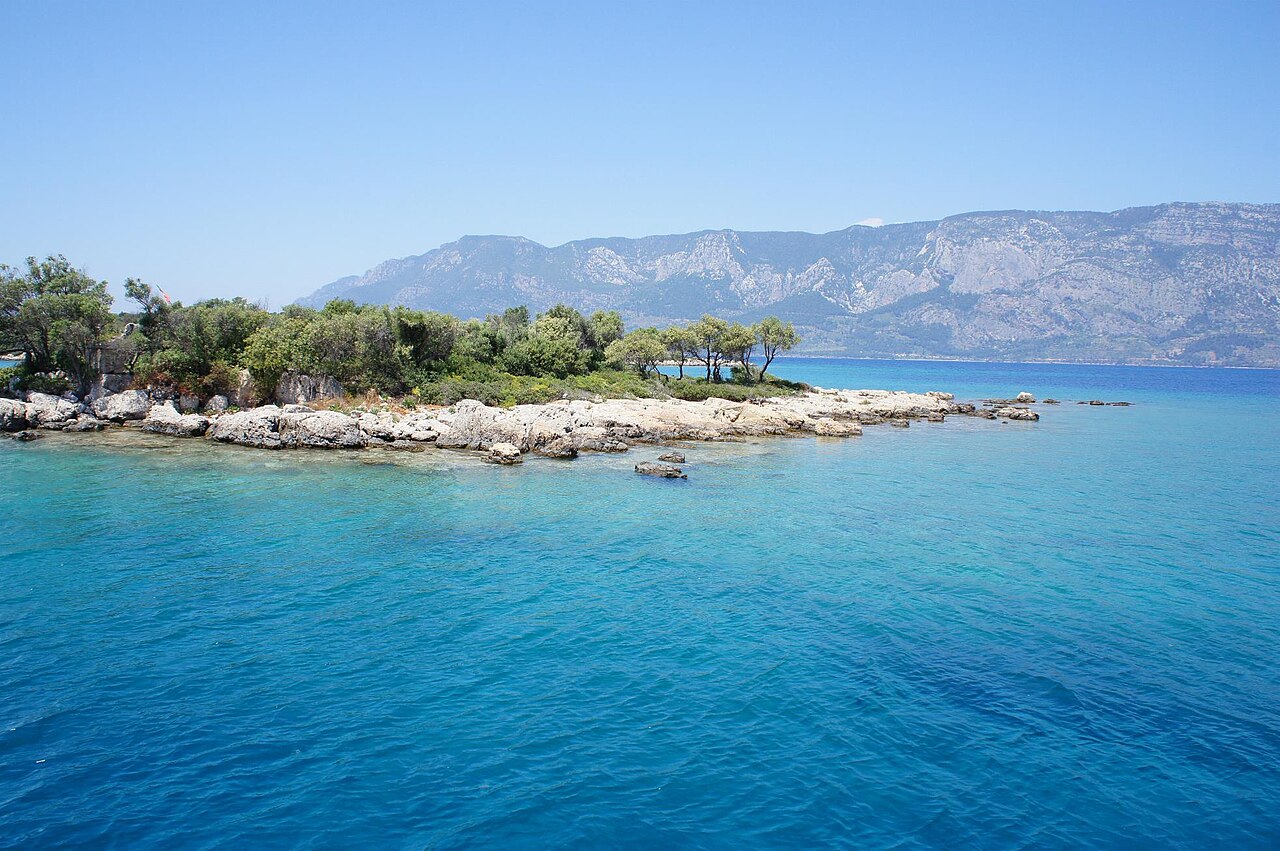
Sedir Island (Cleopatra Beach)
In the Gulf of Gökova, a protected island with unique sand said to be brought for Cleopatra, and the ruins of ancient Kedrai.
Details →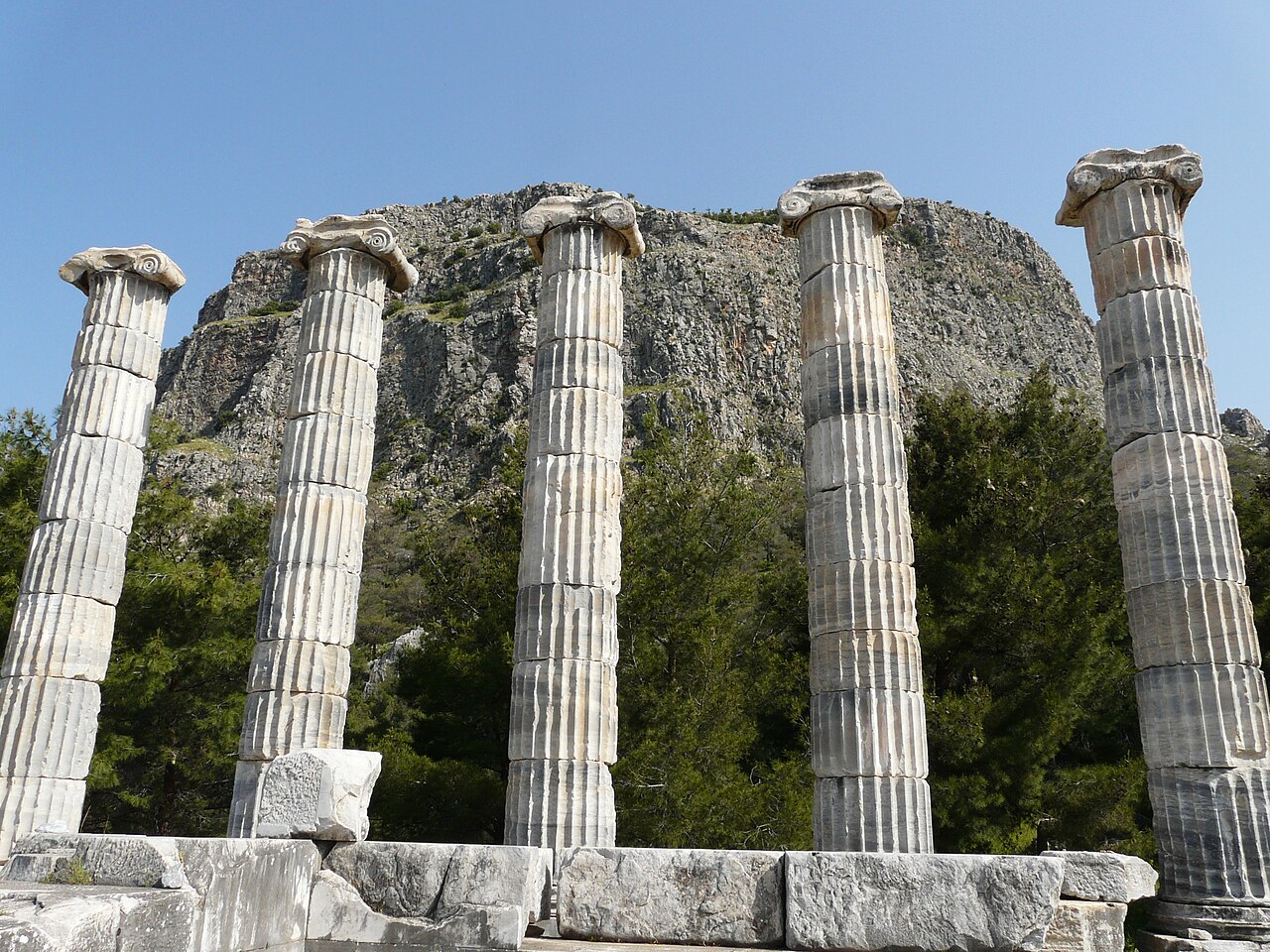
Priene · Miletus · Didyma (Three Ancient Cities)
Three great Ionian cities in a day: perfectly grid-planned Priene, Miletus the birthplace of philosophy, and the oracle at Didyma — the classic ancient-world route.
Details →How to plan this ring
- Give it two days. Day 1 (the Milas axis): Euromos → Beçin → Labranda. Day 2: Lake Bafa & Herakleia, or the Three Ancient Cities route.
- Combine Iasos with Bargylia. Both are on the Gulf of Güllük and are two faces of the same story; together they mean far more.
- Sedir Island means a boat. You get there on tours leaving from Gökova, and it may already be on your blue-cruise itinerary.
- The Museum Pass pays off. Iasos, Euromos, Beçin and Sedir all charge and all accept it. Labranda and Bafa are free.
- Distance is misleading. Labranda is 85 km but 90 minutes; the Three Ancient Cities are 100 km but two hours. Mountain and delta roads do not follow straight lines.
- No shade. Euromos, Beçin, Iasos and Herakleia are all open ground. Hat, water, closed shoes.
The next ring
In the fourth article the circle widens to 150 kilometres and we cross from Caria into Ionia: the grid-planned Priene, the oracle at Didyma, the “Cittaslow” town of Akyaka with its crystalline Azmak river, and the pebble coves of Dilek Peninsula National Park — and above all Alinda: the city of Queen Ada, who adopted Alexander the Great and took Halikarnassos back. Which is to say, the story returns to Bodrum.
The previous rings: 25 stops, two articles
This series is cumulative — the 100-kilometre ring also contains the peninsula and the 50-kilometre transition. We are not retelling them here; they are covered in detail in the first and second articles. A quick reminder:
- Zeki Müren Art Museum — 0.4 km from the hotel
- Bodrum Marina — 0.6 km from the hotel
- Bodrum Castle — 0.7 km from the hotel
- Ancient Theatre of Bodrum — 1.2 km from the hotel
- Mausoleum at Halicarnassus — 1.3 km from the hotel
- Myndos Gate — 1.5 km from the hotel
- Bodrum Windmills — 1.5 km from the hotel
- Gümbet Beach — 2.5 km from the hotel
- Ancient City of Pedasa — 5 km from the hotel
- Karaada (Black Island) — 6 km from the hotel
- Torba Bay — 8 km from the hotel
- Aquarium Bay (Bitez) — 9 km from the hotel
- The Leleg Way — 10 km from the hotel
- Camel Beach (Kargı Bay) — 15 km from the hotel
- Cennet Cove (Göltürkbükü) — 18 km from the hotel
- Dilek Cave (Bağla) — 18 km from the hotel
- Yalıkavak & Sandıma Village — 18 km from the hotel
- Turgutreis — Sunset — 20 km from the hotel
- Kadıkalesi — 22 km from the hotel
- Orak Island — 22 km from the hotel
- Ancient Myndos (Gümüşlük) — 24 km from the hotel
- Aspat (Strobilos) — 25 km from the hotel
- Gümüşlük & Rabbit Island — 25 km from the hotel
- Mazı & Kisebükü — 45 km from the hotel
- Bargylia & the Boğaziçi Lagoon — 50 km from the hotel
Sources
- Iasos akropolisi — Dosseman (CC BY-SA 4.0)
- Euromos Zeus Tapınağı — Dosseman (CC BY-SA 4.0)
- Beçin Kalesi, güney kapısı — Volker Höhfeld (CC BY-SA 4.0)
- Labranda güney terası — Dosseman (CC BY-SA 4.0)
- Herakleia — Bafa Gölü — Barbaradon78 (CC BY-SA 4.0)
- Sedir Adası — nepomnyashiy (CC BY-SA 3.0)
- Priene, Athena Tapınağı — foto: Zigomar (Wikimedia Commons)
- Milet Tiyatrosu — foto: Bernard Gagnon (Wikimedia Commons)
 Artemis Bodrum