Artemis Bodrum · Jul 16, 2026 · 6 min read · Travel Guide
Turn inland from the crowded Aegean coast, climb for an hour or so towards Karacasu in Aydın province, and a different world opens up in the shade of plane trees: Aphrodisias. This was a city dedicated to Aphrodite, goddess of love and beauty — a city that took her name and trained some of the finest sculptors of the ancient world. Inscribed on the UNESCO World Heritage List in 2017, Aphrodisias is among the best-preserved ancient cities in Türkiye, yet it still lives in the shadow of Ephesus — which is precisely one of the best reasons to go.
A City with Three Names
Aphrodisias lies in the interior of ancient Caria, above today's village of Geyre. Before it took the goddess's name, it went by three others: Lelegonpolis (City of the Leleges), Megalepolis (Great City) and Ninoe. Around the 3rd century BC it became Aphrodisias, and the name shaped its destiny. Under Rome, the city was not only a centre of the cult of Aphrodite but also enjoyed a privileged status thanks to its close relationship with the imperial house.
In Late Antiquity, as Christianity spread, a name with pagan echoes became a problem: sometime before AD 640 the city was renamed Stauropolis, "City of the Cross". History changes its labels, but it stays in the soil.
Why a City of Sculpture?
What made Aphrodisias singular was not only its temple — it was its geology. The hills right beside the city held quarries of white and blue-grey Carian marble. When the raw material is under your feet, mastery follows. The Aphrodisian school of sculpture exported both works and sculptors across the Roman world; signed pieces by Aphrodisian artists turn up as far away as Italy.
That is why walking through Aphrodisias is an unusual experience: you see not only finished works but unfinished statues, workshop debris and trial pieces. It feels less like a ruin and more like stepping into an ancient studio mid-project.
What You Must Not Miss
The Tetrapylon — The City's Signature
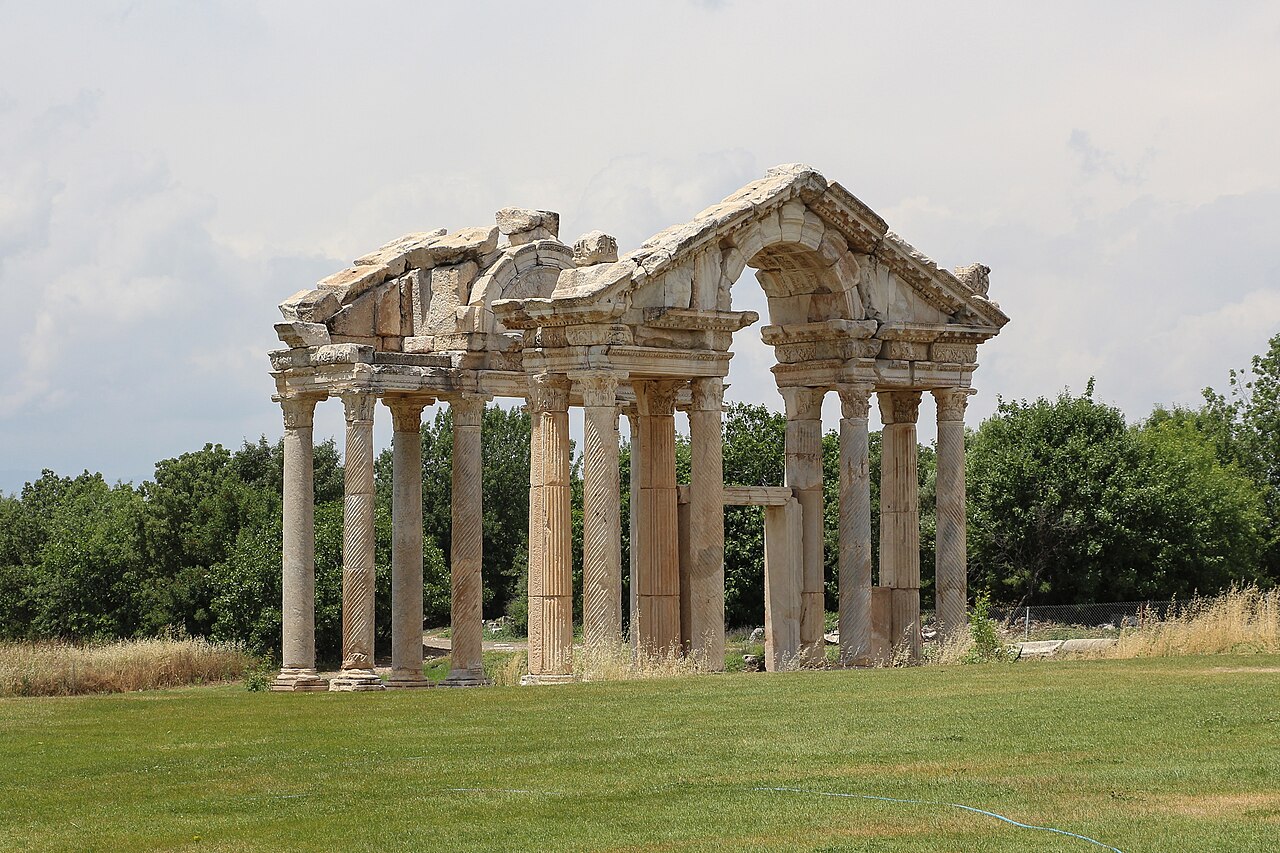
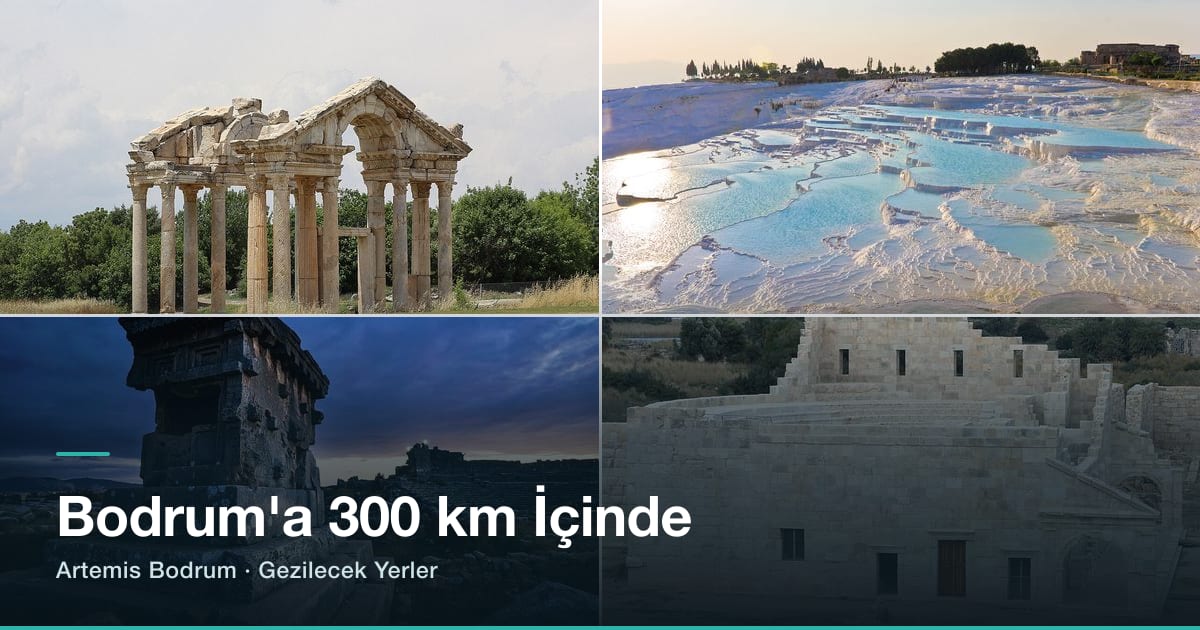
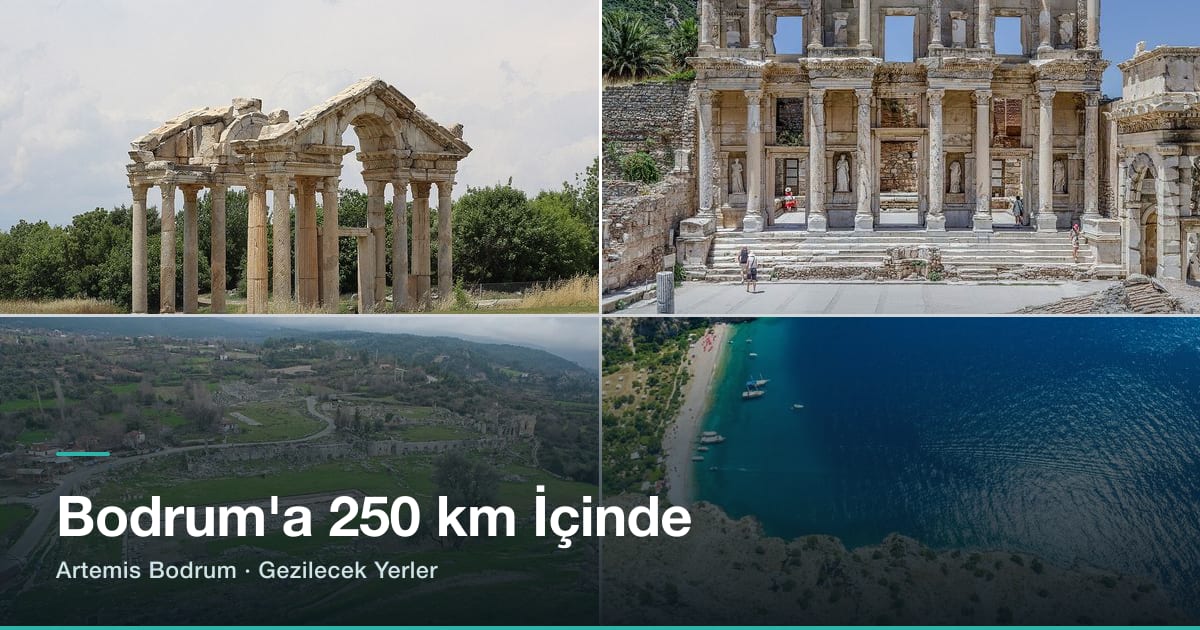
Built around AD 200, this monumental four-way gateway marked the passage from the main street into the Sanctuary of Aphrodite. With its spiral-fluted columns and richly carved pediment, the Tetrapylon has become the emblem of the site. That it was painstakingly re-erected from blocks scattered on the ground is a lesson in what monumental restoration can achieve.
The Stadium — The Best Preserved in the Ancient World
The most astonishing structure here is the stadium, built in the 1st century AD. It measures roughly 270 by 60 metres, with 30 rows of seating on each side and an estimated capacity of 30,000 spectators. Almost no other stadium has survived from antiquity this complete. Sit on one of the tiers, look out over the empty arena, and the roar of thirty thousand people is hard not to imagine.
The Sebasteion — A Propaganda Gallery in Stone
Dedicated "To Aphrodite, the Divine Augusti and the People", the Sebasteion was a temple complex devoted to the Roman imperial cult. Relief panels running along its three-storey façades weave mythological scenes together with imperial messaging. Most of these reliefs are now displayed in the Sevgi Gönül Hall of the Aphrodisias Museum, which makes the museum an inseparable part of the visit rather than an afterthought.
The Temple of Aphrodite — From Temple to Church
The heart of the city met a striking end. Because it had become a focus of pagan resistance, the temple was dismantled around AD 481–484 by order of Emperor Zeno and converted into a Christian basilica. Columns re-set for a new faith: a single building that documents the turning of an age.
The Bouleuterion and the Hadrianic Baths
Dating to the late 2nd or early 3rd century AD, the Bouleuterion (council house) seated around 1,750 people and served as an indoor theatre, concert hall and assembly space. The Hadrianic Baths of the 2nd century AD are a grand complex that speaks to the city's prosperity.
The Story of the Excavations
The first formal excavations took place in 1904–1905 under Paul Augustin Gaudin. But the city truly came to light thanks to the Turkish archaeologist Kenan Erim, who began digging in 1962 under the aegis of New York University. Erim devoted his life to Aphrodisias and, by his own wish, is buried beside the Tetrapylon. From the 1990s the work continued under R.R.R. Smith, and it goes on today.
The city's undoing came from earthquakes: major tremors in the 4th and 7th centuries left deep wounds, and after the 7th-century earthquake Aphrodisias never recovered.
Practical Notes for Your Visit
- Time to allow: The site is large and laid out along a single circuit. With the museum, 2.5–3 hours makes for an unhurried pace. Don't rush it — the stadium sits at the far end of the city.
- Best time of day: Summer midday sun is heavy and shade is scarce. Go early morning or late afternoon — it is cooler, and marble photographs far better in low light.
- Admission: This is a paid archaeological site; the Museum Pass (Müzekart) is valid. We recommend confirming current prices and opening hours on the Ministry of Culture and Tourism's official site before you set off.
- Bring: A hat, water and comfortable shoes. The ground is stony and uneven.
- Parking: A short shuttle service runs between the car park and the site entrance.
Getting There from Bodrum
Aphrodisias is about 170 km from Artemis Bodrum, roughly 2 hours 40 minutes by car. The route generally runs via Milas and Yatağan towards Muğla, then turns off for Karacasu. Most of the drive is easy and scenic, ending with a climb that winds between olive groves and pine forest.
Our tip: If you want to do this as a day trip, an early start is essential. Leaving after breakfast and returning in the late afternoon is entirely realistic. For more detail, see our Aphrodisias destination page.
Nearby Stops
It is easy to pair Aphrodisias with another World Heritage Site: Pamukkale and Hierapolis lie in the same direction, and a "double UNESCO" route — either one long day or with an overnight stay — is one of the most rewarding plans in the region. Karacasu's distinctive pottery tradition and local cooking are a fine excuse for a stop on the way back.
Aphrodisias hasn't lost out by staying off the main tourist track — it has gained. Here you can listen to an ancient city in its own silence, without tour groups brushing past your shoulder. If you'd like to plan this route during your stay at Artemis Bodrum, our reception team will gladly help with timing and directions.
 Artemis Bodrum